
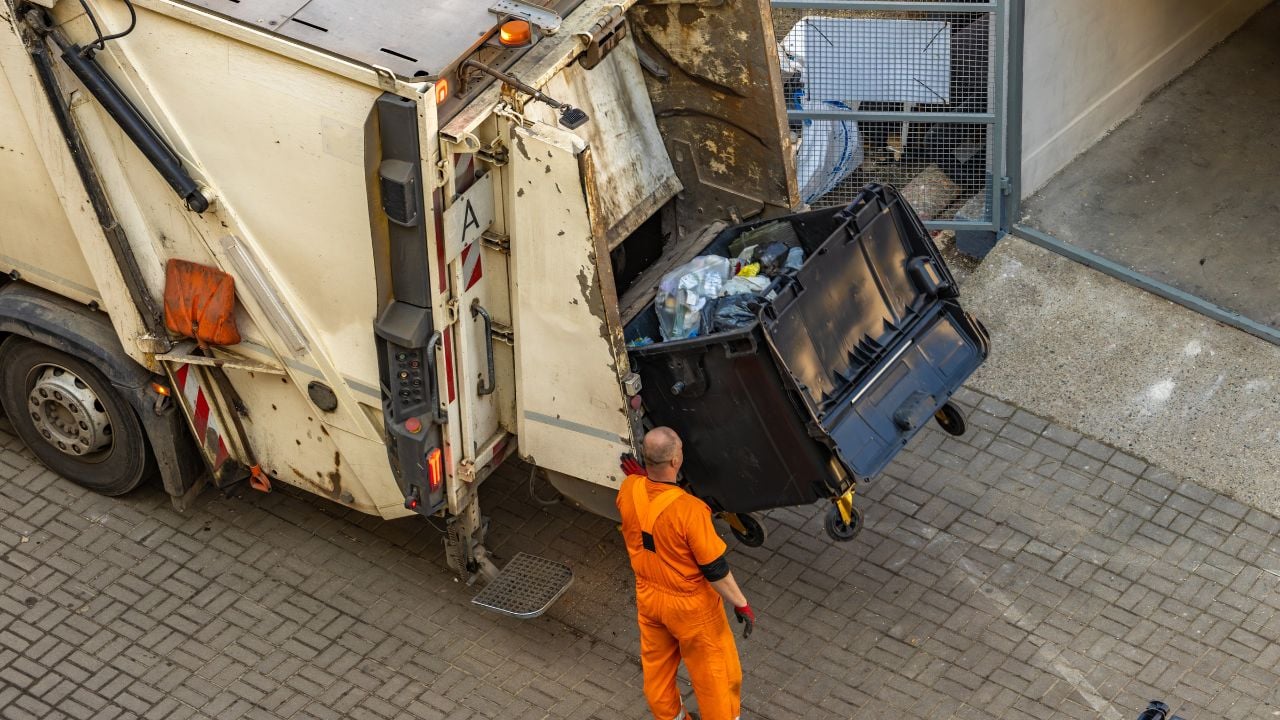
12 Things Your Pennsylvania Garbage Collector Wants You to Know

A Pennsylvania garbage collector sees more code violations before 8 a.m. than most residents notice all year.
Nobody warns homeowners about most of them.
The rules live in borough ordinances almost nobody reads until a fine shows up.
These are the things a Pennsylvania garbage collector wants every homeowner to know before trash day.
1. Your Recycling Isn’t Yours
Set a bin at the curb in some Pennsylvania boroughs, and ownership changes hands the second it leaves your hand.
Grove City’s borough code states plainly that recyclables become the borough’s property from the moment they hit the curb, and West Mifflin runs the same rule.
Not yours anymore.
Lancaster goes further, fining anyone caught picking through a neighbor’s bin $50 to $1,000, depending on the offense.
Grabbing a neighbor’s old bike frame off their recycling pile because it looked salvageable can turn into a citation in these towns, even when the resident wouldn’t have minded at all.
2. Bare Mattresses Get Left
Drag an old mattress to the curb in Philadelphia without a wrapping, and the crew drives right past it.
City rules require every mattress and box spring to be sealed inside a plastic mattress bag before curbside pickup, and the limit runs two compactible furniture items a week.
Bare mattresses get left behind.
The policy exists to keep bed bugs from riding a mattress from one Philadelphia rowhouse block to the next, since a crew member has to touch every item they haul.
Skip the bag, and that mattress sits at the curb through another week of rain before anyone hauls it away.
3. Cash Tips Are Banned
Pennsylvania’s biggest city runs its sanitation crews under rules that reach past the truck itself, straight into your holiday envelope.
Philadelphia’s city ethics code bars every municipal employee, sanitation workers included, from accepting a cash tip for doing their job.
Not a dollar of it.
City employees can’t accept gifts worth more than $99 a year from any one person, and cash is off-limits no matter the amount.
A Philadelphia crew that finds an envelope taped to a can is supposed to hand it back and suggest a thank-you note to a supervisor instead.
The rule doesn’t reach every one of Pennsylvania’s other municipalities, so a hauler outside the city can still pocket what the neighbors leave out.
4. Bagging Backfires
Philadelphia recycling runs on the opposite instinct from trash, and most households never get the memo.
Trash goes in bags.
Recycling doesn’t because bagged recyclables jam the sorting equipment at the processing facility, where nobody stops the line to untie every bag by hand.
Philadelphia’s own rules state it flat out: Don’t put recyclables in plastic bags or cardboard boxes.
A bin full of neatly bagged bottles and cans reads as contamination to a sorting machine, and haulers landfill the whole load instead of recycling it.
5. Holidays Erase a Pickup
A Philadelphia holiday week doesn’t just push your pickup back a day, not in every neighborhood.
Neighborhoods with twice-weekly collection drop down to a single pickup during a City-observed holiday week, and the second collection simply doesn’t happen.
It’s gone, not delayed.
Residents used to that extra midweek pickup have to plan around one truck instead of two, which turns a normal week’s trash into a real squeeze.
A resident who forgets and fills both cans anyway ends up storing the overflow until the following week’s regular schedule catches up.
6. Every Bag Has a Ceiling
Pennsylvania’s two biggest cities disagree on exactly how heavy your trash is allowed to get.
Philadelphia’s own sanitation rules cap any bag or can at 40 pounds when filled, while Pittsburgh’s curbside code caps containers at 35 pounds and 35 gallons.
Ten pounds is the gap.
A bag of wet leaves or a box of old tile can cross either line without anyone noticing, and a crew running an automated arm has no easy way to weigh it before the truck grinds it up.
Over the limit, and the bag stays at the curb until you split it into two lighter bags.
Psst! How much do you know about garbage trucks and America’s trash history? Take our quiz and see if you can ace it.
Quiz
Trash Day IQ
Answer these questions on garbage trucks, recycling, and America’s waste history. We bet you can’t get them all right. Prove us wrong?
According to federal labor data, where does refuse and recyclable collection usually rank among the most dangerous jobs in the country?
7. There's a Weekly Cap
Most Pennsylvania homeowners assume the truck takes whatever fits at the curb, and that assumption is wrong in Philadelphia.
A single-family home is limited to four cans or eight bags a week, and a small property with two to six units gets six cans or 12 bags.
Yard waste counts too.
A spring cleanout that fills ten bags in one week doesn't fit the limit, no matter how neatly every bag is tied and set at the curb.
Anything past the cap has to wait for next week or ride to a sanitation convenience center instead.
8. Bulk Pickup Has Limits
An old recliner at the curb in Pennsylvania comes with more rules than most homeowners expect.
Philadelphia's scheduled bulk program books appointments first come, first served, and caps how much a household can set out at once.
Skip that appointment.
Setting bulk items out on a regular collection day without booking ahead limits how many large items a Philadelphia household can leave at the curb that week.
Pittsburgh runs it differently: A small number of bulk items can ride along with the regular truck each week, and anything beyond that needs a phone call to arrange a separate paid pickup.
9. Leaf Piles Are Banned
Pennsylvania decided leaf waste doesn't belong in a landfill long before most states caught on.
State law has barred loads made mostly of leaf waste from landfills since 1990, and many municipalities have to collect it separately for composting.
Grass clippings dodge the ban.
Homeowners who assume every bit of yard waste falls under the same rule usually learn the difference the week a hauler leaves a bag of clippings behind, or refuses a can stuffed with fall leaves mixed into the regular trash.
10. Pittsburgh Runs on a Curfew
Set your cans out at the wrong hour in Pittsburgh, and you've already broken the rule before the truck shows up.
The city's curbside code sets refuse out no earlier than 6 p.m. the night before collection and no later than 6 a.m. on collection day.
Then the clock resets.
Empty containers have to come back off the curb by 10 p.m. that same night, so a can left sitting through the next morning breaks the rule twice in one cycle.
Inspectors patrol for exactly this pattern, and a can parked at the curb for days draws attention fast.
11. Violations Add up Fast
Pittsburgh stopped giving residents three warnings before a fine lands.
A 2024 quality-of-life ordinance now issues a $35 fine for a first trash violation, $50 for a second within the same calendar year, and $100 for a third.
Three strikes used to be the rule.
Now one is.
An overflowing can, a container set out too early, or contaminated recycling can all trigger the same citation, and inspectors no longer have to catch a resident breaking the rule three separate times first.
12. Sharp Objects Need a Box
A loose needle in a regular trash bag puts the person emptying that bag at direct risk, and Pittsburgh's curbside rules treat it that way.
Needles, syringes, and lancets have to go in a hard plastic container with a tight-fitting lid, labeled clearly as medical waste, per Pittsburgh's own curbside guidance, before they ever reach the curb.
Broken glass works differently.
Sharp shards need a wrap of heavy paper and a box reinforced with tape or string, never a loose toss into the same bag as the rest of the week's trash.
An empty laundry detergent bottle with a screw-on cap works as a stand-in container, provided the plastic doesn't give when the capped needle presses against the side.
Skip that step, and a crew member reaches into a bag that was never supposed to hide anything sharp in the first place.
9 Pennsylvania Laws Newcomers Break Without Knowing
Pennsylvania runs on a set of rules that don't exist in certain other states, and none of them feel illegal at all.
A transplant can break several of them in the first month without ever meaning to.
9 Pennsylvania Laws Newcomers Break Without Knowing
14 Toys Pennsylvania Kids Played With That Would Never Be Sold Today

A toy oven once burned a child's finger badly enough that doctors had to remove part of it, and it still sat on Pennsylvania kitchen tables for years afterward.
Half the backyard and basement favorites from those years carried a recall, a lawsuit, or a banned ingredient nobody thought twice about at the time.
14 Toys Pennsylvania Kids Played With That Would Never Be Sold Today
