
The 20-Degree AC Rule Virginia Homeowners Use to Cut Summer Bills

Think turning your thermostat down to 65 on a scorching Richmond afternoon cools your house off faster?
It doesn’t.
Push it low enough, and the strain shows up on your electric bill more than the cool air shows up in your living room.
That’s the real reason behind the 20-degree rule Virginia homeowners lean on to keep their summer bills in check.
Note: This is general information, not financial advice. Program details and dollar amounts are subject to change.
20-Degree Rule, Explained
The 20-degree rule is the guideline Virginia heating and cooling contractors reach for once the summer heat index climbs high enough to matter.
It says a home’s air conditioner shouldn’t be asked to cool more than 20 degrees below whatever the thermometer reads outside.
On a 98-degree afternoon in Fredericksburg or Suffolk, that puts the floor around 78 degrees, not 68.
Push the thermostat lower than that, and the house doesn’t get there any faster.
A lower number doesn’t unlock some hidden gear in the compressor.
It only changes when the system decides to shut off.
It just runs longer.
Not One-Size-Fits-All
Here’s the part the popular version of the rule leaves out: There’s no single, official 20-degree number written into any engineering code.
Contractors size air conditioners using a real design standard called Manual J, which fixes the indoor target at 75 degrees and pulls the outdoor number from decades of local weather data for that exact spot on the map.
In a hot, dry climate like Las Vegas, that gap can stretch past 30 degrees, since the desert’s design temperature runs well above 100.
In humid, subtropical Florida, the same math often lands closer to 15 or 20 degrees.
Virginia’s summer design numbers sit much closer to Florida’s than to the desert Southwest’s, so the 20-degree line tracks fairly close to what many systems in the state were built to handle.
Hampton Roads and the Northern Neck run some of the muggiest summers in the state, while the mountains around Wytheville and Marion cool off faster once the sun drops, so the same rule of thumb performs differently depending on which corner of Virginia a house sits in.
Not a coincidence.
Pushing Past the Rule
A properly sized air conditioner running 30 degrees below the temperature outside won’t explode or die on the spot.
It also won’t get you a cooler house any faster.
The system just runs, sometimes for hours straight, and that kind of nonstop strain wears on a compressor over the years.
Big mistake.
In Virginia’s humidity, a system working flat out also falls behind on pulling moisture from the air, so a house can end up damp instead of comfortable even while the thermostat reads cold.
The electric bill rises right along with it, since a compressor that never cycles off runs nonstop.
Many service calls each July start with a homeowner convinced the unit is broken, when a technician’s gauge shows a system running exactly as designed on a day that simply asked too much of it.
Psst! How much do you know about cooling a Virginia home the smart way? Flip these cards and see how many you get right.
What It Costs in Virginia
Dominion Energy, the utility serving most of Virginia from Northern Virginia down through Hampton Roads, says heating and cooling together drive about 52% of a home’s energy use, and in the thick of a Virginia summer, that load is almost entirely the air conditioner.
That’s the single biggest swing on a power bill, ahead of the water heater, the refrigerator, and the laundry room combined.
It’s the reason Virginians watch their summer bills jump before any other season.
Appalachian Power customers in the southwest corner of the state see the same pattern, even with cooler nights around Roanoke and Blacksburg easing the load some evenings.
A Chesapeake or Virginia Beach household often runs the air conditioner into October, while a home tucked into the Shenandoah Valley catches a break once the nights turn cool in September.
Location changes the math.
Dominion’s own EnergyShare program pays up to $300 toward a cooling bill for qualifying households between June and September, on top of free weatherization work like sealing and insulation for anyone who receives it.
A separate option, the Percentage of Income Payment Program, ties a household’s bill to its income instead of the sticker price.
Virginia’s electric cooperatives outside Dominion’s territory run their own versions of the same idea.
Confirm which program applies before assuming the number, since the utility serving a household determines which door to knock on first.
Smarter Ways to Save
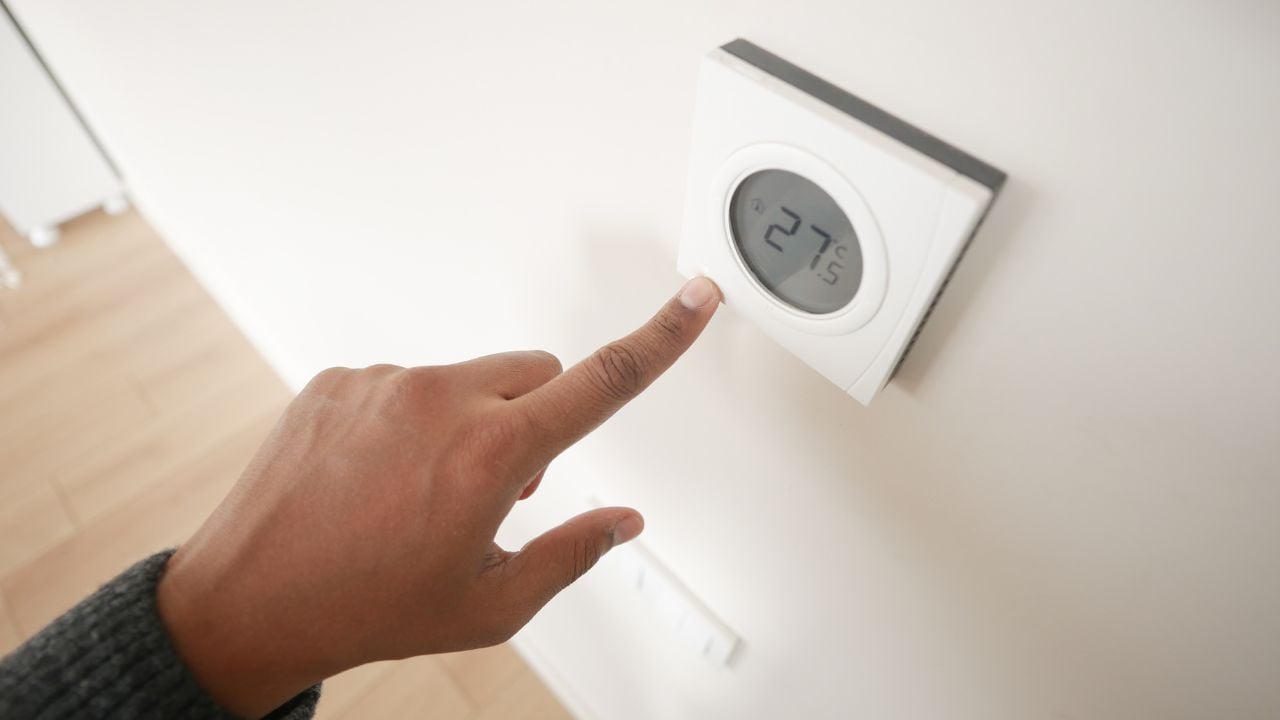
A programmable or smart thermostat takes the guesswork out of an empty house, since it can step the temperature up a few degrees while a Northern Virginia commuter is still stuck on I-66 and bring it back down before anyone walks in the door.
One less thing to remember.
Sealing the gaps around doors and windows keeps cooled air from slipping back outside, a fix that matters even more in Richmond’s older Fan District rowhouses and Norfolk bungalows still running on their original windows, so the system spends less time running to replace what leaked out.
A yearly tune-up, ideally booked before Memorial Day once Virginia heating and cooling companies’ summer schedules fill up, catches a low refrigerant charge or a dirty coil before either one turns into a bigger repair bill in the middle of July.
Keeping the thermostat away from a sunny window or a kitchen doorway matters too, since a reading skewed a few degrees warm makes the system run longer than the house needs.
Shading the outdoor condenser with a tree or an awning helps it run cooler, but shrubs pressed right against the unit choke the airflow it needs and can drag efficiency down instead.
A foot or two of open space on every side is enough for the coil to breathe, even during the stickiest stretch of a Virginia August.
9 Kitchen Habits Draining Virginia Households of Hundreds Every Year

A family of four in Virginia throws out close to $2,900 worth of food a year without ever noticing it happen.
The kitchen hides more of these leaks than any other room in the house.
9 Kitchen Habits Draining Virginia Households of Hundreds Every Year
9 Virginia Squatter Rules That Leave Homeowners Powerless

An inherited house sits empty on Virginia’s Eastern Shore, checked once a season if that.
By the next visit, a stranger has moved in, and state law makes the owner’s key beside the point.
