
13 Habits Florida Transplants Have That Never Fool Lifelong Residents

Do you think you could pass as a lifelong Floridian after a single year in the state?
We’re willing to bet it’ll take longer.
These are the habits Florida transplants have that never fool a lifelong resident.
1. Skipping the Winter Coat
Florida transplants love to announce they’ve toughened up once the temperature dips into the 50s.
They’ll walk out in shorts and flip-flops on a properly cold morning, arms crossed, insisting they don’t feel it.
Nobody believes them.
Longtime residents are the people who reach for a real coat once the temperature drops below 60 degrees.
A puffer jacket on a 55-degree morning is practically a local rite of passage.
So when a new arrival fakes indifference to a cold snap, they’re skipping the exact habit that marks a real Floridian.
2. Correcting Kissimmee
A transplant who’s spent a year in Florida develops a favorite party trick, correcting anyone who mispronounces Kissimmee.
It’s pronounced kuh-SIM-ee, not KISS-uh-me, and they know it because someone corrected them first, not all that long ago.
The correction isn’t the problem.
It’s the tone, a little too proud, a little too quick, like passing a test instead of just saying a name the way everyone around them already does.
Longtime residents say it without a thought and never once bring it up as proof of anything.
3. Buying Out the Water Aisle
A tropical storm watch drops for a system still days away, and a Florida transplant heads straight for the water aisle.
They load the cart with more water and batteries than a household could use in a month.
Not yet.
Florida’s hurricane season officially runs from June 1 through November 30, with the historical peak landing around September 10, not the moment a watch first flashes on the news.
Longtime residents know a watch means paying attention, not panic-buying.
4. Getting Closer for a Photo
A Florida transplant treats a gator sunning at the pond’s edge like a tourist attraction with a face.
They creep closer for a better shot, phone up, grinning the whole way.
Bad move.
The Florida Fish and Wildlife Conservation Commission (FWC) is clear that a resting alligator can move fast, so the smart reaction is distance, never a close-up.
Lifelong residents don’t perform bravery near a gator.
They back away, and if the animal has wandered somewhere it shouldn’t be, they call FWC’s nuisance hotline instead of reaching for their camera.
That’s the actual local move, and it makes for a far less exciting video.
5. Bragging About Dodging Lovebugs
Lovebugs swarm twice a year in Florida, and a transplant trying to seem seasoned will claim they’ve never once been caught in a swarm.
Sure.
The swarms cluster in spring, generally April into May, and again in late summer, roughly August into September, with adults most active in the middle of the day.
Anyone who’s driven through an actual lovebug season has a windshield story.
They just don’t lead with it as proof of anything.
A transplant who swears total immunity either hasn’t lived through a real lovebug season yet, or is stretching the truth to sound like they have.
6. Overusing Y’all
A transplant who lands in Miami or Fort Lauderdale starts using “y’all,” dropping it into nearly every sentence to sound like they belong.
It doesn’t.
South Florida’s vernacular leans on Spanish and Caribbean influence, not the Southern drawl that’s more at home up in the Panhandle.
Overusing “y’all” in Miami reads like a play, not a dialect.
Longtime residents down there are more likely to reach for “dale” than a Southernism borrowed from a state they’ve never lived in.
Psst! How much do you know about Florida beyond the headlines? Take our quiz and see how many you can get right.
Quiz
Sunshine State IQ
Answer these questions on Florida geography, wildlife, and history. We bet you can’t get them all right. Prove us wrong?
Which pie did Florida’s Legislature name the state’s official pie back in 2006?
7. Talking up SunPass
A transplant who's discovered SunPass suddenly can't stop explaining how it works to anyone in the car.
They'll walk through the whole setup, the transponder on the windshield, the tolls that deduct on their own.
That's not a local flex.
Every regular driver on Florida's Turnpike has carried a transponder since long before this transplant owned a car in the state.
The real tell is getting a basic detail wrong, like assuming SunPass only works on the Turnpike when it covers nearly every Florida toll road and most bridges in the state.
Nobody who's used it for years explains it like a brochure.
8. Acting Shocked at 3 O'Clock
Summer afternoons in Florida run on a clock, and a transplant who hasn't caught on yet acts shocked every single time.
The sky darkens, the thunder rolls in, and they scramble for cover like the weather ambushed them.
It didn't.
Sea breezes moving in from both coasts collide over the interior on most summer afternoons, and that collision is why storms tend to hit around 3 or 4 p.m. with clockwork regularity.
Longtime residents plan around it without thinking twice, scheduling errands for the morning and treating the afternoon soak as background noise.
Acting surprised gives them away.
A real local just grabs the umbrella they never put away.
9. Skipping the Sunscreen
A transplant eager to look sun-hardened will skip sunscreen entirely, treating a burn like proof they've adjusted.
That's backward.
Florida carries one of the highest melanoma rates of any state in the country, trailing only one other state.
Longtime residents who've sat through a dermatologist visit or two reapply without being asked twice.
Skipping sunscreen isn't proof of belonging.
It's proof of not having lived through a Florida August yet.
10. Lecturing You on Palmetto Bugs
A transplant who's just learned the term "palmetto bug" can't wait to explain it to someone.
They'll launch into the whole history, insisting it isn't a cockroach, just a Florida thing.
It's a cockroach.
Palmetto bug is simply the regional nickname for the American cockroach, and pest control professionals will say so outright if asked.
Longtime residents use the word without the lecture.
They just yell for a shoe and move on with their night.
11. Blaming Snowbird Season for Everything
A transplant who's picked up the phrase "snowbird season" applies it to every traffic jam from October straight through May.
That's stretching it.
Snowbird traffic runs heaviest in the coldest months up north, roughly winter into early spring, not across half the calendar.
Spring break crowds and summer tourist traffic are their own separate headaches with their own separate months.
Lumping every backup into one long "snowbird season" is what outs them.
Longtime residents know exactly which crowd is clogging which road, and when.
12. Reciting the Beach Flags
A transplant who's memorized the beach flag chart will recite it to anyone standing near the lifeguard stand.
Not always right.
Green means calm, yellow means caution, red means stronger currents, and double red means the water is closed to swimmers entirely.
Purple has nothing to do with waves at all, it's a warning for dangerous marine life like jellyfish.
Longtime residents check the flag once, without narrating it, and act accordingly.
Explaining the whole system out loud is what gives a newcomer away.
13. Ordering a Colada Alone
A transplant trying to fit into Miami's coffee culture walks up to a ventanita and orders a colada, the multi-shot Cuban coffee meant for sharing, all for themselves.
Not quite.
A colada comes with small plastic cups so a group can split it, while the everyday order for one person is a simple cafecito.
Regulars walk up, order a quick cafecito, and are gone in under a minute, no ceremony involved.
Miami's mayor even set an official cafecito break at 3:05 p.m. for exactly that reason.
A transplant asking for a colada solo just outed themselves as new.
7 Florida Lakes Locals Swear By (and 3 They'd Never Swim In)

By noon on a Saturday, a dozen boats have rafted together on the sandbar off Lake Weir, coolers open, kids standing chest-deep on a hard sandy bottom.
Marion County families treat this lake like a backyard, and there's a reason nobody drives past it to reach the next lake on the list.
7 Florida Lakes Locals Swear By (and 3 They'd Never Swim In)
9 Florida Resident Perks Tourists Pay Full Price For
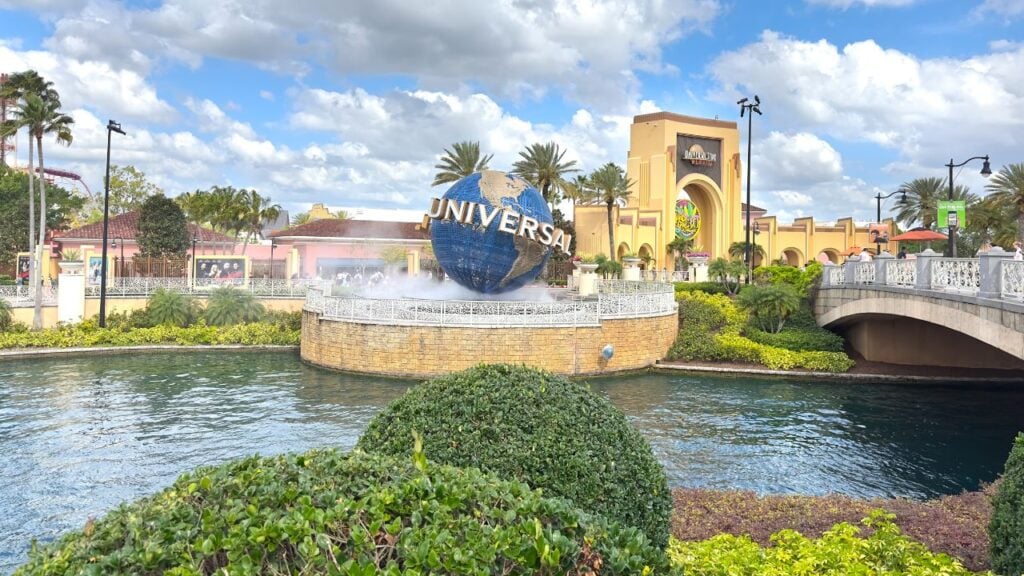
A family from Indianapolis pays full price at the ticket window, and the next family in line flashes a Florida driver's license for less than half that rate.
Nobody behind the glass blinks.
These resident perks are baked into daily life for anyone who calls Florida home.
