

9 Air Conditioner Mistakes Making Georgia Homes Hotter and Bills Higher

Do you think your air conditioner is delivering the cold air you’re paying for?
A fifth to a third of it might never reach your room.
It might be leaking out of the ductwork crossing your attic, and that’s before anybody touches a vent or a thermostat.
These are the air conditioner mistakes Georgia homeowners keep making, and what they cost.
1. Keeping Your Thermostat at 65
Walk into a hot house in August, and the reflex is to shove the thermostat down to 65 so it cools off faster.
It doesn’t.
Many home air conditioners run a single-speed compressor, so the air from your vents is the same temperature at 65 as at 75.
Your living room takes exactly as long to reach 75 either way, which means the house stays hot for the same ninety minutes you were trying to cut short.
Then the system doesn’t stop at 75, and you pay for cooling nobody asked for.
The Energy Department puts the gap between cooling to 78 and cooling to 72 at 6% to 18% of your cooling cost.
A University of Georgia study nudged summer setpoints up two or three degrees in three campus buildings and cut chilled water use by 19% to 40%, with no comfort complaints.
Offices aren’t houses, but the direction holds.
Georgia Power prices summer power in tiers from June through September.
Past 1,000 kilowatt-hours in a billing cycle, the base energy charge on its Residential Service plan runs about 15.1 cents, against 8.8 cents at the start of the month.
That’s the base charge alone, before fuel cost recovery and the other riders.
2. Letting Your Filter Clog
Your air conditioner runs close to nonstop from June through September, pulling every bit of that air through one filter.
Pine pollen from spring, dog hair, and drywall dust from the bathroom project you finished in May all end up in the same pleated square.
Choke that filter, and less air crosses the cold coil, so the rooms farthest from the unit stay warm however long the system runs.
Airflow is everything.
ENERGY STAR figures airflow trouble alone can cut a system’s efficiency by up to 15%.
Match the filter to what your system’s manual calls for, since the thickest filter on the shelf isn’t right for every blower, the fan that moves air through the system.
The same ENERGY STAR checklist says to look at the filter monthly and change it when it’s dirty.
A starved coil can also ice over, and a block of ice moves no air at all.
3. Your Boxed-In Outdoor Unit
Outside, your air conditioner’s condenser unit dumps your house’s heat into the open air, and it can only do that while air moves freely through its coil.
Homeowners plant monkey grass up to the concrete pad the outdoor unit sits on, let a crepe myrtle drop blooms into the fins, set a privacy fence eight inches off the back, or build a deck over the top.
All four are common.
The Energy Department says to trim foliage back at least two feet on every side.
Crowd it, and the unit draws its own hot exhaust back through the coil, which means higher pressure, more electricity, and less cold air indoors.
Shade is a different story, and the same guidance figures shading the outdoor unit can raise its efficiency by up to 10%.
An awning or a tree canopy over the unit does that, as long as it isn’t blocking the airflow.
A wall of shrubs eight inches off the coil does the opposite.
4. Closing Vents in Empty Rooms
Shutting the air conditioning vents in a spare bedroom feels like it should send more cold air elsewhere.
It doesn’t work that way.
Researchers at Lawrence Berkeley National Laboratory tested this on forced-air systems and found energy use going up, not down.
Their houses sat in California and their test ran in the heating season, so the numbers don’t transfer straight to a Georgia August.
The mechanism does.
Contractors call those vents registers, and closing them raises the pressure inside your ducts, which forces more air out through every seam and gap.
In a house with ductwork strung through the attic, the way many Georgia homes are built, that escaping air ends up somewhere far hotter than the bedroom you were trying to skip.
The same paper warns that closing more than about 60% of your registers can freeze a cooling coil.
Then nothing cools until it thaws.
5. Ignoring Your Attic Ducts
The ducts feeding your air conditioning cross the hottest part of the house for four months a year.
ENERGY STAR estimates a duct system loses 20% to 30% of the air moving through it, through leaks, holes, and joints nobody ever sealed.
That air isn’t free.
Leaks on the return side do the reverse and pull attic air into the system, so what comes out of your registers is a blend of cooled air and whatever was baking above your ceiling.
You feel that as rooms that never reach the number on the thermostat.
Sealing the joints with mastic, a thick paste brushed over the seams that dries hard, and wrapping the runs in insulation takes part of a day.
You see it across a summer of bills.
Psst! How much do you know about the invention of air conditioning? Take our quiz and see if you can ace it.
Quiz
Air Conditioning History IQ
Answer these questions on the invention of air conditioning and how America got cool. We bet you can’t get them all right. Prove us wrong?
Willis Carrier’s 1902 machine, the first modern air conditioning system, was built to fix a problem at what kind of business?
6. Skipping the Yearly Checkup
An air conditioner cools a little worse every season, and nobody notices until an August afternoon when the house won't drop below 80.
The Energy Department's guidance for a proper job includes checking the refrigerant charge and the airflow rate against the manufacturer's numbers.
Both drift.
Refrigerant doesn't burn off the way gasoline does, so a low charge means a leak somewhere.
A system running short on refrigerant cools poorly, runs constantly, and can freeze its own coil.
Dirty coils, loose connections, and a clogged condensate drain belong on the same visit, and ENERGY STAR recommends booking that checkup in spring.
Call a contractor in the middle of a heat wave, and you're behind everybody else who waited, at emergency-call prices.
Put next year's on the calendar for March.
7. Leaving Your Ceiling Fans Running
A ceiling fan doesn't lower the temperature of a room, and the Energy Department is blunt about it: Fans cool people, not rooms.
Leave one spinning all day in the bonus room over the garage, and that room hits the same afternoon temperature it would have without the fan.
Nothing about that room changed.
The bill did, since the motor drew power the whole time.
Worse, homeowners see the fan turning and assume the room is handled, so a space that runs hot all summer goes unexamined.
Point that same fan at a person, though, and you get something back, since the Energy Department figures a ceiling fan lets you raise your thermostat about four degrees with no loss of comfort.
Four degrees is 78 instead of 74 on a Macon afternoon.
8. One Size Too Big
When an air conditioner struggles through a hot summer, the tempting fix is a bigger unit.
Georgia's humidity is exactly why that backfires.
The Energy Department's building research explains that an oversized system drops the air temperature below the setting fast, then shuts off before it has pulled the moisture out of the air.
The house ends up damp.
A 74-degree room in Augusta with the humidity still in it feels worse than a dry 77, so you push the setting down and pay for a problem cold air won't solve.
Sizing is a calculation, not a guess, and a contractor runs it with a Manual J load calculation that counts your windows, your insulation, and which way the house faces.
That same research puts the right equipment at 95% to 115% of that number, so a house figuring at 30,000 BTUs wants a system between about 28,500 and 34,500.
Ask to see the printout before you sign, since a contractor sizing by square footage alone is guessing with your money.
Psst! How ready is your house for the rest of a Georgia summer? Run through this checklist and see where you stand.
9. Fan Set to On
Your thermostat has a switch marked ON and AUTO, and it sets whether the blower runs all the time or only while the air conditioner cools.
ON feels like better circulation.
In a Georgia August, it costs you.
Research at the University of Central Florida found that when the blower runs nonstop, water that condensed on the cold coil re-evaporates and blows back into the house before it can drain away.
At 77 degrees indoors, AUTO held their test house around 60% relative humidity, while running the fan continuously pushed it to 70%.
The Environmental Protection Agency recommends keeping indoor humidity below 60 percent, and ideally between 30 and 50.
A muggy 76-degree living room feels worse than a dry 78, so people drop the setting and the compressor runs longer for a house that still feels sticky.
Switching to AUTO doesn't leave your air stagnant, since the system cools for a good part of every hour on a Georgia afternoon anyway.
And if you want filtered air on a schedule, many thermostats offer a circulate setting that runs the blower a set number of minutes an hour.
9 Things a Georgia Landlord Can Legally Do
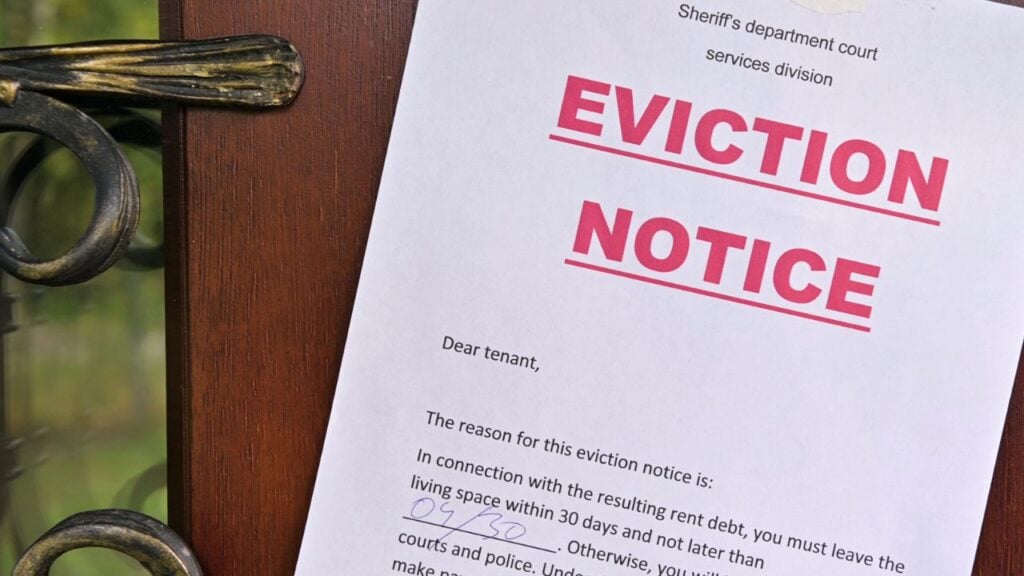
A renter in Gwinnett County opens her lease renewal and reads the new number twice.
No Georgia law caps that increase, and the rent is only the first thing a landlord can change.
9 Things a Georgia Landlord Can Legally Do That Tenants Never See Coming
8 Georgia Lake Towns Locals Love

Georgia has more than a dozen big lakes, and the crowds pile onto about three of them.
While tourists idle in traffic toward Lake Lanier, many Georgians are backing a boat trailer down a ramp two hours away with the whole cove to themselves.
