
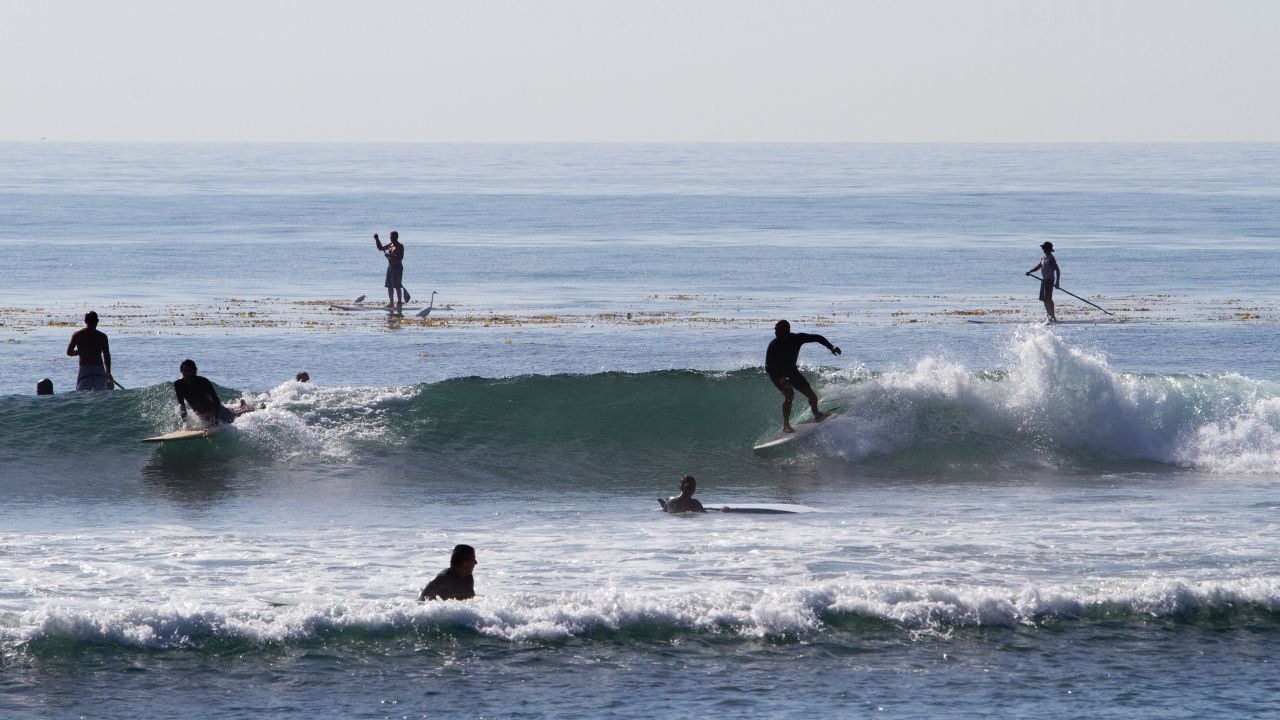
15 California Beach Habits That Baffle Visitors From the East Coast

Can you explain why a family stands on a California beach at midnight in August, waiting on fish?
Locals can.
They can also tell you why nobody lifts their feet walking into the water at Seal Beach.
Every beach habit on this list has an explanation, and East Coast visitors rarely get past the first.
1. Wetsuits in August
A first-timer from the Atlantic side does a double-take at Ocean Beach in San Francisco, where half the swimmers wear neoprene in August.
Water on the Pacific side never warms the way the Atlantic does.
The National Park Service warns that ocean water at Point Reyes can sit as low as 50 degrees, and it lists hypothermia beside rip currents as being problematic.
That’s the summer water temperature.
Southern California runs warmer, so the wetsuit habit belongs to the coast from Big Sur north, where surfers wear full suits in August the same as in February.
2. Waiting Out the Fog
The start time throws newcomers too, since a beach morning between Santa Cruz and San Diego often has no sun.
A marine layer settles over the shoreline on summer mornings, cold ocean air trapped under warmer air, and the sky goes flat gray.
May Gray came first, then June Gloom, then No-Sky July and Fogust as the gray held on.
The sun shows up late.
So people build the day around the burn-off, not the alarm clock.
A family on a Rehoboth Beach schedule sits under that sky for three hours.
3. Racing for a Fire Ring
Beach bonfires are normal from Huntington down to Mission Bay, where cities install rows of concrete fire rings so they stay legal.
People arrive at breakfast.
You claim a fire ring by sitting at it, and outsiders keep asking who issues the permit.
Newport Beach paints its charcoal-only rings green, bans pallets and plastic outright, and writes citations from $100 to $500 for burning the wrong thing.
Huntington Beach rents a handful of fire rings by the day, and the rest go to whoever got there first.
4. Paying Only for Parking
Beach access is the habit newcomers misjudge before they open the trunk, since nobody charges you to walk on the sand.
The Coastal Act of 1976 put shoreline access at the center of how the state manages the coast.
Public trust law handles the rest: The wet sand below the mean high tide line stays public, whoever owns the house above it.
Nobody checks anything at the sand.
The money changes hands at the parking meters instead.
At the Jersey Shore, Ocean City charges $10 a day for a beach tag.
That’s per person.
5. Doing the Stingray Shuffle
Watch how people wade in at Seal Beach and you’ll spot one of the stranger habits on the coast.
Nobody lifts their feet.
They slide them forward through the sand, past their knees.
Round rays bury themselves in those shallows, and stepping down on a hidden ray earns a barb in the foot or ankle.
Shuffling warns the ray you’re coming, so it slides off instead of striking.
Nobody learns that walk at Virginia Beach.
Lifeguards repeat it all summer, and the signs at the ramp spell it out.
6. Hands off the Tide Pools
Reach into a tide pool at Crystal Cove and somebody says something.
State Parks says the shells and rocks are protected along with the plants and animals, and none of it may be removed or disturbed.
That includes the empty shells.
Long stretches sit inside marine protected areas, so a bucket of hermit crabs can end in a citation.
Filling a pail is standard practice on the Outer Banks, and it doesn’t travel.
A docent will show you the hermit crab under a ledge, then ask you to set the rock back exactly where you found it.
7. Animals Get the Beach
Sea lions get more beach than people do at a few spots, and locals hand it over.
San Diego closed Point La Jolla and Boomer Beach to the public year-round in 2023, and the signs there warn that harassing a sea lion breaks federal law.
Harbor seals get the same treatment a short walk away, where the Children’s Pool shuts to people every December 15 through May 15.
You keep your distance.
Roped-off bird nests are normal on the Atlantic side, but nobody there closes a viewpoint to people every day of the year.
A bull sea lion covers dry sand faster than you can back up, which nobody expects from an animal that looked asleep.
8. Grunion Runs at Midnight
One of the odder beach habits sends whole families out after dark to watch fish spawn on wet sand.
Grunion come ashore for four straight nights, beginning on the nights of the full and new moons, from March into August.
Anyone 16 or older needs a fishing license to take them, the daily limit is 30 fish, and the rules allow hands only, with no holes dug in the sand.
Nets are out.
You can’t take a single grunion through April, May, and June, which leaves August nights open to anybody holding a fishing license.
Grunion live nowhere but the coast from Southern California down into Baja, so a transplant arrives with no idea it exists.
Psst! How much do you know about California’s coast? Take our quiz and see if you can ace it.
Quiz
California Coast IQ
Answer nine questions on the coast, its wildlife, and the rules that govern it. We bet you can’t get them all right. Prove us wrong?
In 2018, California adopted an official state sport. Which sport did lawmakers pick?
9. Leaving Your Dog Home
Two hours of driving with a retriever in the back ends at a sign on the ramp at Bolsa Chica.
Dogs get the bike path there, and not the sand.
Many Jersey Shore towns ban dogs from the beach all summer too, so that part isn't the surprise.
State Parks doesn't allow dogs on most beaches at all, and caps the leash at six feet where they're welcome.
That cap runs year-round.
Dog Beach in San Diego's Ocean Beach is a named exception, which is why people drive across three freeways.
10. Three Days After Rain
One beach habit keeps people out of the water on a clear, sunny day.
County health officials warn that storm drains and creeks carry bacteria, chemicals, and street debris into the surf after a storm.
So a rain advisory runs a full 72 hours after the rain stops, posted at the beach.
That's three days.
Rain on Tuesday means Friday before anybody swims, even when the sky clears Wednesday morning.
Nobody grows up on the Atlantic side counting days after a storm, so check the county's beach postings before you drive out.
11. Tar on Your Feet
Black spots stuck to both heels are a normal souvenir near Santa Barbara.
Crude oil leaks out of the seafloor on its own along that stretch, from natural seeps near Coal Oil Point off Isla Vista.
It isn't a spill.
In July 2026, clumps the size of tennis balls turned up from East Beach to Carpinteria State Beach.
Tar on the Atlantic side usually means a spill and a cleanup crew.
Regulars check their sandals on the walk back to the car.
12. Fishing off the Pier
The pier railing is a legal boundary, and beach habits change the moment you cross it.
You need a state sport fishing license to cast from the sand.
Walk onto a public ocean pier and you don't.
Same water, same fish.
The Department of Fish and Wildlife draws that line at piers connected to shore and open to everyone, and every other rule still holds: Size limits, bag limits, report cards, two rods.
New Jersey doesn't sell a saltwater fishing license at all, so the free part travels fine.
The line drawn at the railing is what doesn't.
13. Boardwalks Without Boards
Say boardwalk to somebody raised in Wildwood and they picture wooden planks and an arcade.
Around Los Angeles the path is concrete.
The Marvin Braude Bike Trail runs the Los Angeles County shoreline, and South Bay locals call their stretch the Strand.
Walkers get their own lane.
Santa Monica Pier has the arcade and the funnel cake.
The Strand has a painted center line and cyclists who use it.
14. Never Turning Your Back
North of Santa Cruz, the reason locals stand facing the water while they talk has a name.
Sneaker waves come out of long-period swells and run up the beach roughly twice as far as the waves before them.
They reach dry sand.
On the Atlantic side you watch the water because a wave might soak your bag.
At Point Reyes they watch it because sneaker waves have pulled people off dry sand into the surf.
South-facing beaches like Limantour and Surfers Beach carry the summer risk, and the advice is to watch the water five minutes before you settle in.
Turn your back there to line up a photo, and a stranger will walk over and tell you to move up the beach.
15. Sharing Water With Sharks
A yellow shark advisory sign goes up on the sand, and nobody gets out.
The Shark Lab at Cal State Long Beach has flown more than 1,600 drone surveys over 34 beaches, and juvenile white sharks spend most of their time within 250 yards of shore.
Those sharks are there.
Researchers logged no rise in bites even as beach crowds grew.
So a shark sighting gets a sign, and the water stays open, which isn't what somebody following shark news off Cape Cod expects.
9 Unwritten Freeway Rules Californians Follow Without Thinking
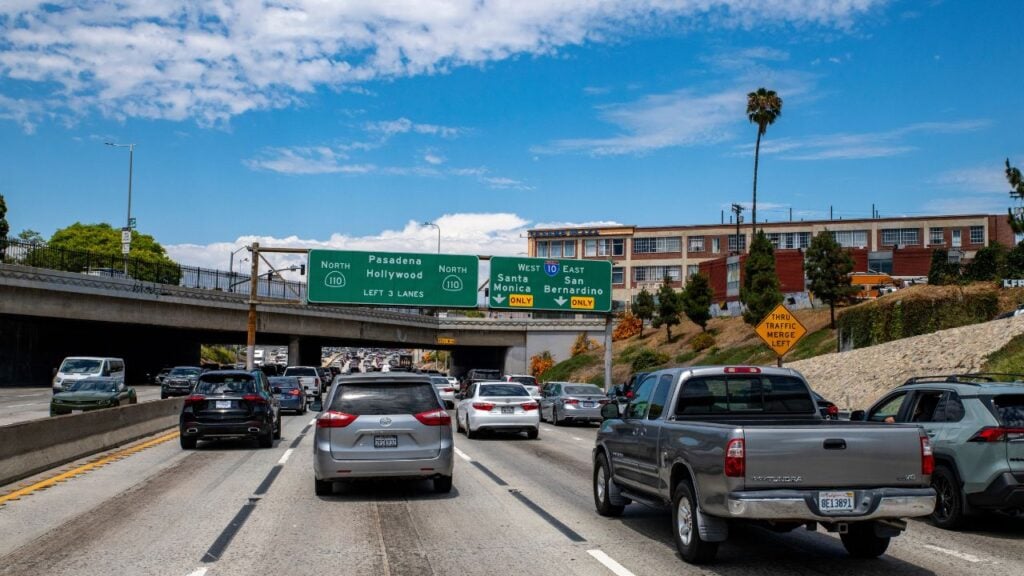
Anybody with a valid license can drive the length of the 5.
Driving it like a local takes longer to learn, and no examiner tests that part, which is exactly why a merge on the 405 goes sideways for out-of-state drivers.
9 Unwritten Freeway Rules Californians Follow Without Thinking
9 Habits Californians Can't Hide No Matter Where They Move
Rinsing out a soda can and setting it aside is a reflex that outlives the move.
The nickel doesn't come back in Pennsylvania, and the habit keeps going anyway, right alongside a few others that give a transplant away in a week.
