
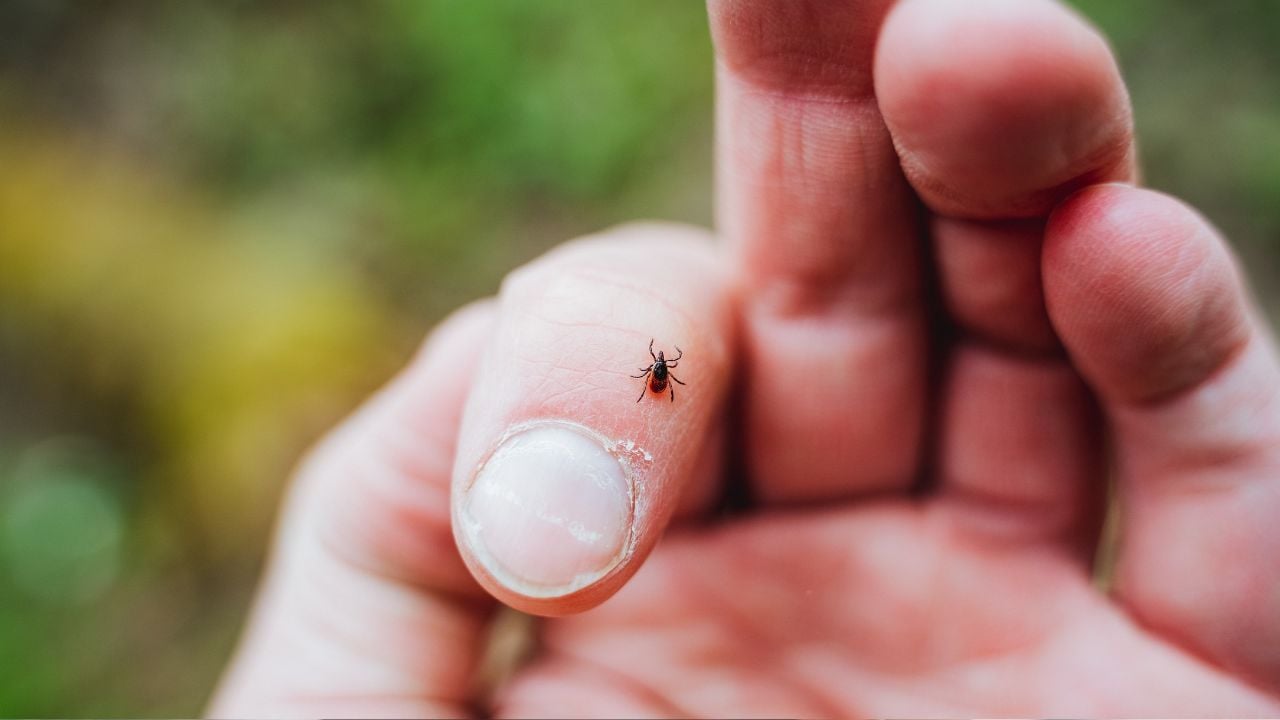
9 Ways Virginians Keep Ticks Out of Their Yard Before Fall

Think tick season winds down once the kids go back to school?
It doesn’t.
Virginia Cooperative Extension researchers say adult blacklegged ticks stay active clear into the winter months, right as most people put their bug spray away for the season.
These are the moves that keep ticks out of a Virginia yard before that shift catches you off guard.
Note: This is general information about tick prevention and the illnesses ticks can spread, not medical advice. Guidelines are subject to change, so talk to a doctor about any symptoms or a suspected bite.
1. Lay a Dry Barrier Where Your Yard Meets the Woods
Virginia’s wooded lots back up to exactly the kind of habitat ticks need to survive.
The ticks that spread Lyme disease need the higher humidity of the woods, and they die off fast once they’re out in the open sun and air.
That’s the whole idea behind a dry barrier.
The Centers for Disease Control and Prevention (CDC) recommends laying a 3-foot barrier of wood chips or gravel anywhere lawn butts up against trees, brush, or a wood line, plus around patios and play areas.
Ticks won’t cross it.
It doesn’t need to run the whole property line either, just the stretch where the family walks, sits, and lets the dog out.
2. Mow Tight and Clear the Leaf Litter
A shaggy Virginia lawn holds onto moisture, and moisture is exactly what keeps a tick alive.
Fairfax County’s health department points to that same dry conditions principle: Increasing sun and air by mowing, clearing tall grass, and raking out leaf litter cuts the number of ticks a yard can support.
No mystery there.
Leaf litter piled against a fence line or left under a hedge does the opposite, holding humidity right where the kids cut through on the way to the bus stop.
3. Keep Raking Once Fall Hits
Many Virginia homeowners ease off tick prevention the moment the humidity breaks.
That’s backward.
The tiny nymph ticks that bite all summer molt into adults by fall, and adult blacklegged ticks stay active into the fall and winter, questing for a host any day the ground isn’t frozen.
They don’t quit when the leaves start dropping.
Raking those leaves up as they fall, rather than waiting for one big cleanup in November, keeps the humid layer they hide in from ever building back up.
4. Set Out Tick Tubes for the Mice
Virginia’s white-footed mice do most of the damage before a tick ever reaches a person.
Young ticks pick up the Lyme bacteria from infected mice while they’re still small enough to hide in a mouse’s nest, then carry it for the rest of their lives.
Tick tubes work that angle directly.
They’re cardboard tubes stuffed with permethrin-treated cotton, tucked along a wood line or under a shed, where mice gather the cotton for nesting material and pick up a dose of tick-killing treatment in the process.
No yard-wide spraying involved.
5. Take Away the Deer’s Reasons to Stop By
Deer carry adult ticks from property to property, and a single female can lay thousands of eggs after one blood meal.
Fewer visits mean fewer eggs.
The CDC lists deer fencing among its core yard recommendations, and Virginia extension agents add removing spilled birdseed and skipping deer-favorite plants like hostas and daylilies in beds near the house.
A fenced vegetable garden alone won’t clear a whole property of deer.
It does mean fewer of them wandering close enough to drop ticks where the kids play.
Psst! How much do you know about ticks? Take our quiz and see if you can ace it.
Quiz
Tick IQ Challenge
Answer these questions on ticks and the diseases they carry. We bet you can’t get them all right. Prove us wrong?
A widely repeated claim says one common backyard animal eats thousands of ticks a season and keeps yards protected. Which animal?
6. Clear the Brush Piles and Old Furniture
Every Virginia yard collects a corner of stuff nobody's gotten around to moving.
An old patio chair, a stack of scrap lumber, and a mattress leaned against the shed all count.
The CDC calls that kind of clutter out by name, since it gives ticks, and the mice and chipmunks that carry them, somewhere shaded and undisturbed to hide.
Haul it off.
A cleared-out corner doesn't just look better. It's one less shelter for the rodents that keep the whole tick population fed.
7. Stack Your Firewood off the Ground
A loose woodpile against the house looks like prime real estate to a chipmunk or a mouse.
Stack the wood neatly, off the ground, and in a dry spot instead.
Simple fix.
A raised, airy pile dries out faster than one dumped straight on damp soil, and rodents lose the cover they were counting on.
Fewer rodents traveling between the woodpile and the back door means fewer ticks getting a free ride toward the house.
8. Move the Swing Set Into the Sun
Where the kids play matters as much as how the whole yard is kept.
A swing set, trampoline, or sandbox tucked against the tree line sits right in a tick's favorite habitat.
Bad spot.
Move it toward the middle of the yard instead, somewhere sunny and away from the edges and shrubs.
Decks and patios benefit from the same placement.
A few extra feet of open lawn between the play area and the woods is often all it takes.
9. Ask for an Edge Treatment, Not a Blanket Spray
Many Virginia homeowners hire someone to spray the whole lawn for ticks and figure that settles it.
It usually doesn't.
Ticks cluster along wood lines, stone walls, and shaded edges rather than spreading evenly across open grass.
So, Fairfax County's health department recommends any pesticide application target those zones and time it to when nymph ticks peak locally, not blanket the entire property.
A targeted treatment costs less.
It also does less damage to the bees and other pollinators working the same yard, which a wall-to-wall spray can't avoid.
Virginia's Most Common Tick Isn't What You Think
Ask most Virginians which tick to worry about, and Lyme disease comes up first.
The blacklegged tick that spreads it isn't the one biting the most people.
Wrong tick.
The Virginia Department of Health (VDH) names the lone star tick as the most common tick to bite people across the state.
It comes with its own set of problems: Ehrlichiosis infects roughly one in twenty of them, and a bite can also trigger alpha-gal syndrome, a red meat allergy.
It also moves differently than the tick most people picture.
Instead of waiting patiently in the grass, a lone star tick moves toward a host across open ground, which is part of why it ends up biting so many more Virginians every year.
The Meat Allergy Nobody Saw Coming
Alpha-gal syndrome sounds rare until it shows up close to home.
Bedford County has recorded the second-highest concentration of alpha-gal cases of any county in the country, according to a CDC-linked count from a few years back, with nearly 2% of the county's population affected.
That's not a small number.
The allergy shows up hours after eating beef, pork, or venison, not minutes, which is part of why so many people go undiagnosed for years before connecting the dots back to a tick bite.
A hunter field-dressing a deer or a gardener pulling weeds along the tree line runs the same lone star tick risk as a kid on a swing set.
Some people's IgE levels fade over several tick-free years, easing the allergy some.
A fresh bite resets the clock right back to square one.
10 Things Virginians Do That Give Them Away Anywhere They Go

A woman in a Charlotte grocery line asks the deli clerk if he's ever tried a Virginia ham biscuit, and he hasn't.
She sighs the way only a transplant can, then spends five minutes explaining Smithfield ham to a stranger who never asked.
10 Things Virginians Do That Give Them Away Anywhere They Go
10 Foods Virginians Grew Up on That the Rest of America Never Tasted

On a Saturday in Brunswick County, a man stirs a cast-iron kettle the size of a bathtub with what looks a lot like a boat oar.
He's been at it since before sunrise, and half the county has followed the smell to the firehouse.
10 Foods Virginians Grew Up On That the Rest of America Never Tasted
