
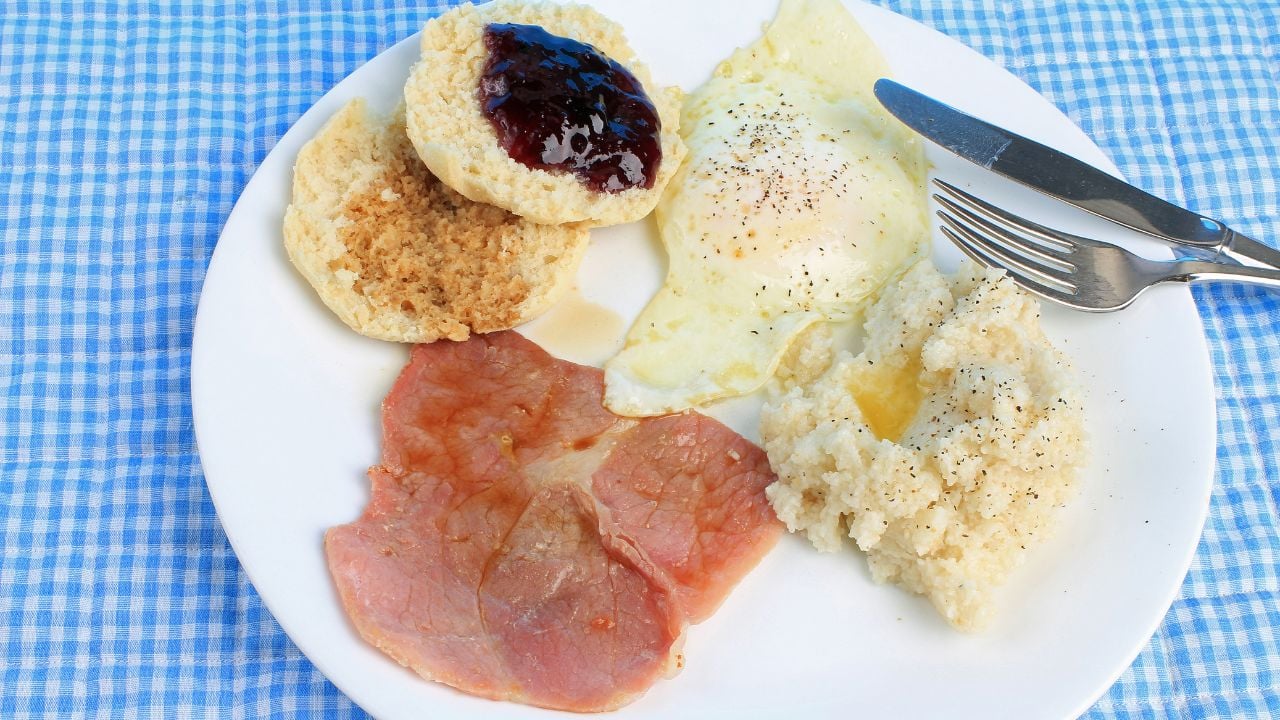
10 Foods Virginians Grew Up On That the Rest of America Never Tasted

On a Saturday in Brunswick County, Virginia, a man stirs a cast-iron kettle the size of a bathtub with what looks a lot like a boat oar.
He’s been at it since before sunrise, and half the county has followed the smell to the firehouse.
Tell a friend in Minnesota you spent your morning that way, and you’ll get a blank stare.
These are the foods Virginians grew up on that the rest of the country has never tasted.
1. Virginia Country Ham
Virginia doesn’t treat ham the way the grocery deli case does.
A Virginia country ham is packed in salt, smoked, and hung to age for months until it turns firm, deep red, and salty enough to make your eyes water.
No refrigerator needed.
Under Virginia law, a ham can wear the Smithfield name only if it’s cured inside the town limits and aged at least six months.
You slice it thin because a thick slab would floor you.
Think of it as the Southern cousin of Italian prosciutto, except it comes from a Tidewater farm instead of a hillside in Parma.
2. Brunswick Stew
Virginians will fight you over Brunswick stew, and they mean Brunswick County, Virginia.
The county traces the dish to 1828, when a camp cook named Jimmy Matthews simmered a pot of squirrel, butter, and onions for a hunting party.
The squirrel’s optional now.
What hasn’t changed is the thickness, cooked down for hours until a spoon can stand up in the pot on its own.
Georgia claims it too, and the two states have needled each other about it for more than a century.
Virginia’s legislature settled the matter to its own satisfaction and named the county the birthplace, which is exactly the kind of thing that keeps an argument going.
3. Peanut Soup
Say peanut soup out loud outside Virginia and people assume you misspoke.
In Colonial Williamsburg, it’s a first course, ladled out warm and creamy at the candlelit tables of the King’s Arms Tavern.
It tastes like a savory, silky bowl of the inside of a peanut, finished with a little cream and a sprinkle of chopped peanuts on top.
Not dessert.
The recipe traces back to colonial kitchens, where cooks worked ground peanuts into something rich and new.
Order a cup on a cold day in Williamsburg and you’re tasting three hundred years of Virginia in one spoonful.
4. Chincoteague Salt Oysters
Out on Virginia’s Eastern Shore, the oysters taste like the Atlantic hit you in the face.
Chincoteague salt oysters grow in the channels behind Assateague, on the ocean side, where the water runs saltier than the calmer bays.
Shuckers call them salt bombs.
An oyster carries the flavor of the exact water it grew in, and this water is brine to the bone.
Chincoteague built its whole name on this, and every fall the island throws an oyster festival where people shuck and slurp for a solid weekend.
Eat them raw off the half shell, and you’ll skip the cocktail sauce a landlocked oyster needs.
5. Peanut Pie
Virginia looked at pecan pie and swapped in the crop it grows by the ton.
Peanut pie is the same gooey, sweet, custardy idea, except a layer of roasted peanuts sits where the pecans would be.
The salt of the peanuts cuts the sugar.
It’s better than it sounds.
The Virginia Diner down in Wakefield made its reputation on the slice, and diners have been driving out of their way for it for decades.
The slice rarely travels north of Richmond.
Psst! How much do you know about Virginia’s food and traditions? Take our quiz and see if you can ace it.
Quiz
Virginia Food IQ
Answer these questions on Virginia’s food, farms, and folklore. We bet you can’t get them all right. Prove us wrong?
A beloved 1947 children’s novel turned Virginia’s annual wild-pony swim into a national story. What was its title?
6. Route 11 Potato Chips
In the Shenandoah Valley, a good bag of chips has a road number on it.
Route 11 Potato Chips takes its name from the old highway that runs down the valley, and the company has been kettle-cooking small batches by hand since 1992.
The factory in Mount Jackson lets you watch the whole thing through a window, chips tumbling out of the fryer a few feet away.
These aren't your average chips.
They come in flavors a national brand would never risk, from the fiery Mama Zuma's Revenge to a Chesapeake Crab dusted with crab seasoning.
A Virginian home for the holidays will pack a few bags in a suitcase to smuggle back to wherever they moved.
7. Hanover Tomatoes
Ask a Virginian about tomatoes and you'll hear one county over and over: Hanover.
No seed packet will grow you a Hanover tomato. The name belongs to any tomato raised in the sandy, low-lying soil of Hanover County, just north of Richmond.
That dirt does something to the flavor, and Virginians have bragged about it since 1878.
They barely leave the region.
You find them at roadside stands and church tables in July, not in a chain grocery two states away, which is why the flavor stays a local secret.
The proper way to eat one is between two slices of soft white bread with a thick swipe of Duke's, salt, and nothing else.
8. Ham Biscuits
No Virginia gathering gets going until someone sets down a tray of ham biscuits.
The move is simple: A sliver of salty country ham folded inside a small, soft biscuit, stacked by the dozen and eaten cold.
They turn up everywhere.
Weddings, funerals, tailgates, Christmas morning, and the spring steeplechase races at places like Foxfield all run on them.
The salt of the ham and the butter of the biscuit do all the work, so nobody bothers with mustard or mayonnaise.
A visitor always takes a single ham biscuit, then goes back for four more.
9. Spoonbread
Virginia makes a cornbread so soft you eat it with a spoon, and that's how it got the name spoonbread.
It lands somewhere between cornbread and a soufflé, with a custardy middle that never firms up into a slice.
Food historians think it may have started in Virginia kitchens, and old Tidewater families still call their version batter bread.
You scoop, not slice.
A pat of butter melts into the warm middle, and it belongs on the table beside fried chicken or a Sunday roast.
A box of cornbread mix never comes close.
10. Virginia Peanuts
Virginia grows a peanut all its own, and treats it like candy.
The Virginia-type peanut, prized for its oversized kernels, runs so wide that the best grade comes a few to a handful instead of by the sad little scoop.
Down in Suffolk, they don't grow just any peanut. They grow a mascot.
A Suffolk schoolboy drew the first sketch of Mr. Peanut in 1916, and the town has been peanut country ever since.
Top hat and all.
The best of them are blister-fried, cooked in oil until the skins split and the whole peanut goes glassy and crunchy.
A place like Hubs, over in the tiny town of Sedley, has been blistering them in copper kettles for generations, and the tins ship out by the thousands every December.
Set an open tin on the counter at a Virginia Christmas, and it's empty by New Year's, one crunchy handful at a time.
9 Vintage Cookout Sides Virginians Still Bring to Every Summer Potluck
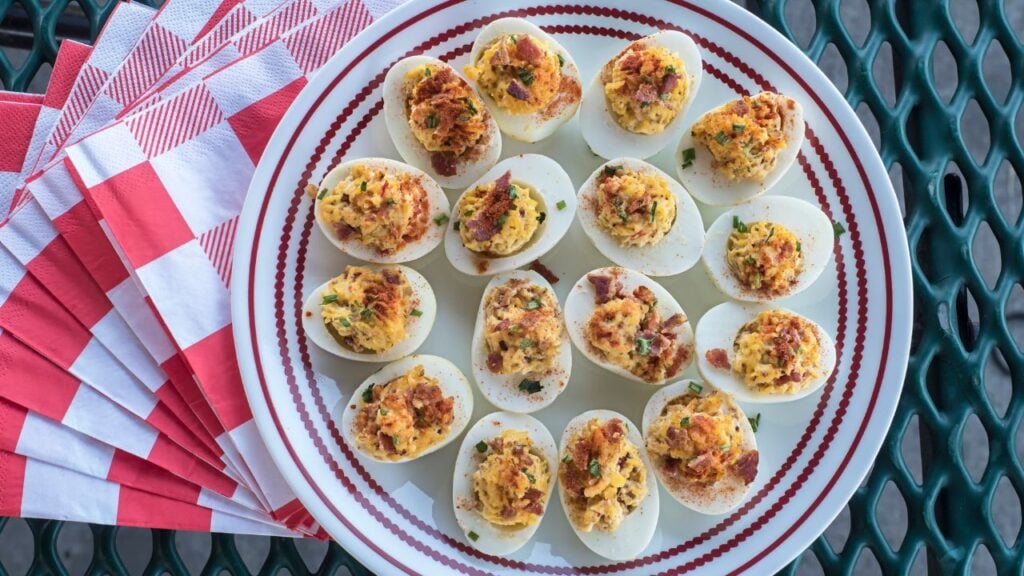
The folding table starts sagging before Aunt Wilma even sets down her dish.
She's carried the same foil-covered deviled-egg plate to every cookout for thirty summers, and she still guards the last two eggs like the crown jewels.
9 Vintage Cookout Sides Virginians Still Bring to Every Summer Potluck
9 Kitchen Habits Draining Virginia Households of Hundreds Every Year
A family of four throws out hundreds of dollars of food a year without noticing.
That's grocery money, going straight into the trash, and a few small habits are the reason.
9 Kitchen Habits Draining Virginia Households of Hundreds Every Year
