
9 California Beach Towns Locals Love (and 4 Tourists Ruin)

A tourist circles the same block in Laguna Beach for the fourth time, hunting a parking spot that isn’t there.
Ninety minutes north, a local parks her truck outside a Cayucos bakery without a second thought.
Same coastline, same Saturday, two completely different mornings.
These are the California beach towns locals still love, and the towns tourists have taken over parking spot by parking spot.
Let’s start with those they love.
1. Trinidad
A pickup truck loaded with crab pots idles at the boat ramp before sunrise, waiting for enough light to see past the rocks.
Trinidad anchors the Humboldt County coast, small enough to drive through in under a minute if you don’t stop for the view.
Around 300 people call it home, making it one of California’s smallest incorporated cities.
That’s not many people.
Ten public beaches ring Trinidad, and most day-trippers headed up Highway 101 never make it past the first parking area.
Locals know all ten, plus which beach clears out first once the fog rolls back in.
Trinidad Head, the rocky bluff above the harbor, still shelters fishing boats the way it has for generations.
A weekday walk out to the point usually turns up more sea lions than people.
2. Cayucos
Cayucos runs on one main street, Ocean Avenue, and a pier that’s older than most of the buildings around it.
About 2,500 people live in Cayucos full time.
Locals gather at the Brown Butter Cookie Company on Ocean Avenue, the sea-salt shortbread shop two sisters built out of one recipe back in 2008.
One recipe, one town, one line out the door most Saturdays.
Cayucos State Beach stretches six miles toward Morro Rock, and the storefronts along Ocean Avenue stay locally owned instead of turning into chains.
That’s on purpose.
Residents have fought to keep it that way, and the town still has no high-rise hotel blocking the view.
3. Carpinteria
Carpinteria sits 12 miles down the coast from Santa Barbara, and locals will tell you their beach beats their famous neighbor’s.
Carpinteria City Beach has carried the nickname World’s Safest Beach for more than 90 years, thanks to the Channel Islands blocking the swells before they build into anything a surfer would call a wave.
It still holds up.
Parents let kids wade in without the riptide worry that comes with the open coast farther north, and the beach stretches wide enough that a Saturday crowd never feels packed in.
Santa Barbara’s beaches pull the bigger crowds and the harder parking search, so many locals cross the county line to Carpinteria instead.
Carpinteria has held onto its original look, without the resort sprawl that reshaped its more famous neighbor’s shoreline.
4. Bodega Bay
Fog still clings to the bluffs above Bodega Head some mornings, thick enough that boats leave the harbor by feel more than sight.
Bodega Bay still runs as a working harbor, ninety minutes north of San Francisco in Sonoma County.
Boats still work out of Bodega Harbor, and Spud Point Marina fills up before dawn every crab and salmon season.
The fleet has thinned out over the past few years as salmon runs struggled.
Locals notice the difference.
Alfred Hitchcock shot “The Birds” around Bodega Bay in 1963, and fans still drive out looking for the filming spots.
Locals just wave and keep driving.
5. Avila Beach
Avila Beach tucks into a sheltered cove in San Luis Obispo County, protected enough that the wind and fog skip it most afternoons.
About 1,300 people live there, a fraction of the crowd that packs neighboring Pismo Beach on a summer weekend.
Port San Luis, the working harbor next door, still lands fresh fish for the seafood stands along the promenade.
Palm trees line the town square, and regulars know each other by name at the coffee counter.
Nobody stays a stranger.
Avila Beach never grew into Monterey or Santa Barbara, and most residents like it exactly that way.
Psst! How much do you know about California’s beaches? Take our quiz and see if you can ace it.
Quiz
California Beach Trivia
Answer eight questions on California’s coastline, piers, and beach history. We bet you can’t get them all right. Prove us wrong?
Fourteen bison arrived on Catalina Island by boat in 1924. Why were they brought over?
Where Tourists Took Over
Not every California beach town got to stay this way.
These four didn't.
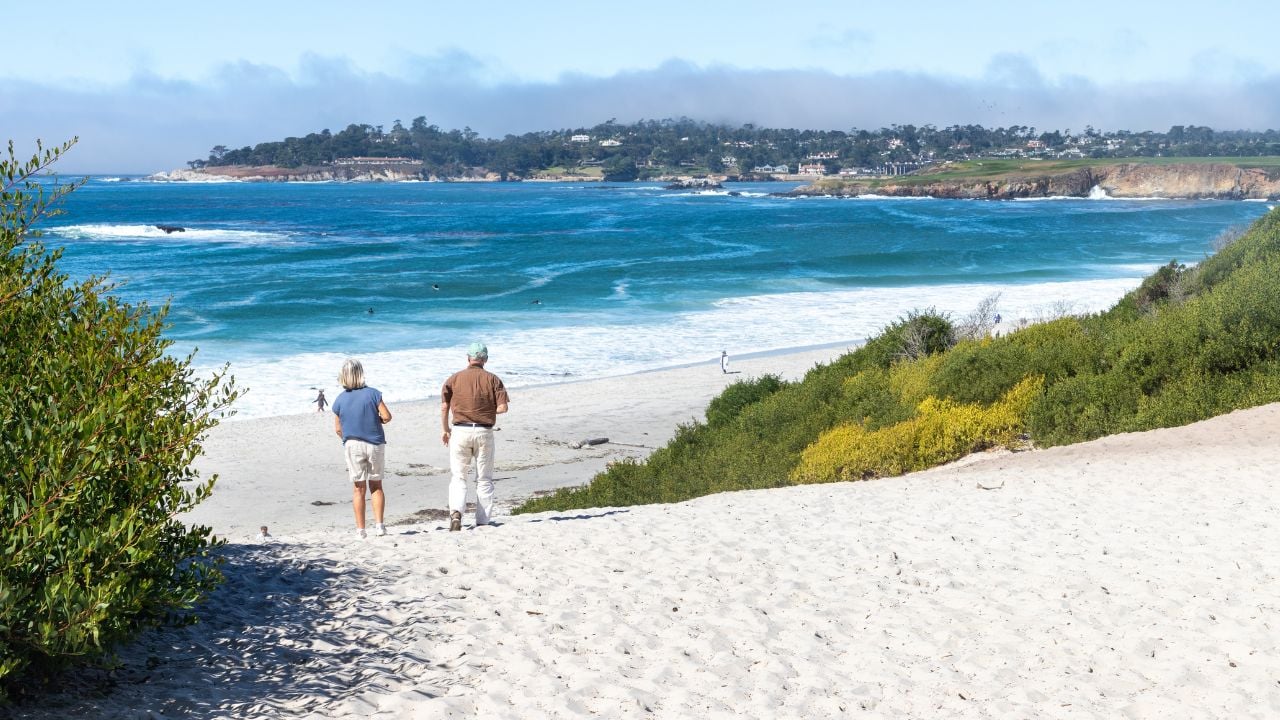
1. Carmel-by-the-Sea
Carmel-by-the-Sea covers about one square mile, and tourist spending funds a majority of the town's annual budget, according to Visit Carmel.
Visitors packed Ocean Avenue every week this year, enough that the city council passed its $42 million 2026-2027 budget without the $292,000 it usually sends to the regional tourism bureau.
Locals had pushed for exactly that, tired of gridlock, trash on the sidewalks, and a parking search that outlasts most lunch reservations.
The council restored partial funding a month later, but only after promising a study on how to manage the crowds the town depends on.
2. Laguna Beach
Laguna Beach's population swells several times over between Memorial Day and Labor Day, and Main Beach takes the brunt of it.
City officials have issued public warnings in recent summers as visitor numbers spike, asking tourists to mind the trash, the noise, and the smoke they leave behind.
There's no relief.
Parking near Main Beach turns competitive by 10 a.m. most summer weekends, and the crush spills into residential streets never built for it.
Few roads lead in or out of town, so once traffic backs up on Coast Highway, it stays backed up.
Residents have spent months pushing the city to rein in what they call destructive tourism, the kind that treats their neighborhood as one more parking lot.
3. Malibu
Malibu runs 21 miles of coastline, and a stretch of it sits behind gates that don't belong there.
Some homeowners have hired security guards, hung fake no-parking signs, and blocked stairways the state already ruled must stay open, according to the California Coastal Commission.
Nowhere close to public access.
The commission fined one couple $4.2 million in 2016, the first penalty of its kind, after a decade-long fight over a blocked path to Las Flores Beach.
Down the coast, the owners of the hotel at Carbon Beach, nicknamed Billionaire's Beach, only added a public crosswalk and two stairways after regulators forced the issue and collected $500,000 in fines and conservation fees.
4. Huntington Beach
Huntington Beach fought for years to lock down the exclusive rights to its nickname, Surf City USA, and the city leans on the name.
About 2.4 million visitors came from outside Orange County in 2025, worth roughly $585 million in direct spending.
Boardwalk shops feel it first.
That's before the pier crowd and the annual surf contest.
The US Open of Surfing alone draws roughly 400,000 spectators over nine days each summer, packing the sand around the pier shoulder to shoulder.
Residents who live within walking distance of the pier say they lose their own street parking to contest crowds for over a week straight every summer.
Some skip their regular sunset walk on the pier entirely until the tents and the crowds clear out.
9 Unwritten Freeway Rules Californians Follow Without Thinking
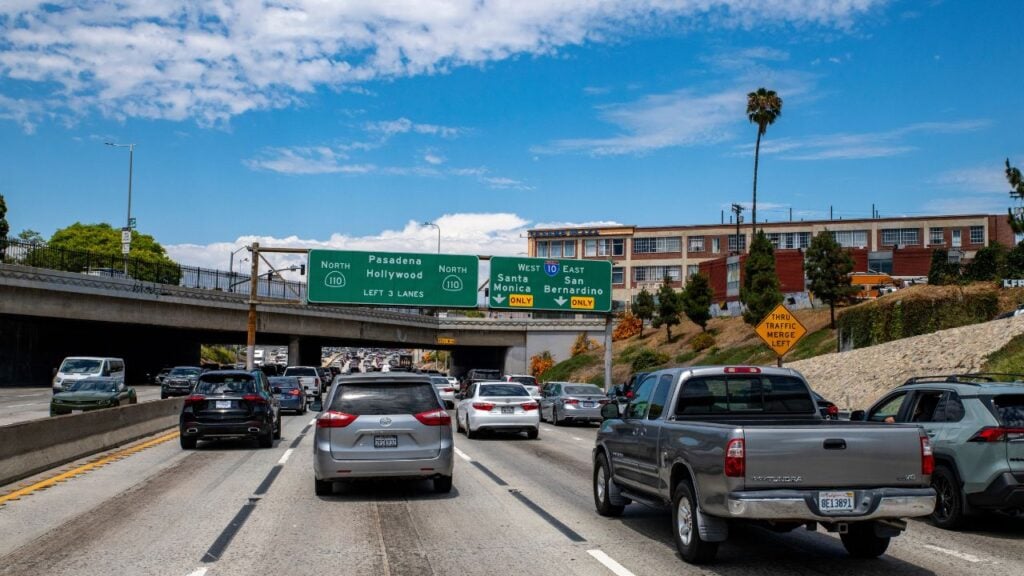
Anybody with a valid license can drive the length of the 5, but driving it like a local takes years of on-ramps, gridlock, and at least one memorable ticket.
These are the unwritten rules Californians follow without ever writing one of them down.
9 Unwritten Freeway Rules Californians Follow Without Thinking
14 Phrases That Instantly Give Away a California Native

A visitor from out of state orders a burger, asks what "animal style" means, and watches every native at the table exchange a look.
These are the phrases that separate a lifelong Californian from everybody else at the table.
