
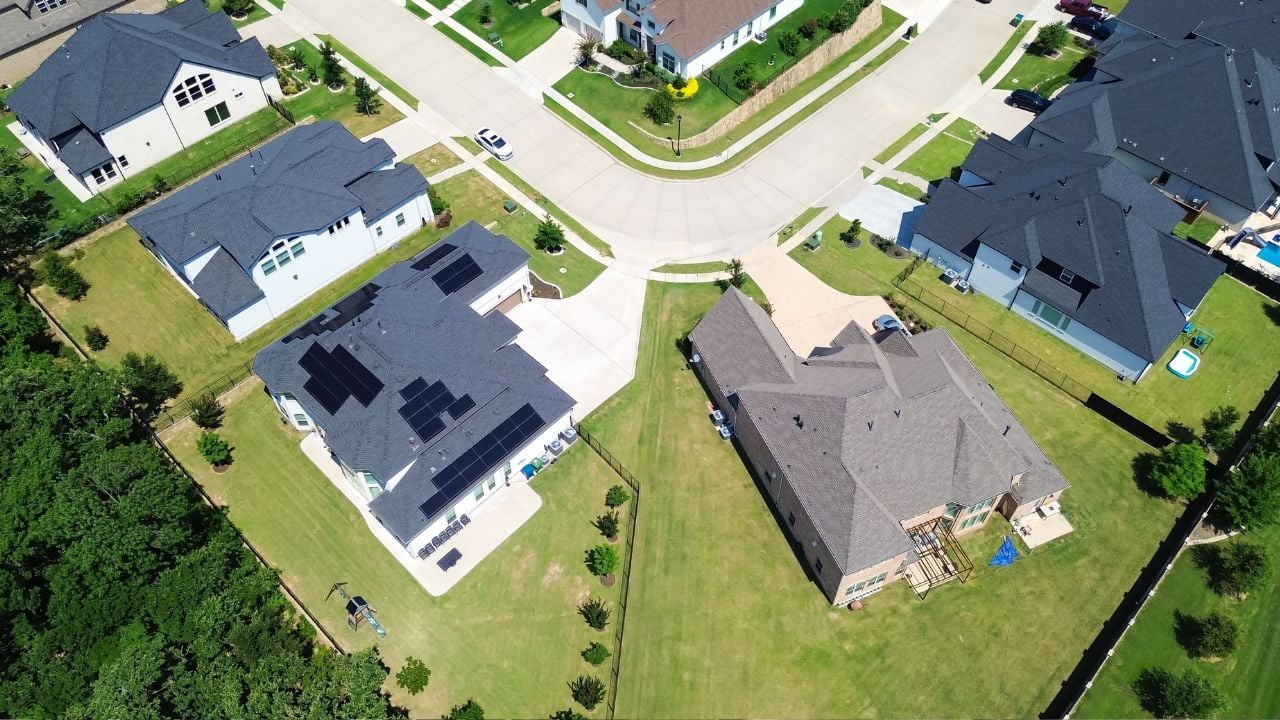
8 HOA Rules North Carolina Homeowners Are Shocked to Learn Are Legal

Your homeowners association in North Carolina can take your house without ever filing a lawsuit.
No judge weighs in.
No jury hears a word of it.
That single power lives inside a state law many Tar Heel homeowners never read until they need it, and it’s far from the only HOA surprise buried in there.
Note: This is general information, not legal advice. HOA rules and how they’re enforced vary by community and are subject to change, so confirm the specifics with your HOA or a North Carolina attorney.
1. Solar Panels Have Limits
North Carolina homeowners heard the news in 2022 and assumed their HOA lost all say over solar panels.
Not quite.
The state Supreme Court ruled that an architectural review committee can’t lean on vague, general authority to ban solar outright. The homeowners who won that case had already faced $50 a day in fines just for installing their own panels.
The board still gets a say, though.
State law still lets an HOA regulate where the panels go, as long as the rule doesn’t have the effect of blocking reasonable use of the system.
One exception stands out.
The board can ban panels anywhere visible from the street or a shared common area, including a roof surface that slopes toward that view, as long as another spot on the house still works.
2. Foreclosure Without a Lawsuit
Fall far enough behind on assessments in a North Carolina HOA, and the association doesn’t need to sue you to take your house.
State law lets it foreclose through what’s called a power of sale, the same nonjudicial process a mortgage lender uses.
Once the debt runs unpaid for 90 days or more, the board can vote to start proceedings without ever walking into a courtroom.
No lawsuit required.
A homeowner in Mecklenburg County can lose a house worth half a million dollars over a debt that started in the hundreds, all because a mailed notice sat unopened on a kitchen counter.
A 10-day window to outbid the sale is the last chance to keep it.
3. $100 a Day in Fines
A single HOA violation in North Carolina, an unapproved shed or a mailbox in the wrong color, tops out at a $100 fine by law.
That sounds manageable.
Let it drag on and the math changes fast. The association can charge $100 a day for every day beyond the first five after a violation hearing.
Two weeks of silence adds up to about a thousand dollars.
A homeowner does get a hearing first, in front of the board or an appointed panel, with a chance to explain the shed or the mailbox before the meter starts running.
Skip that hearing, and the fine can’t legally start.
4. Interest at 18% a Year
An association doesn’t wait to act on unpaid HOA dues in North Carolina.
State law lets an association charge interest of up to 18% a year on whatever a homeowner owes.
That’s a steep add-on for a bill that started small.
Add a late fee capped at the greater of $20 a month or 10% of what’s due, and a small balance from a Waxhaw or Apex subdivision compounds into a much bigger balance within a year.
It adds up fast.
Once a lien lands on the property, the association can also add its attorney fees and collection costs on top of the balance.
All of it rides on top of the original bill.
Psst! North Carolina HOAs hold more legal power than many homeowners realize. Flip each card below and see how many you already had right.
5. Political Signs on a Clock
North Carolina protects a homeowner’s right to plant a political sign on their own lot, so an outright ban never survives a challenge.
That protection has an expiration date, though.
An association can legally require the sign down more than 45 days before an election and within seven days after it.
Size limits apply, too.
Where the town has no sign ordinance of its own, state law defaults to one sign no bigger than 24 inches by 24 inches, a limit many Wake County homeowners never see coming until a board letter shows up in October.
6. Every Flag but Two
The same North Carolina law that protects political signs names exactly two flags by name, the American flag and the North Carolina flag, each covered up to four feet by six feet.
Nothing else makes that list.
A Carolina Panthers flag, a college pennant, a garden flag by the front steps, none of those carry that legal shield, so the board can order them down under its normal rules.
Homeowners who assume “flag” means any flag find out the hard way.
7. Banning Short-Term Rentals
Buy a place near the coast or the mountains hoping to run it as a weekend rental, and a North Carolina HOA can shut that plan down entirely.
Courts have upheld full bans on Airbnb-style stays when the restriction shows up in the original declaration recorded before an owner ever bought in.
Timing decides it.
Add that same ban years later against owners who already bought without it, though, and the outcome flips, since a new, sweeping restriction can be struck down as too big a change to ownership rights someone never agreed to.
Some associations settle for a softer version instead, requiring a 30-day minimum lease rather than banning short stays outright.
8. Approval for Your Paint
Repaint a house the exact same color it’s always been, and a North Carolina HOA can still make a homeowner ask first.
Architectural review committees hold broad authority over paint, roofing, additions, and fencing under many declarations, and the law backs that authority up.
Ask first.
Skip the request, and the same $100-a-day fines start stacking on top of the repaint job.
Nobody outside the community steps in to referee it, either.
The North Carolina Justice Department’s own guidance says no state agency oversees homeowners associations at all.
A homeowner in Fort Mill or Wilmington takes a denied paint request to a judge, or nowhere at all. Neither one leads to a state regulator.
8 North Carolina Mountain Towns Locals Love (and 3 Tourists Overrun)
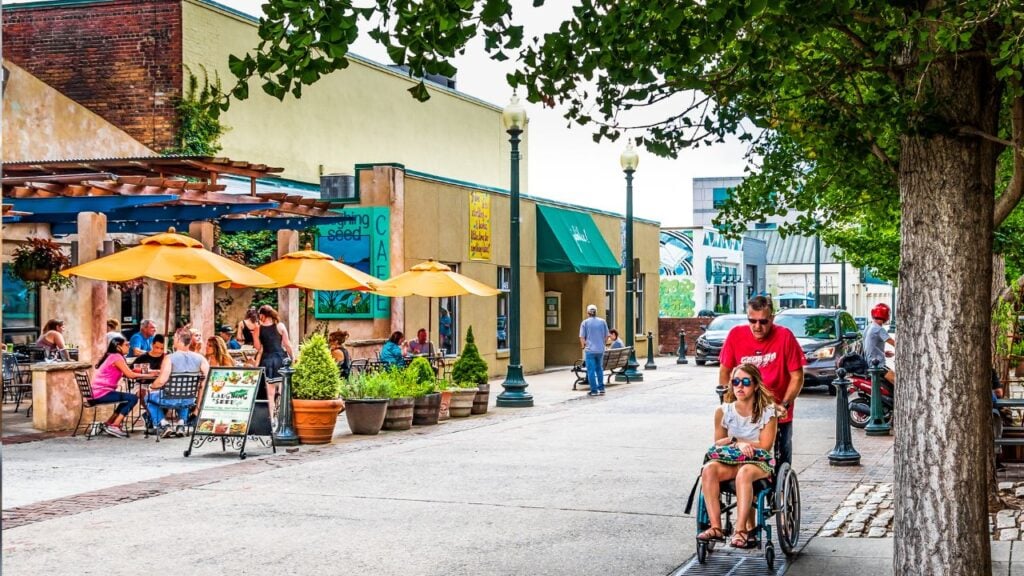
A line of out-of-state plates crawls toward the same overlook in the mountains, everyone chasing the same photo.
A few miles back, locals turn off onto a road those cars will never find, headed for one of the small towns that never makes anybody’s list.
8 North Carolina Mountain Towns Locals Love (and 3 Tourists Overrun)
8 Harris Teeter Perks North Carolina Shoppers Over 60 Shouldn’t Overlook

Harris Teeter got its start in Charlotte and still runs its headquarters in Matthews.
Many longtime North Carolina shoppers still miss some of the money-saving perks sitting right there at checkout.
8 Harris Teeter Perks North Carolina Shoppers Over 60 Shouldn’t Overlook
