
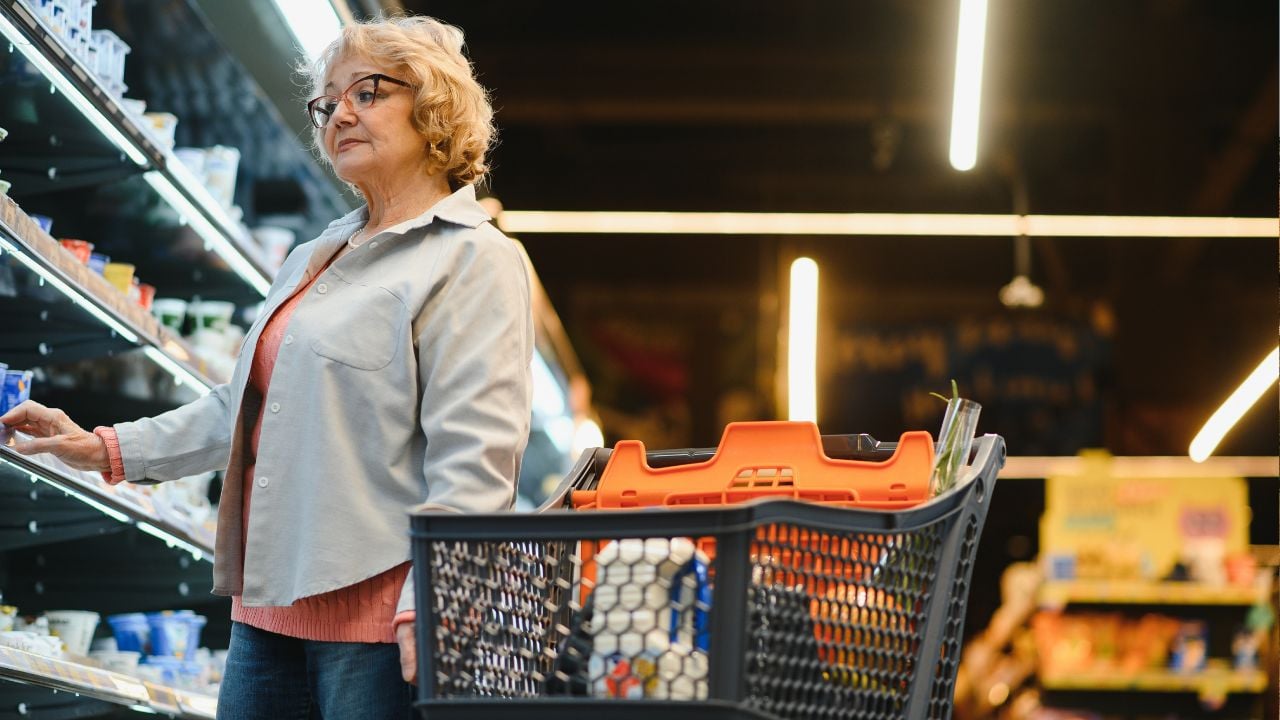
9 Things Virginians Miss About Grocery Stores in the ’80s and ’90s

Grocery shopping in Virginia used to mean a bag boy who carried your bags all the way to the car and a butcher who’d cut a steak exactly the way you asked for it.
Try finding either one now.
A wave of local chains vanished from Virginia in the ’80s and ’90s, bought out, renamed, or shut down for good.
These are the things about grocery stores in the ’80s and ’90s that Virginians still miss.
1. Farm Fresh’s Fried Chicken Counter
Farm Fresh, the Virginia Beach grocery chain, built a deli following of its own, anchored by a fried chicken recipe regulars built weeknight dinners around.
When new owners took over Farm Fresh’s last Richmond store in 2018, they made a point of promising customers the fried chicken wasn’t going anywhere.
Farm Fresh backed up that following with a full lineup many Virginia grocers didn’t match at the time.
Bakery, seafood, a sushi bar, and its own in-store pharmacy all fit under one roof.
The chain built its whole identity around one line, too: “Virginia’s Grocery Store.”
By the late 1980s, Farm Fresh stores stretched from Hampton Roads up toward Richmond and into smaller Virginia towns.
The map shrank fast.
Farm Fresh filed for bankruptcy in 1997.
Richfood Holdings, the company’s own biggest supplier, bought the chain in March 1998.
Supervalu bought Richfood a little over a year later, in August 1999.
Only three independently owned Farm Fresh stores still carry the name in Virginia today.
One store operates in Portsmouth, one in Newport News, and one in Richmond’s Tobacco Row.
2. Ukrop’s Sunday Closures
Ukrop’s locked every store in Richmond for the entire day, every Sunday, for as long as many shoppers could remember.
That never changed.
The Ukrops were devout Baptists, and they built the policy into the company from its first store in 1937.
Alcohol never touched the shelves either, a rule the chain kept even as national competitors leaned harder into wine and beer sales.
Twenty-five stores followed that same rulebook for more than seven decades, longer than many Virginia grocery chains lasted at all.
Why Ukrop’s Closed for Good
Ukrop’s, Richmond’s favorite grocery chain, didn’t close because shoppers stopped showing up.
The family announced on Dec. 17, 2009, that Giant-Carlisle, part of the Dutch company Ahold, would buy all 25 Ukrop’s stores for $140 million.
Every Ukrop’s store had switched over to the Martin’s name by spring 2010, though the Ukrop’s Bakery brand still shows up on shelves today.
3. Big Star’s Rooster Overhead
Every Big Star sign carried a rooster overhead, a mascot Colonial Stores adopted in 1947 and kept on storefronts, shopping bags, and delivery trucks for decades.
The banner traced back to two stores Norfolk’s Pender Grocery Company opened in 1937 and 1938.
By 1983, Colonial Stores had folded every one of its Virginia locations under the single Big Star banner, rooster and all.
Grand Union had already bought the whole Colonial Stores chain in 1978, years before many Virginia shoppers noticed a difference on the shelf.
The difference showed up in 1988, when Grand Union sold every Big Star store in Virginia and the Carolinas to Harris Teeter in one deal.
The rooster came down.
Shoppers who’d driven to the same Big Star for years found a different name painted over the door within months.
4. Giant Open Air’s Frozen Waterfall
Giant Open Air’s flagship store, at Ward’s Corner in Norfolk, built a 20-foot waterfall of ice over its seafood counter every single day.
That flagship opened on Little Creek Road in 1963, a decade after Giant Open Air’s first enclosed store went up on Campostella Road in 1953.
The Ward’s Corner store ran 24 hours a day, closing only for Christmas.
Shoppers walked in through an “air curtain,” not a door.
A blower pushed air down over a steel grate that recycled it and caught loose change all year long.
A sign over the entrance read “Finest Foods of the World.”
The shelves backed it up: Chocolate-covered ants, pickled eel, Russian caviar, and English teas many Virginia grocers never carried.
Banquet rooms upstairs held up to a thousand guests around a balcony with its own fountain.
None of it lasted.
Farm Fresh bought the whole Giant Open Air chain in 1986 and retired the name for good, folding 26 full-line grocery stores into its own banner.
The arch outlived the name: Farm Fresh added Giant Open Air’s giant arch to its own logo after the sale, and shoppers can still spot it today.
5. Pantry Pride’s No-Frills Prices
Pantry Pride ran its Virginia stores on a no-frills discount model, trading fancy fixtures and full-service counters for the lowest price on the shelf.
The format got its start in 1964 at a Best Markets store in New Jersey.
Food Fair rebranded its entire Tidewater and Richmond lineup to the Pantry Pride name by 1979.
Shoppers who wanted service counters and name-brand theatrics went to a fancier store nearby.
Shoppers who wanted the lowest total on the receipt went to Pantry Pride instead.
The name lasted seven years.
A&P bought roughly 20 Pantry Pride stores across the state in 1984, keeping the name on the doors for two more years before folding them into its own Super Fresh banner in 1986.
Psst! How much do you know about Virginia’s old grocery chains? Take our quiz and see how many you can get right.
Quiz
Virginia Grocery History Quiz
Answer these questions on Virginia’s old grocery chains and the history behind them. We bet you can’t get them all right. Prove us wrong?
Ukrop’s powered one of the country’s earliest supermarket loyalty cards through a joint venture with which national bank?
6. Giant Food's Extra Counters
Giant Food, the Landover, Maryland, chain that dominated Northern Virginia, spent the late 1980s and mid-1990s turning ordinary stores into one-stop errands.
New remodels added in-store banks, pharmacies, Chinese takeout kitchens, coffee shops, photo processing counters, and dry cleaning drop-off, all under one roof.
One trip covered everything.
A Northern Virginia shopper could cash a check, pick up a prescription, and grab dinner without leaving the building.
Many of those extras thinned out or disappeared once Giant Food shifted its focus elsewhere in the years that followed.
7. Be-Lo's Corner Markets
Be-Lo grew out of a trademark the Norfolk wholesaler Camelia Foods built for its Virginia retailers in the late 1950s, branded with a thrifty Scottish lady mascot nicknamed Bonnie Be-Lo.
The stores stayed small on purpose.
Be-Lo ran neighborhood markets in Virginia's inner cities and small towns, the kind of store within walking distance rather than a destination trip.
Thrift was the whole pitch.
Food Lion's expansion up the Eastern Shore in the 1990s pulled shoppers away, and the Be-Lo name gradually faded from Virginia's grocery landscape.
8. Safeway's One-of-a-Kind Store
One Safeway location broke from the ordinary mold entirely: A "Safeway International" store on Cary Street in Richmond, one of only a handful the chain built nationwide.
The upscale format built its shelves around imported cheeses and gourmet goods a standard Safeway never carried.
Shoppers kept calling that stretch of Cary Street "the International Shopping Center" long after the store itself had closed.
Safeway's ordinary stores told a different story across Hampton Roads.
Safeway ran grocery stores across the region for more than a decade before pulling out entirely in 1987.
Eleven stores emptied out.
Farm Fresh picked up many of the old Safeway locations directly, while others became part of Gene Walters' Marketplace, a new upscale chain launched that same era.
Shoppers who'd built their week around a familiar Safeway found a different name on the same building within months.
9. Gene Walters' Wine and Cheese Case
Gene Walters spent two decades working his way up in the grocery business, starting at Kroger before joining Farm Fresh in 1966 and eventually becoming its chief executive officer (CEO).
He left in 1987 to build a fancier grocery store of his own.
Gene Walters' Marketplace grew to 14 Virginia locations built around a wine and cheese case shoppers turned to for a dinner-party spread they couldn't put together at an ordinary grocery store nearby.
Regulars kept coming back.
Walters carried that reputation into the wider industry, too, serving a stretch as president of the National Grocers Association and a seat on the Food Marketing Institute board.
Richfood's Hometown Backbone
Richfood never operated a store shoppers could walk into, but the cooperative shaped which Virginia grocery stores survived the '80s and '90s at all.
Independent grocers organized the wholesale cooperative in the 1930s to keep small Virginia stores stocked and competitive against the national chains.
Strength in numbers kept those family-run stores on the shelf against bigger competitors for decades.
Richfood stopped operating as a not-for-profit around 1990, once new leadership pushed it toward becoming a public, for-profit company instead.
Without that cooperative, many of Virginia's small-town grocery stores in the '80s and '90s might never have kept their doors open at all.
9 Aldi Mistakes Virginia Shoppers Make Every Week
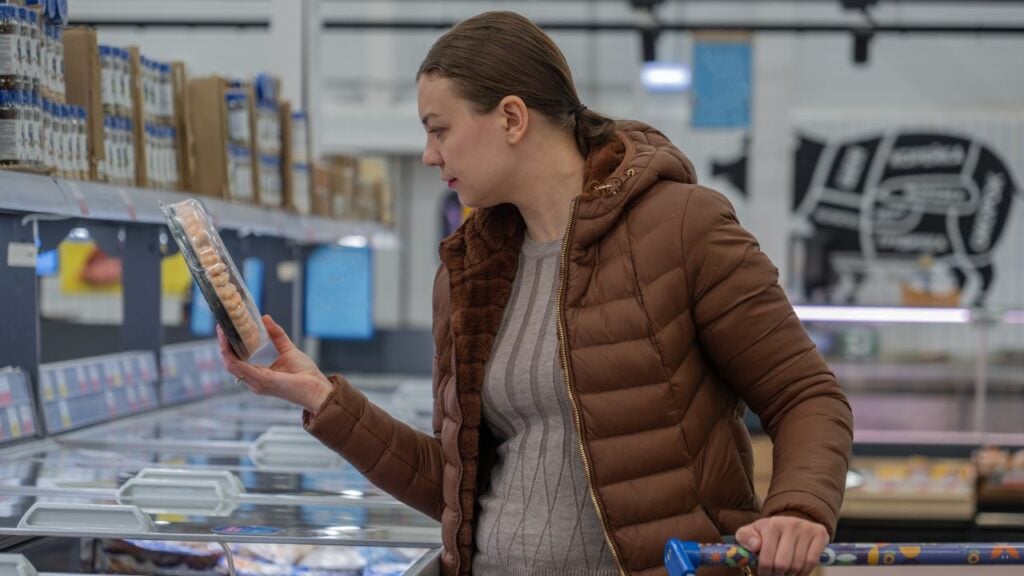
A shopper in a Woodbridge Aldi parking lot pulls up a coupon flyer she screenshotted from a Facebook post the night before.
The cashier has seen that same fake image a dozen times this month, and it's never once been real.
9 Aldi Mistakes Virginia Shoppers Make Every Week
12 Things Virginians Brag About That Confuse Everyone Else
Staunton trips up outsiders before they even finish saying it out loud, since locals pronounce it Stan-ten, not Stawn-ton.
These are the things Virginians brag about that leave transplants and tourists scratching their heads.
