
8 Thrift Store Finds South Carolina Bargain Hunters Should Never Pass Up

A thrift store rack has the potential to hold a pair of jeans that once sold at auction for more than $87,000, pulled decades earlier from an abandoned mine out west, of all places.
That’s an extreme case, not the norm.
But it’s proof that what’s on a thrift store shelf isn’t always worth what the sticker says.
Some of it is worth a great deal more.
Knowing which items are worth grabbing is what separates a South Carolina bargain hunter from a browser.
1. Sweetgrass Baskets
Sweetgrass baskets occasionally turn up in a South Carolina thrift store, mixed in with ordinary housewares by a clerk who has no idea what a hand-coiled basket is worth.
Gullah artisans along Mount Pleasant’s Highway 17 have coiled these baskets by hand for generations, a skill passed from mother to daughter since West African families brought the craft to the coast in the 1700s.
The work never stopped.
About 55 roadside stands still line that stretch of highway between Mount Pleasant and Georgetown, and the craft itself holds a place in the Smithsonian’s National Museum of African Art.
A genuine handmade basket sells for as little as $20 for a small handle basket and rises into the hundreds, sometimes thousands, for a large family piece.
That’s why a basket like that is worth grabbing off a thrift store shelf instead of walking past it.
Look at the coils before the price tag.
Tight, hand-bound coils held together with strips of palmetto frond mean it’s handmade, while loose, machine-stitched strands or a made-elsewhere tag mean a tourist knockoff.
2. Vintage Pyrex Bowls
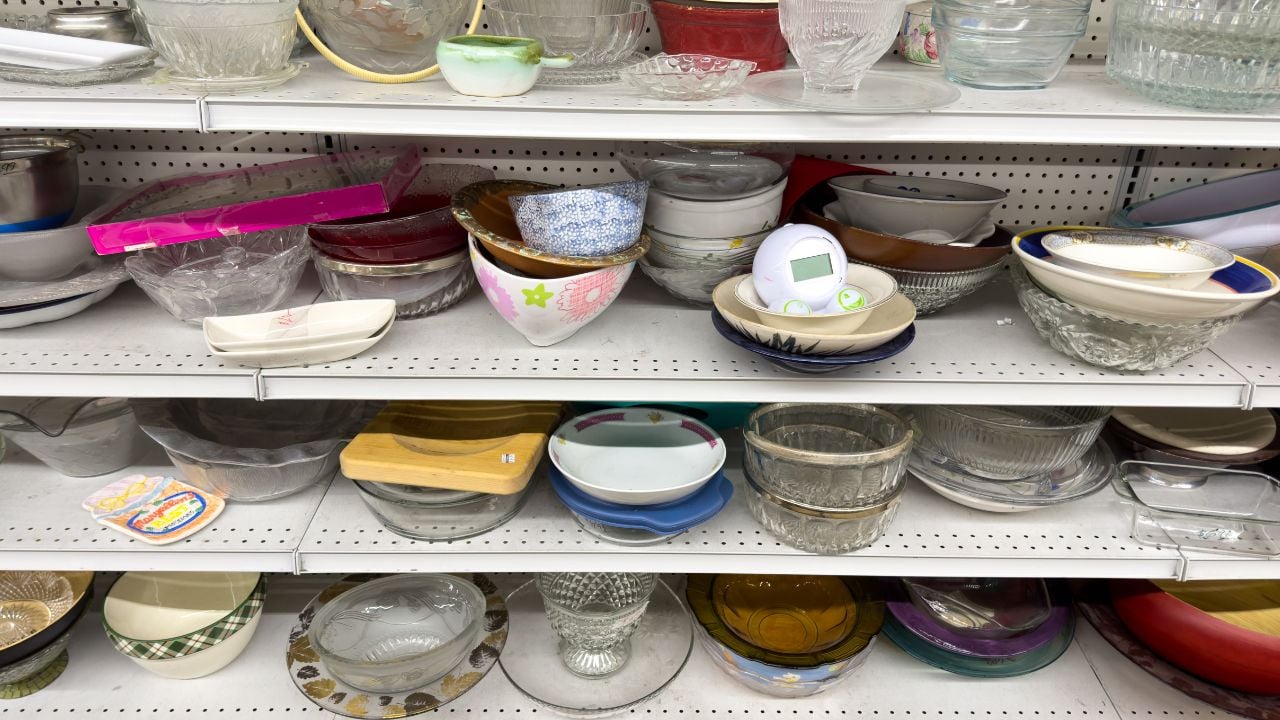
Vintage Pyrex mixing bowls sit on South Carolina thrift store shelves priced like ordinary kitchenware, and the giveaway is stamped right on the bottom.
A pattern name stamped or painted on the bottom is the tell, and many clerks never think to look for it.
Some of those patterns sell for serious money.
One rare “Butterprint” bowl, in a size Pyrex never officially produced, sold for $2,100 on eBay, and a “Lucky in Love” bowl from a 1959 test run brought over $4,000 the same way.
Not bad for a bowl.
Common patterns like classic pink or turquoise diamonds still sell too, just for less, so even an ordinary find is worth flipping over before it goes back on the shelf.
Antique or Just Vintage?
A South Carolina thrift store tag calling something an “antique” is often wrong.
Federal customs rules require an antique to be at least 100 years old, filed under Harmonized Tariff Schedule heading 9706.00.00, which in 2026 means made in 1926 or earlier.
Many of the finds on this list count as vintage instead.
A 1960s Pyrex bowl or a 1980s letterman jacket both fall into the common vintage range of 20 to 99 years old.
That distinction doesn’t change what something is worth. It only decides which shelf a dealer puts it on.
3. Griswold Cast Iron
Griswold and Wagner cast iron skillets turn up constantly in South Carolina thrift stores, usually rusted and priced like something bound for the scrap pile.
That price tag is almost never right.
A name stamped on the bottom, especially alongside the older “Erie” branding, separates a five-dollar skillet from a serious collector’s piece.
Collectors say Griswold’s own superstition around the number 13 led the company to cast fewer pans in that size, and rare #13 and #20 skillets have resold for more than $5,000.
Bad luck paid off.
An older pan with a raised heat ring on the bottom, a leftover design for wood and coal stoves, usually predates the electric-stove era and helps date it further.
Flip it over before deciding it’s junk.
Rust and grime don’t disqualify it, since a soak, a scrub, and a fresh coat of oil bring old cast iron back to life.
4. Sterling Silver Flatware
Sterling silver flatware sits in South Carolina thrift store bins priced like stainless steel because many staff never check for a hallmark.
Turn a fork over and look near the handle.
“Sterling” or “925” stamped there confirms solid sterling, while electroplated nickel silver (EPNS) markings, or a maker’s name with no purity mark, usually mean silverplate instead.
Weight tells the story too.
A genuine sterling dinner fork typically runs 40 to 70 grams and feels noticeably heavier than a plated fork, though a fork from a heavier “grand” pattern can weigh more.
The melt value alone adds up fast: Multiply the weight in grams by 0.925, then by the day’s silver spot price, and a full setting for twelve can carry serious money in raw metal before any collector premium.
Patterns from makers like Gorham or Reed & Barton push individual pieces well past that baseline for the right collector.
Psst! How much do you know about thrift, vintage, and flea market history? Take our quiz and see how many you can get right.
Quiz
South Carolina Vintage IQ
Answer these questions on thrift, vintage, and flea market history. We bet you can’t get them all right. Prove us wrong?
eBay wasn’t always called eBay. When founder Pierre Omidyar launched the site in 1995, what was it originally named?
5. Vintage Levi's Denim
Vintage Levi's jackets and jeans pass through South Carolina thrift racks all the time, folded in with regular clothes for a few dollars apiece.
The tab on the back pocket gives it away first.
A capital "LEVI'S," known among collectors as the Big E, marks anything made before 1971, and a thin red thread woven into the seam, the redline selvedge, confirms it.
A pair of 1880s Levi's pulled from an abandoned Nevada mine sold for more than $87,000 at auction in 2022, still wearable after more than a century underground.
That's an extreme case.
A far more ordinary Big E jacket, or a pair with hidden rivets and a single-stitch inseam, still earns solid money from denim collectors hunting exactly that kind of find.
6. Vinyl Records
Vinyl records fill thrift store crates across South Carolina, usually priced at a dollar or two no matter what's stamped in the wax.
U.S. vinyl sales crossed $1 billion in 2025 for the first time this century, the 19th straight year of growth for the format.
That renewed demand pushes up what an original pressing can bring, not just what a new release still in shrink wrap costs.
South Carolina has skin in that game too. Ernest Evans, the Georgetown County singer known as Chubby Checker, turned his 1960 cover of "The Twist" into what became the best-selling single of its era, and an original 45 of it now resells anywhere from $20 to more than $150 depending on the pressing.
Local roots pay off.
Check the label before the price sticker.
An original pressing on the first label a song was released under generally outsells a later reissue, so a worn sleeve isn't a reason to put a record back.
7. Military Memorabilia
Military memorabilia surfaces constantly in South Carolina thrift stores and estate sales, priced like random junk instead of documented service history.
That's not a coincidence.
Fort Jackson outside Columbia trains roughly half of every soldier who enters the Army, and Marine Corps Recruit Depot Parris Island in Beaufort trains about 20,000 recruits a year, every female Marine recruit among them.
Decades of that gear move through South Carolina's secondhand market once families clear out a house.
A named, documented piece is what separates a bin filler from a find worth claiming.
A 1942 named World War II Army officer's uniform recently sold at auction for $120, while an unmarked Ike jacket from the same era brought closer to $50, proof that a name and paperwork can double a price on their own.
A unit patch tied to an actual campaign, or a ribbon rack that matches a documented service record, draws even more from serious collectors.
Handle it like the history it is.
8. Letterman Jackets
Letterman jackets pop up in South Carolina thrift stores every football season, tagged at a price that has nothing to do with what they're worth.
Most start around $150 in resale value, and individual chenille letter patches, a look that's been standard since the 1930s, sell for about $10 apiece on their own.
That's before factoring in a rivalry.
A jacket from a South Carolina high school program, or one carrying a Gamecocks or Clemson Tigers letter from decades before that in-state rivalry had its own nickname, draws even more interest from collectors chasing the state's football history.
Wool and leather hold up.
A working zipper and intact snaps matter more than a little wear, since many buyers plan to wear the jacket, not frame it.
Even a jacket with someone else's name stitched inside sells, mostly to buyers who like owning a stranger's forgotten high school glory.
8 Food Lion Deli and Bakery Buys South Carolina Shoppers Grab Every Week
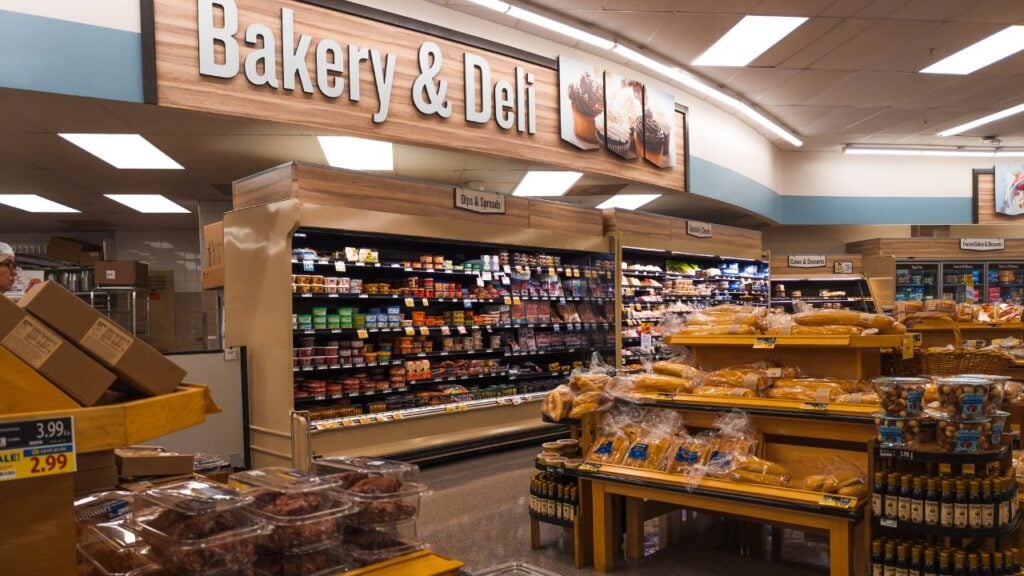
Food Lion opened two brand-new South Carolina stores this year, both with a self-service wing and hot favorites bar built in from day one.
These are the deli and bakery buys shoppers load into their carts week after week, no thrifting required.
8 Food Lion Deli and Bakery Buys South Carolina Shoppers Grab Every Week
12 Things South Carolinians Are Tired of Explaining to Outsiders
A South Carolina fan wears an orange sweater to a family dinner without thinking twice, while a cousin dressed head to toe in garnet stops speaking to her until the next Palmetto Bowl.
Nobody at that table finds it strange.
12 Things South Carolinians Are Tired of Explaining to Outsiders
