
8 Unwritten New York City Subway Rules Tourists Break Every Day

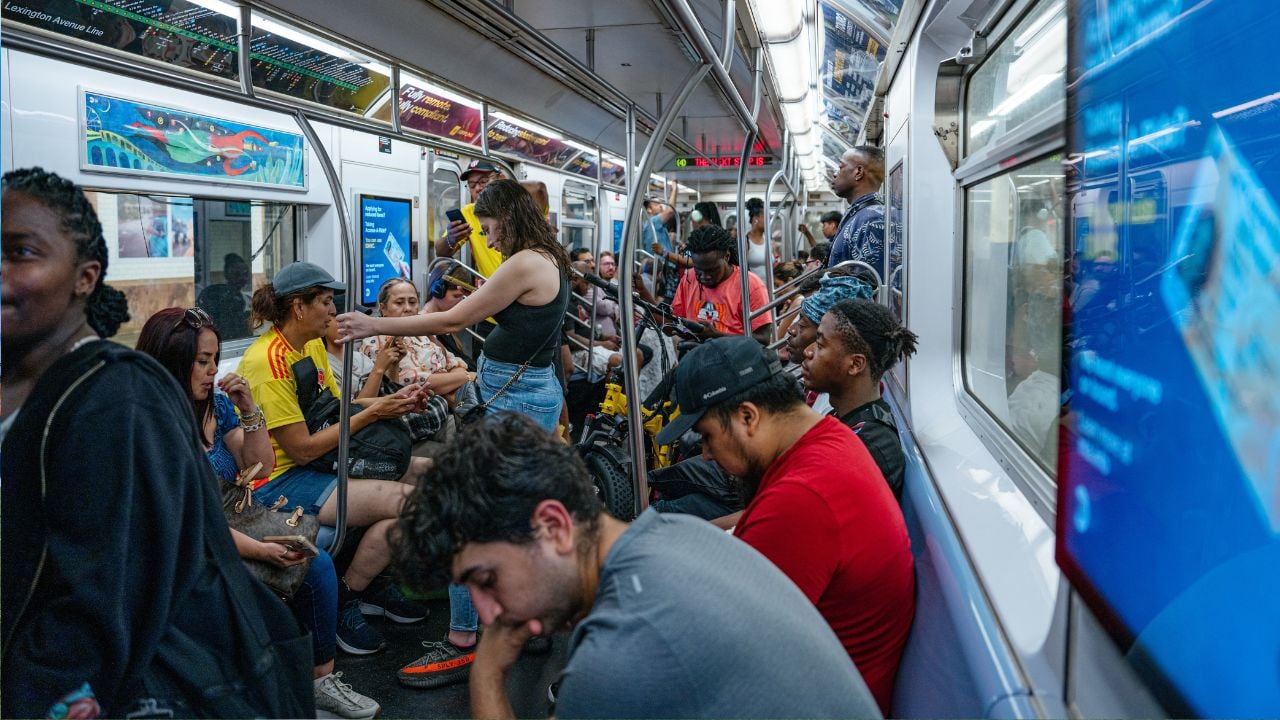
Six riders step off a downtown 4 train at Grand Central, and six more slide into the same doorway before the chime even finishes.
Nobody bumps shoulders.
Nobody says a word.
New York City’s subway runs on unwritten habits like that one, and tourists break them constantly.
1. Skipping the Lone Empty Car
A packed New York City subway train pulls into the station with one car sitting nearly empty in the middle of it, an odd gap in an otherwise full train.
An empty car on a jammed train almost always means something’s off with it: A broken air conditioner in July, a mess nobody’s cleaned up yet, or a rider having a loud, rough night.
No conductor announces any of this over the speaker.
New Yorkers just read the crowd and keep walking, already choosing a car further down the platform.
Tourists see the open space and climb in.
Bad move.
A tourist who skips that read gets the whole car to themselves.
They find out why within a few stops.
2. Giving Showtime Its Circle
“Showtime” dancers turn a New York City subway car into a stage mid-ride, center pole included.
Regular riders feel the shift before the music even starts.
They back toward the doors and clear the floor.
Tourists do the opposite.
They crowd in close with a phone held up, camera first, right in the performer’s landing zone.
That’s the exact spot a Showtime dancer needs for a flip or a pole trick.
These performers now take tips through Zelle or Cash App since cash barely moves through the system anymore, so a tourist doesn’t even need loose bills to show a little respect.
Just room.
3. Matching Your Car to the Exit Stair Code
New York City’s subway trains run eight to eleven cars long.
A rider who boards the wrong one can walk the length of a city block underground just to reach the stairs.
Regular commuters solve that before the train even arrives.
They stand on the platform spot that lines up with the staircase they need at the far end of their ride, using the small code stamped into that step to keep the two stations straight in their head.
Tourists board wherever they happen to be standing when the doors open.
That’s how one staircase ends up jammed with people walking the wrong way through the car while three others sit wide open a few yards down the platform.
It never fails.
New Yorkers who ride the same station every week memorize their code once and never think about it again.
What Those Letters on the Subway Stairs Mean
New York City’s subway marks every staircase with a short code that starts with M, S, or P.
M stands for mezzanine, S stands for street, and P stands for platform.
The number after the letter identifies that exact staircase inside the station.
MTA workers use the codes to give each other directions underground.
A rider can borrow the trick to remember which staircase leads to the door they want.
4. Boarding for Your Transfer, Not Your Entrance
A tourist boards New York City’s subway at whatever door sits nearest the turnstile they just walked through, with no thought for where the train will leave them.
Many tourists do exactly that.
Then they shove across a packed car at the last second, fighting a crowd that already knows where it’s going.
Regulars think one stop ahead, planning where they’ll get off before they even step on.
On the L train, for example, regulars headed for the A, C, or E know to ride in the very last car, since that’s the one that lands closest to the transfer staircase at 14th Street.
That one-car difference is the gap between stepping off the transfer stairs and elbowing thirty feet of car to reach them.
5. Claiming a Second Lane in a Stairway Crush
Stairway traffic in New York City’s subway usually runs on one simple pattern: Stay right, whichever direction you’re headed.
That pattern breaks the moment two packed trains unload onto the same platform at once.
When that crush hits, riders headed up will take over a second lane on the left, squeezing everyone coming down into a single narrow strip.
The MTA itself confirmed the move is real, admitting it has posted stay-right signage at just one station in the entire system.
Tourists hold their single-file line even as the crowd around them has already claimed the extra lane on the left.
Their line doesn’t move.
The crowd’s workaround keeps moving regardless.
That standoff is how a five-second stair climb turns into a two-minute one.
Psst! How much do you know about New York City’s subway history? Take our quiz and see if you can ace it.
Quiz
NYC Subway History IQ
Answer these questions on subway firsts, records, and hidden corners. We bet you can’t get them all right. Prove us wrong?
What year did the New York City subway open to riders?
6. Keeping the Suitcase Close, Not Blocking the Aisle
New York City's subway feeds directly off two airport rail links: The AirTrain meets the A train at Howard Beach and the E, J, and Z trains at Jamaica, dumping airport arrivals straight onto the system with their bags.
A New Yorker who travels with luggage keeps the bag tucked between their feet or braced against a pole, wheels in, handle down, out of the aisle.
A tourist fresh off a flight sets the suitcase down wherever there's room and lets it sit.
It rolls with every stop and start.
Riders trying to pass end up stepping over a wheel or squeezing past a suitcase parked in the one gap wide enough to walk through.
The aisle stays blocked.
7. Tapping and Stepping, Not Camping at the Turnstile
Tap-to-pay now handles almost every ride on New York City's subway, with more than 90% of trips paid through OMNY, the system's tap-and-go payment method, instead of a swiped card.
Regular riders have a phone or card out before they're even close to the reader.
They tap and step to the side without breaking stride.
Tourists reach the turnstile still digging through a bag.
They tap, then stop dead a foot past it to put everything away.
The line behind them backs up in seconds.
Big holdup.
8. Leaving Room on the Bench
New York City's subway benches seat three riders across with no armrests marking anyone's space.
Regular riders slide toward the window the moment they sit down, leaving the far end open for whoever boards next.
Tourists sit at the end and stay put.
Nobody moves.
That leaves an orphan middle seat nobody wants to claim between two strangers.
One rider on the N train even made the local news in a widely circulated 2015 clip after refusing to slide over for a standing passenger.
A third rider ends up standing over a seat that was free the entire time.
Riding a System at Record Crowds
Record crowds hit New York City's subway in 2025, a stretch of record ridership that topped 4.65 million riders on a single December day, the busiest the system had been since before the pandemic.
Crowding like that changes the math on every platform and every staircase.
Every second counts.
The MTA added rush-hour service on the M line starting December 8, 2025, one of several moves the agency made that year to keep pace with the crowding.
The subway broke its own single-day ridership record several times over the course of 2025, each one edging past the mark set just weeks before.
9 Things New Yorkers Do Without Realizing It's Not Normal Anywhere Else
A New Yorker drives two states over for the weekend, and the gas station cashier already knows they're not from around there.
These are the everyday habits that give a New Yorker away before they ever say a word.
9 Things New Yorkers Do Without Realizing It's Not Normal Anywhere Else
8 New York Laws From the 1800s That Are Somehow Still on the Books

Guess which one is real: A local permit required before pro sports teams can play on a Sunday, or a citywide ban on humming in an elevator?
New York's old law books are full of rules nobody ever repealed, and some of them are still technically on the books today.
8 New York Laws From the 1800s That Are Somehow Still on the Books
