
5 Things That Cost Less in California Than People Expect

Think a move to California means paying more for absolutely everything?
A short list of California costs breaks that stereotype, and even longtime residents get the numbers wrong.
These are the things that come in lower than California’s reputation suggests.
Note: This is general information, not financial, tax, or legal advice. Insurance rates, tax rules, and program details are subject to change.
1. Homeowners Insurance
California’s home insurance bill runs $1,413 a year on average, while homeowners nationwide pay $2,395, according to LendingTree’s 2026 State of Home Insurance report.
That’s 41% lower.
Wildfire risk pushed California’s rates up 53.7% since 2020, and several insurers pulled back from parts of the state after the January 2025 Los Angeles fires.
Even so, California’s base premium sits well under what many other states pay, largely because state regulators require insurers to publicly justify a rate increase before it takes effect.
Lower base, higher scrutiny.
2. Property Tax Rate
California’s effective property tax rate is 0.70% of a home’s value, according to the Tax Foundation, well under the roughly 1% national average.
New Jersey homeowners pay the highest effective property tax rate in the country, 1.88%, more than double California’s rate.
Illinois homeowners pay that same 1.88% rate.
Connecticut homeowners pay 1.54%, still well over double California’s.
California’s rate stays low because of Proposition 13, the 1978 law that caps the base tax at 1% of assessed value and limits how fast that value can rise after a home sells.
Not automatic.
A home’s tax bill only resets to full market value when it changes hands or gets rebuilt, so many longtime owners pay tax on a value far below what their home is worth today.
The Math Behind Prop 13
Proposition 13 caps a California home’s assessed value increase at 2% a year, according to the Santa Clara County Assessor’s Office, regardless of what the home is worth on the open market.
Picture a home bought for $400,000 back in 2010.
By 2026, its assessed value has grown to roughly $549,000 under that 2% cap.
The county taxes a nearly identical home next door, sold this year for $900,000, on the full $900,000.
Same street, same square footage, two very different tax bills.
3. Community College Tuition
California community colleges charge $46 a unit, a rate that hasn’t moved since 2012, according to the state’s nonpartisan Legislative Analyst’s Office.
A full-time student carrying a full course load pays about $1,380 a year.
Community college nationally runs closer to $5,300 a year, roughly four times the California rate, the same office reports.
Four times.
California kept its fee flat for over a decade while tuition rose elsewhere, and the state still posts the lowest community college cost in the nation.
Psst! How do six California costs compare with the rest of the country? Sort the table below by any column and see for yourself.
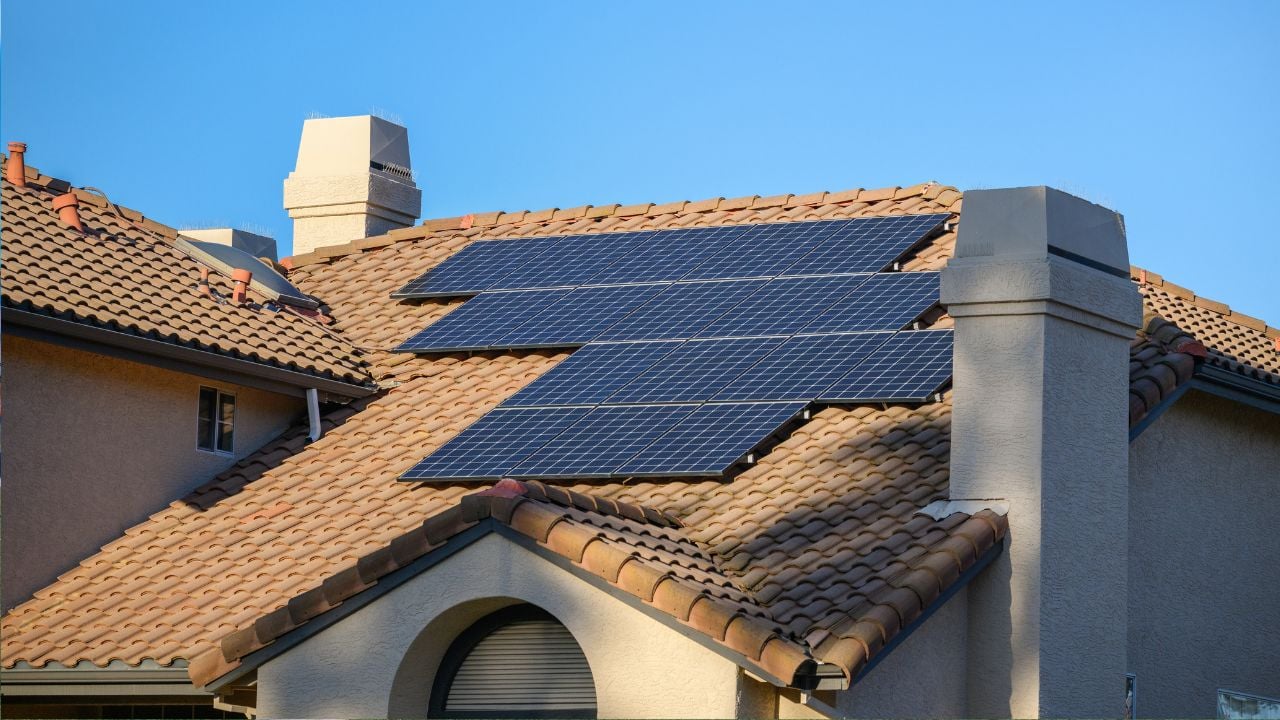
4. Solar Panel Installation
California’s sky-high electricity rates flip the math on solar panel installation.
California’s electricity rates already rank among the highest in the country, pushing installers to compete hard for business.
The competition keeps the price per watt close to the national rate, even as each panel offsets a much bigger bill.
A California solar installation runs $2.45 per watt before incentives, according to EnergySage marketplace data, just under the $2.60 national average.
That runs against everything Californians hear about their own electric bills.
A typical California homeowner breaks even on a system in about 4.3 years, according to EnergySage.
Just over four years.
The panels then produce free electricity for decades.
The payoff compounds from there: The average California homeowner nets $131,966 over a system’s 25-year life, more than double the $60,500 the average American homeowner saves nationwide, according to EnergySage.
5. Security Deposits
California landlords can charge no more than one month’s rent as a security deposit, under a state law that took effect in July 2024.
The cap covers the majority of rentals in the state.
Before that, the limit ran two months for an unfurnished place and three months for a furnished one.
Many other states set no ceiling at all.
Not California.
Texas, for example, sets no cap at all on what a landlord can charge up front.
So a renter moving into a California apartment can hand over less cash at signing than a renter doing the same thing in a state with a cheaper reputation.
Small landlords who own four units or fewer can still ask for two months’ rent, so the cap isn’t universal.
Where California Still Costs More
California doesn’t win every category.
The state’s own electricity bill makes the case.
The average California household now pays 39 cents per kilowatt-hour, according to EnergySage, nearly double the 21-cent national average.
Only Hawaii charges more.
The Fine Print on Free Tuition
California’s Middle Class Scholarship can cover some or all of a student’s tuition at a University of California or California State University campus, on top of the community college savings above.
Families earning up to $250,000 a year can qualify for the 2026-27 school year, according to the California Student Aid Commission.
That’s not a typo.
The award amount depends on a student’s financial need and any other aid already in hand.
It doesn’t erase every family’s bill.
But it stretches well past what many other states offer a middle-income household.
Sticker price and actual price aren’t the same number in California.
8 WinCo Mistakes That Cost Californians Money Every Week

Rice, rolled oats, and gummy bears sit in open bins at a Clovis WinCo, sold by the pound instead of packed in a brand-name box.
Californians love that aisle, and they still hand over money at checkout they didn’t need to spend.
8 WinCo Mistakes That Cost Californians Money Every Week
20 Phrases Californians Say Without Realizing Nobody Else Does

A Californian moves to Ohio, mentions a Sig alert on the drive in, and watches new coworkers stare back blankly.
They’ve said it their whole life without knowing it isn’t universal English.
20 Phrases Californians Say Without Realizing Nobody Else Does
