
20 Phrases Californians Say Without Realizing Nobody Else Does

A Californian in Ohio tells new coworkers that there was a Sig alert on the way in.
Everyone stares.
Nobody has any idea what it means, and the Californian has said it their entire life without knowing it isn’t universal English.
These are the phrases Californians repeat their whole lives without knowing nobody else says them.
1. The Freeway “The”
Californians don’t say “I-5” or “Highway 101” out loud.
They say the 5, the 101, and the 405, always with the little word most other states skip entirely.
The habit goes back to the old named parkways Southern California drove before route numbers existed, and the state didn’t simplify its highways into single numbers until 1964.
Drivers kept the “the” anyway.
Nobody else does.
Ask a Nevada or Arizona transplant for directions to “the 90,” and they’ll just look confused.
2. Calling It a Sig Alert
Southern Californians hear a traffic report call something a Sig alert, and they know exactly what that means without a second thought.
It signals a major freeway blocked for 30 minutes or more.
The term dates back to 1955, when a Los Angeles radio engineer named Loyd Sigmon built a device that let police dispatchers beam traffic updates straight to radio stations.
Stations started calling his updates “Sigmon alerts.”
Not a stutter.
Say “Sig alert” outside Southern California, though, and most people hear it as a typo before they hear it as a warning.
3. The Grapevine
Californians heading between the Central Valley and Los Angeles casually mention “the Grapevine” like everyone knows the road.
They mean the steep 40-mile grade where Interstate 5 climbs over the Tehachapi Mountains at Tejon Pass.
Spanish explorers named the canyon for the wild grapevines growing through it centuries before pavement.
No grapes anymore.
Just semi trucks, snow closures some winters, and a name that means nothing to anyone who has never driven it.
4. The Stack
Angelenos will tell a friend to meet them “past the stack” and expect that to mean something.
It refers to downtown Los Angeles’ four-level interchange, the tangle of freeways that opened in 1953 as the first directional interchange built anywhere in the world.
Thirty-two lanes stack on four separate levels so drivers can switch freeways without ever crossing another lane.
Engineers everywhere copied the design.
Almost nobody outside the region calls their own version “the stack” the way Los Angeles does.
5. Introducing Yourself by Area Code
Southern Californians will describe where they grew up with three numbers instead of a city name.
“I’m from the 626” places someone in the San Gabriel Valley, “the 909” marks the Inland Empire, and “the 818” claims the San Fernando Valley.
The 626 has its own night market named after it.
Three digits, one identity.
Outside California, an area code is just a phone number, nothing anyone would ever brag about.
6. May Gray and June Gloom
Coastal Californians shrug off overcast mornings by calling them May Gray or June Gloom without a second thought.
Both describe the thick marine layer that rolls in overnight and usually burns off by late morning.
The pattern has picked up copycat nicknames too, including “Junuary” and No-Sky July.
Then the sun wins.
Explain “June Gloom” to a friend from a landlocked state, and they’ll picture a mood, not a weather pattern.
7. Earthquake Weather
Californians who feel a stretch of hot, still air will sometimes call it “earthquake weather” without thinking twice.
The idea traces back to ancient Greek theories about trapped underground air, and it never held up.
Geologists have found an equal chance of a quake striking in any weather, hot, cold, or rainy.
Science says otherwise.
People just remember the quakes that happened to match, and the phrase stuck around anyway.
8. Tule Fog
Central Valley residents warn each other about “tule fog” every winter like it needs no explanation.
The dense ground fog takes its name from the tule marshes that once covered the valley floor.
It settles in after the first fall rains and can trap whole highways in near-zero visibility for days.
Named for a reed.
Drivers from the coast or from out of state hear “tule fog” and just assume it’s a place, not a weather event.
9. The Delta Breeze
Sacramento Valley residents count on “the Delta breeze” to save their evenings every summer.
Cool air pulls in off the Sacramento-San Joaquin Delta once the valley heats up enough to draw it, dropping temperatures by 10 degrees or more by evening.
Nature’s air conditioning.
Mention it to someone from a state without a delta nearby, and they’ll ask what a Delta breeze even is.
10. King Tides
Coastal Californians plan around “king tides” every winter without treating the term as anything special.
The name describes the year’s highest tides, running 1-2 feet above a normal high tide when the sun, moon, and Earth line up just right.
Not a storm.
They usually roll in around late December or early January, flooding parking lots and piers that stay dry the rest of the year.
Someone from an inland state hears “king tide” and pictures royalty before they picture the ocean.
Psst! How much do you know about California outside its freeways and fog? Take our quiz and see if you can ace it.
Quiz
California Trivia IQ
Answer these questions on California firsts, records, and state symbols. We bet you can’t get them all right. Prove us wrong?
What does California’s official state motto, “Eureka,” mean?
11. NorCal Versus SoCal
Californians introduce themselves as "NorCal" or "SoCal" like the state comes with a marked line down the middle.
It doesn't.
There's no official boundary anywhere in state law, so residents argue over whether it runs through the Tehachapi Mountains, along Kern County, or somewhere near Fresno.
Nobody agrees where.
An outsider assumes the split shows up on a map somewhere, and it just doesn't exist.
12. Going Hella Far
Bay Area natives drop "hella" into sentences the way other states use "very" or "super."
Linguists trace the word to 1970s Oakland, likely a clipped version of "a hell of a lot."
Not a typo.
It's a real, documented regional word, and it took decades to spread past the East Bay into the rest of the country's slang.
Say it in the Midwest, and people still ask if you meant to say "a whole lot."
13. Ordering Protein Style
Regulars at In-N-Out order their burger "protein style" without pausing to explain what that means.
It swaps the bun for lettuce, wrapped around the patty like a sandwich instead.
No bun, no problem.
First-time visitors from states without an In-N-Out hear "protein style" or "animal style" and assume they're ordering off a secret menu because for years, they basically were.
14. Two Buck Chuck
Trader Joe's shoppers still ask for "Two Buck Chuck" long after the price stopped matching the name.
The nickname started in 2002, when Charles Shaw wine hit shelves at $1.99 a bottle, a surplus deal a Napa winemaker struck with the chain's founder.
Inflation caught up.
The bottle costs more now, but Californians never renamed it, and a shopper from another state has no idea what a "Chuck" even is.
15. Building a Granny Flat
Homeowners casually mention "building a granny flat" the way people elsewhere mention a garage remodel.
They mean an accessory dwelling unit (ADU), a small self-contained home built on the same lot as the main house.
Grandma optional.
Recent state law made these units far easier to permit, so the term has spread through neighborhoods where no grandmother ever plans to move in.
Say "granny flat" in a state without the same housing pressure, and most people just picture an actual grandmother.
16. Toilet to Tap
Water agencies and regular Californians alike call recycled drinking water "toilet to tap," half joking and half serious.
Orange County has run a purification system feeding underground drinking supplies since 2008, treating wastewater until it's cleaner than most bottled water.
Cleaner than it sounds.
Bring up "toilet to tap" outside a drought state, and people assume someone's exaggerating for effect.
17. Clearing Defensible Space
Homeowners near wildland talk about "clearing defensible space" every spring like it's an ordinary chore.
State law requires a cleared buffer of dry brush and dead plants stretching 100 feet around a home in fire-prone areas.
A hundred feet of clearing.
Someone from a state without wildfire risk hears "defensible space" and pictures a moat, not a mowed yard.
18. A Flex Alert Day
Californians check the news for a "Flex Alert" the same way other states check for a snow day.
The state's grid operator issues the alert during peak hours on the hottest summer days, asking residents to ease off air conditioning and appliances so the power stays on for everyone.
The grid asks nicely.
Mention a "Flex Alert" to a friend in a state with a less strained grid, and they'll assume it's some kind of workout app.
19. Getting PSPS'd
Californians in fire country describe losing power to high winds as "getting PSPS'd."
A Public Safety Power Shutoff (PSPS) is a utility company's deliberate move to cut power lines during dangerous wind, aimed at keeping a live wire from sparking a wildfire.
The power just stops.
An outage can run seven days in the worst cases, and residents pack a cooler and charge every device the moment the forecast turns windy.
Nobody outside the fire-prone West has ever had to plan a week around one utility's verb.
20. A Spare the Air Day
Bay Area residents check whether it's a "Spare the Air" day before they light a fireplace or mow the lawn.
The regional air district has called these alerts since 1991, warning residents when smog or wood smoke is set to build up to unhealthy levels.
Burning wood on a winter Spare the Air day can draw an actual fine, so neighbors keep an eye on each other's chimneys more than they'd ever admit.
Anyone visiting from a state without an air district issuing daily alerts just hears two ordinary words and no warning at all.
9 Unwritten Freeway Rules Californians Follow Without Thinking
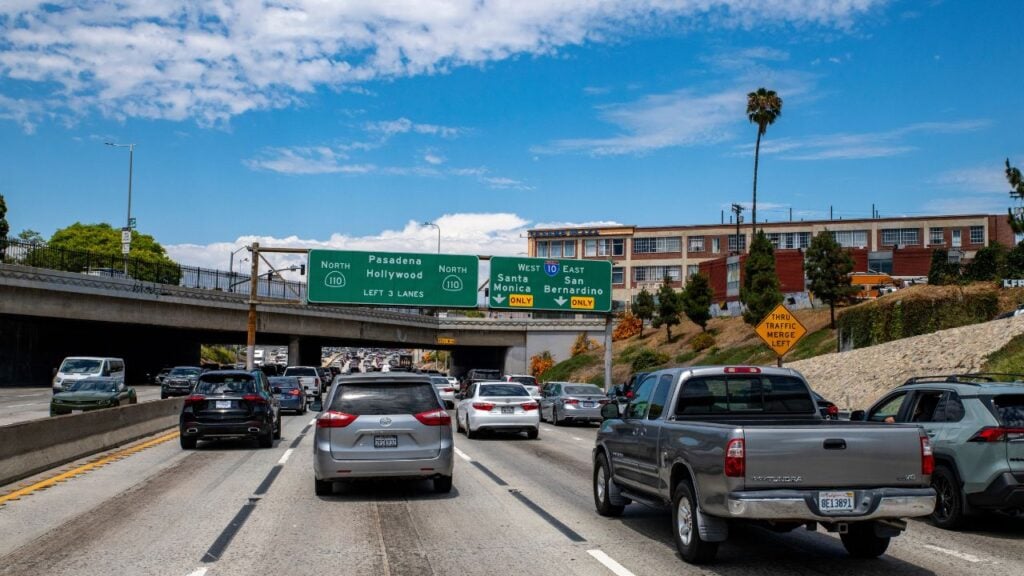
Anybody can memorize the freeway names in this list.
Driving the roads like a local takes a whole different set of habits, the kind no examiner tests and no sign ever explains.
9 Unwritten Freeway Rules Californians Follow Without Thinking
12 California Grocery Staples From the '70s That Disappeared for Good
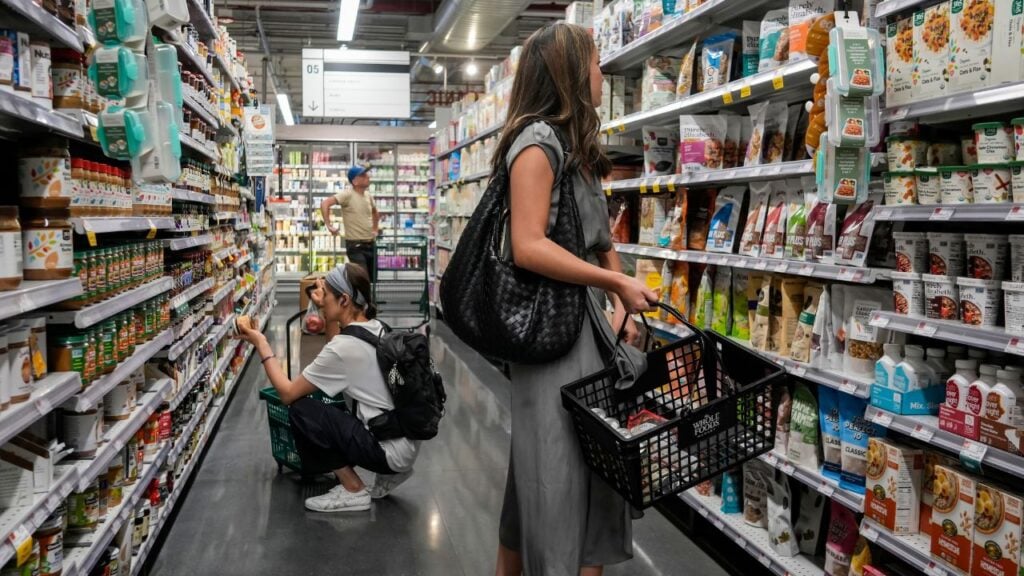
Grocery shelves once carried brands that felt like they'd never leave, the kind with a ruler printed on the wrapper or a jingle everyone's parents knew by heart.
The big food companies don't make most of them anymore.
12 California Grocery Staples From the '70s That Disappeared for Good
