
8 Grocery Store Habits Ohioans Refuse to Give Up, Even in the Age of AI

Just 15% of U.S. shoppers have used an artificial intelligence (AI) tool to help with grocery shopping in the past year.
Ohio’s grocery chains aren’t waiting around for that number to grow.
They’ve built the technology in anyway, and many shoppers still walk past it.
Here’s what Ohioans keep doing the old way, no matter how much AI shows up at the store.
1. Asking the Butcher, Not the App
Buehler’s and Heinen’s still staff full-service meat counters in their Ohio stores, with a butcher standing behind the glass to cut a roast or a chop to order.
That’s the whole point of walking up.
Order that same cut through a Kroger pickup or delivery order instead, and Instacart’s Catalog Engine decides what shows up in its place.
Kroger and Instacart built the AI system together, launching it in November 2025 to give the app a richer, machine-read understanding of every product on the shelf, from a bigger size to a different brand entirely.
The choice comes from the app, not the shopper.
A shopper standing at the counter points at the exact piece they want and walks out with it.
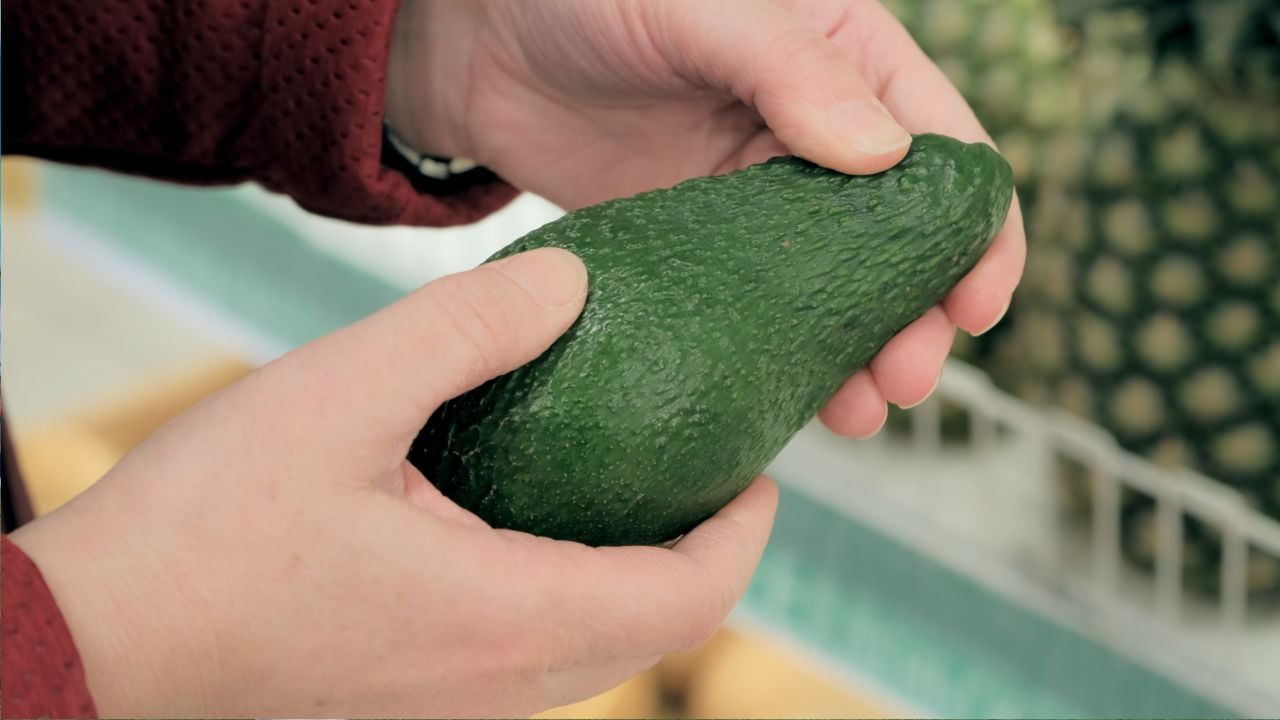
2. Squeezing Their Own Produce
Giant Eagle now runs same-day delivery through Instacart at more than 200 stores across Ohio, Pennsylvania, and three neighboring states.
An AI-driven substitution system built into Instacart’s platform picks which peach or avocado lands in a stranger’s bag when the exact one is out of stock.
It’s not a hand, though.
Many Ohio shoppers squeeze a tomato and check a melon’s stem the old way anyway, walking the produce aisle themselves before anything goes in the cart.
They trust their own hands over an algorithm’s pick.
3. Skipping Kroger’s AI Cart
Kroger’s AI-powered shopping cart, known as KroGO, has rolled out to Ohio stores, scanning items the moment a shopper drops them in and skipping the register completely.
The company piloted it in Ohio, Texas, and Arizona in 2024 and is fast-tracking it to more than 1,000 stores nationwide by the middle of 2026.
Many Ohio shoppers still walk past it.
They grab a plain cart, load it the way they always have, and hand their items to a cashier or a self-checkout scanner instead of letting a screen on the handle do the counting.
A cart’s a cart.
4. Picking the Cashier Lane
Kroger has installed AI-powered cameras above self-checkout stations at more than 1,700 of its roughly 2,700 stores, watching for a shopper who skips a scan or tucks an item close to their body.
What Kroger’s Self-Checkout Cameras Watch For
Kroger’s AI cameras at its Ohio stores don’t just count items moving over the scanner.
The system flags a shopper who moves an item toward their own body instead of over the scanner.
It also flags a hand covering a barcode, or an item that never crosses the scan zone at all.
A flag like that doesn’t force an employee to stop the shopper at the door.
It alerts a nearby employee, who decides whether to step in.
Kroger’s own cameras are exactly why many Ohio shoppers skip the self-checkout altogether and wait for the one open cashier instead, even with a line three or four people deep.
The self-checkout technology company NCR Voyix found in its 2025 Commerce Experience Report that 63% of Gen Z shoppers (ages 18 to 29) and 45% of Millennials (ages 30 to 44) prefer self-checkout, meaning even Gen Z and Millennials, the two groups likeliest to reach for a kiosk, aren’t unanimous about it.
Not everyone wants the machine.
Some shoppers just want to hand a full cart to a person and get a hello along with the receipt.
Psst! How much do you know about Ohio’s grocery chains and checkout tech firsts? Take our quiz and see how many you can get right.
Quiz
Ohio Grocery History IQ
Answer these questions on Ohio’s grocery chains and checkout tech firsts. We bet you can’t get them all right. Prove us wrong?
Which Ohio grocery chain kept a live bear near its store entrance during the 1930s and 40s?
5. Clipping Coupons by Hand
Kroger's data-science arm, 84.51, already builds more than 1.9 billion personalized digital coupons for shoppers across Ohio and beyond, each one built by machine learning matched to a shopper's own buying history.
The app already has that shopper's whole purchase history on file.
Scissors still come out for many Ohioans anyway, tearing the coupon insert from the Sunday paper and circling deals before they ever open the Kroger app.
Paper doesn't glitch.
It doesn't expire somewhere between the parking lot and the checkout line either, the way a digital offer sometimes does.
6. Reading Labels Themselves
Kroger's Ohio stores increasingly lean on Instacart's Catalog Engine, the AI system introduced in November 2025 that uses computer vision to read ingredient lists and assign health, nutrition and allergen tags to grocery products automatically.
A phone camera does the reading for you.
Flipping the carton over and checking the sodium line or the sugar count still comes naturally to many Ohio shoppers.
No scan is required.
They'd rather trust their own read of a label than a tag an algorithm generated.
7. Writing Their Own List
Kroger already offers a conversational AI assistant, built by the startup Cooklist, at six of its sister grocery banners, including Fred Meyer, Ralphs, Smith's and QFC (short for Quality Food Centers), and the company has said it plans to keep expanding the tool.
Just say the word.
A blank note on the phone or a scrap of paper does the job for many Ohioans instead, filled in item by item before anyone leaves the house.
They know their own kitchen better than any app can.
Half a jar of peanut butter left in the cabinet doesn't show up on anyone's screen.
8. Driving Their Own Circuit
Apps like GroceryChop now track prices at more than 100 chains, and its List Optimizer tool can plan the cheapest possible split trip across up to three stores automatically.
A separate AI assistant on the same app, ChopBot, can pull up 90 days of price history so a shopper can check a deal against its own past prices before trusting it.
The math happens in seconds.
Many Ohio shoppers run their own familiar circuit anyway: A Giant Eagle stop on Monday, a Marc's stop on Thursday, chosen by memory and whichever store's ad looked best that week.
No app is required.
They know which register has the short line before they even park.
Where Ohio Shoppers Trust AI
Ohio shoppers aren't rejecting artificial intelligence across the board.
Kroger's data-science arm builds shopper profiles from more than 60 million U.S. households through the Kroger Plus card, and almost nobody opts out of it.
Shoppers still swipe that card at every register.
Nobody seems to mind.
Its AI works in the background, setting the exact price and coupon a shopper sees without ever asking them to trust a robot cart or a chatbot with dinner.
That kind of AI doesn't require a shopper to change a single habit.
It just runs behind a card they were already going to hand over anyway.
9 Kroger Traps That Cost Ohio Shoppers Every Week
Kroger runs many good deals every week, and this list isn't about those.
It's about the small habits at checkout that cost Ohio shoppers money, starting with one tap many people forget to make before they ever reach the register.
9 Kroger Traps That Cost Ohio Shoppers Every Week
11 Things Ohioans Are Told About Their State That Aren't True

A wrong fact about Ohio can outlive the person who first said it, passed down a classroom at a time until nobody remembers where it started.
These are a few of those stories, checked against a $28 billion factory and a presidential head count many Ohioans have never run themselves.
11 Things Ohioans Are Told About Their State That Aren't True
