
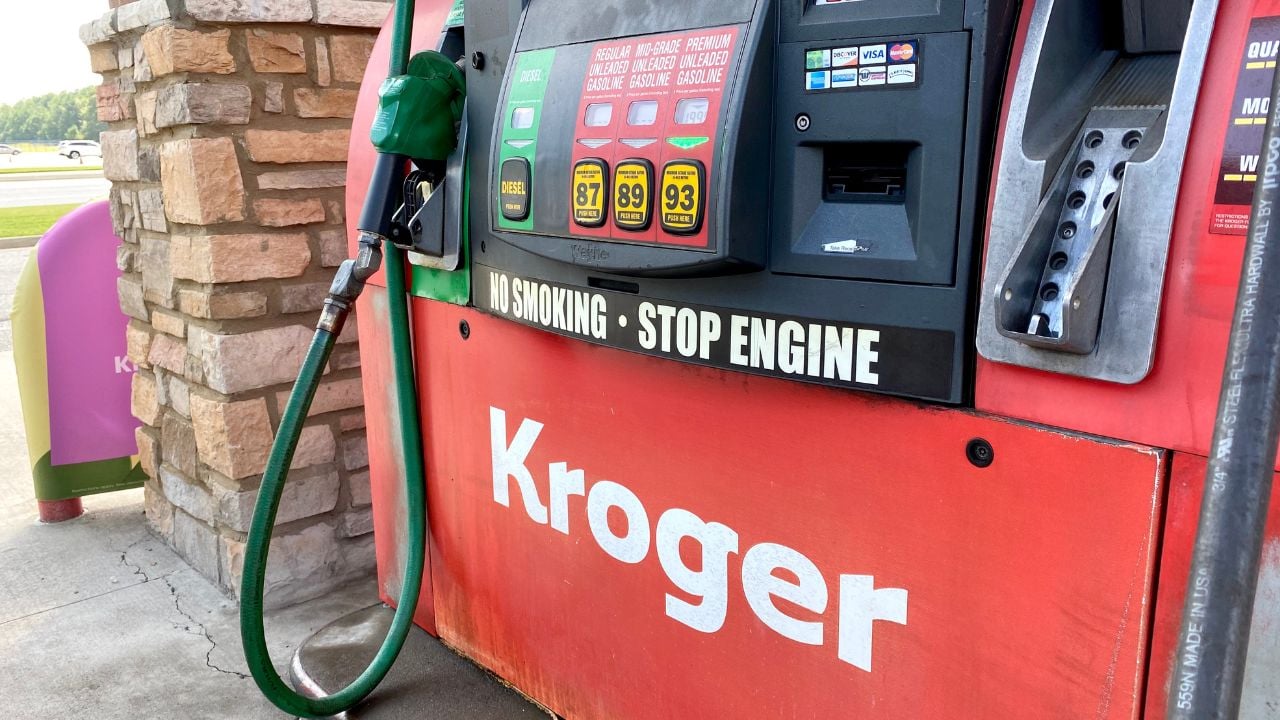
8 Kroger Fuel Points Mistakes That Cost Georgia Shoppers at the Pump

Kroger’s Fuel Points program has saved Shell customers across metro Atlanta and north Georgia money at the pump since the two companies teamed up, yet that track record doesn’t mean the program runs mistake-free.
In our opinion, these are the Fuel Points slip-ups draining the most value out of a driver’s account.
1. Letting Fuel Points Expire Unused
Kroger attaches an expiration date to every Fuel Point it hands out.
A point earned in June expires July 31, the last day of the following month, no matter how busy that summer gets.
No grace period exists.
The balance shows up in two places, on the bottom of a Kroger receipt and inside the Kroger app under Fuel Points.
A shopper who skips both never learns a discount already expired until it’s too late to use it.
Checking either one before a fill-up, not after, is what saves the points.
2. Missing the 1,000-Point Daily Cap
Kroger caps how many Fuel Points a shopper can cash in on a single day.
The ceiling sits at 1,000 points, whether that trip is a fill-up at the pump or a grocery order at checkout.
A Georgia shopper who banks 1,400 points over a big month and plans to spend the whole balance on one giant fill-up hits that wall fast.
Not this time.
The extra 400 points keep ticking toward their own expiration date instead.
Splitting a big balance across two visits inside the same points window uses the whole thing before any of it disappears.
3. Filling Past 35 Gallons
Kroger’s fuel discount stops working at a fixed number.
A full-size pickup with dual tanks, a Georgia farm truck, or a minivan topping off before a long drive to Savannah can easily need more gas than that number allows.
The cutoff is 35 gallons in a single purchase, per Kroger’s posted terms.
Not a gallon more.
Past that, the meter keeps spinning at full price.
Every gallon past 35 earns zero points.
A shopper filling a second vehicle or a gas can on the same swipe runs into the identical wall.
Splitting one big fuel purchase into two separate transactions keeps the discount working on both.
4. Skipping the Shell Account Link
Kroger’s fuel points work at more than just its own gas stations in Georgia.
That requires one extra step many shoppers never take.
The partnership with Shell has run across metro Atlanta and north Georgia for years, letting a Kroger Plus Card save at participating Shell pumps the same way it does at a Kroger Fuel Center.
Show up without linking the accounts first, though, and the pump just charges full price.
The discount never applies.
A shopper who swipes a Kroger card at a Shell station expecting an automatic discount, the way it works at a Kroger-owned station, watches the total ring up untouched.
Linking a Kroger Plus Card to a Shell Fuel Rewards account takes a few minutes online.
It only has to happen once.
The Math Behind Kroger’s Daily Cap
Kroger’s 1,000-point daily limit at the pump works out to a fixed dollar ceiling, not a moving target.
Every 100 points knocks 10 cents off each gallon.
Stack all 1,000 allowed points in one fill-up, and that’s a flat $1 off every gallon pumped.
Capped at 35 gallons, that tops out at $35 off one fill-up.
5. Trying to Stack Two Months for a Bigger Discount
Kroger never lets one month’s Fuel Points balance merge with another month’s into one bigger redemption.
A Georgia shopper banking on a road trip to the coast might let June’s leftover points sit, planning to combine them with July’s for one large discount at the pump.
Points don’t carry over.
Each month’s balance sits in its own batch, capped at 1,000 points, with its own expiration date attached.
June’s batch expires on its own calendar.
It’s gone before July’s total ever has a chance to combine with it.
The trip ends up costing full price on every gallon the stacked discount was supposed to cover.
6. Assuming Every Shell Station Honors the Discount
Kroger’s Fuel Points discount doesn’t work at every Shell station in Georgia, even for a shopper who did everything else right.
The partnership only covers stations that opted in across metro Atlanta and north Georgia.
Franchise agreements decide which individual Shell locations sign on, not Kroger alone.
Not every pump qualifies.
A Georgia driver who links accounts, banks points, and then pulls into an unfamiliar Shell station outside that footprint, or a non-participating one inside it, swipes a card that’s technically ready to redeem and still pays full price.
Kroger’s Shell station locator inside the app flags which nearby pumps accept the discount before a shopper ever leaves the driveway.
7. Assuming Every Item in the Cart Earns Points
Kroger doesn’t hand out Fuel Points on every single thing that crosses the register.
The exceptions catch shoppers who count on them.
Tobacco, lottery tickets, and Kroger’s own gift cards earn zero points, no matter how much a shopper spends on them.
None of it counts.
Kroger also excludes alcohol and dairy in some areas, depending on local rules.
A shopper who picks up a $50 gift card for a birthday and figures it padded the month’s points toward a fill-up discount comes up 50 points short of where they expected to land.
Groceries, general merchandise, and prescriptions filled at a Kroger pharmacy are the purchases that build toward the pump.
8. Redeeming Points on Groceries Before Checking the Math
Kroger now lets a shopper send Fuel Points toward a grocery bill instead of a fill-up.
Picking the wrong one costs money at the pump.
Redeem 100 points at checkout for a flat $1 off groceries.
Send that same 100 points to the pump instead.
Gas drops 10 cents a gallon, worth $1.50 on a 15-gallon fill-up.
Same points, different math.
Gas pays more per point than groceries do, every time.
A Georgia shopper who defaults to the grocery discount out of habit, without checking whether a fill-up is due soon, ends up trading away the higher-value option for the lower one.
Psst! Want to see exactly what your Kroger Fuel Points are worth at the pump versus at the register? This table breaks down the math, point by point.
How Georgia Got Its Shell Fuel-Points Deal
Kroger’s Shell partnership didn’t start in Georgia.
Kroger and Shell had already rolled the fuel-points discount out in eleven other markets, including Cincinnati, Dallas, Detroit, Indianapolis, Jackson, Little Rock, Louisville, Nashville, Raleigh, Richmond, and San Diego, before metro Atlanta and north Georgia joined in October 2018.
Georgia joined later, not first.
Kroger’s partner list still varies by division today.
A Shell station that honors points in DeKalb County isn’t a guarantee every Shell station across the state plays along.
What Changed for Fuel Points in 2026
Kroger’s fuel-rewards program has run for more than two decades.
2026 brought its biggest change yet.
Points that once worked only at the pump can now cover part of a grocery order too, redeemed straight through the Kroger app before checkout.
That part’s new.
The two paths still run on their own separate 1,000-point ceilings, though.
A shopper can redeem up to 1,000 points at the pump on one fill-up and a separate 1,000 points on a grocery order the same day, as long as the balance covers both.
Georgia shoppers who assume spending points at the register eats into what’s left for gas are walking past savings that were never linked.
Kroger built its new grocery-redemption option to work everywhere a shopper already checks out, in-store at the register, at Kroger.com, and on pickup or delivery orders placed through the app.
None of it applies automatically. A shopper still has to select the points redemption before payment finalizes on each order, the same active choice Kroger already requires at the pump.
10 Things That Surprise First-Time Aldi Shoppers in Georgia

A shopper stands at the Aldi cart corral in Marietta, patting down every pocket for a quarter.
Nobody warned her, and she isn’t the only Georgia shopper caught off guard on a first Aldi run.
10 Things That Surprise First-Time Aldi Shoppers in Georgia
9 Things Georgia Shoppers Should Never Buy Secondhand
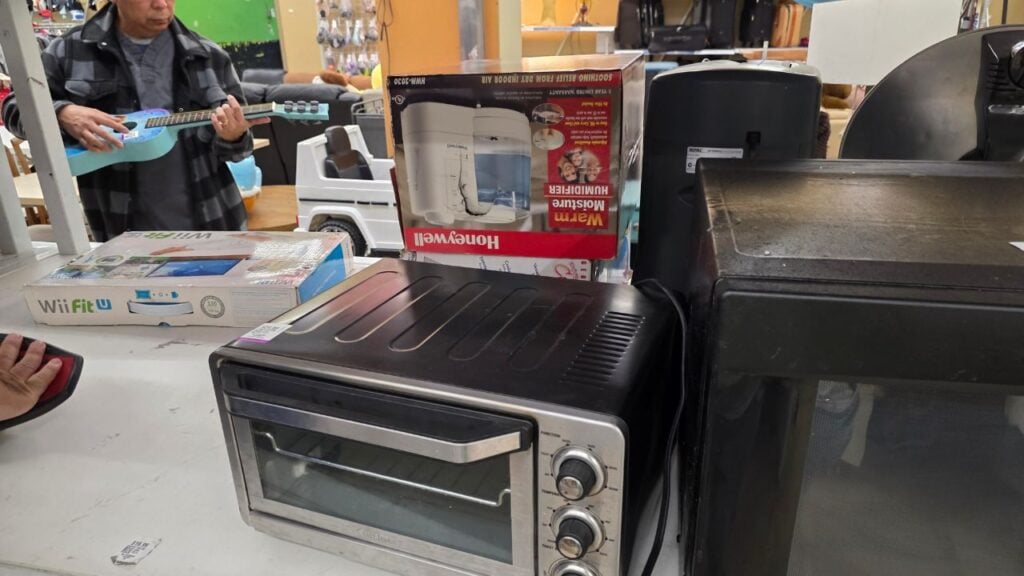
A federal recall doesn’t stop applying just because a product changed hands at a Georgia yard sale.
Atlanta’s Scott Antique Markets draws thousands of Georgians chasing a deal every month, and some of those deals carry a hidden cost.
