

9 Prescription Savings Florida Pharmacies Often Don’t Mention Unless You Ask

A shopper in Tampa pays her usual copay at the pharmacy counter and drives home.
A friend later mentions paying half that for the same pill at the same pharmacy.
These are the prescription savings Florida pharmacies apply once you ask, and often not a moment before.
Note: This is general information, not medical or financial advice. Pharmacy programs, discount card terms, and drug prices are subject to change.
1. A Discount Card’s Cash Price
Florida pharmacies at CVS and Walmart will run a GoodRx or SingleCare card next to your insurance card and let whichever price is lower win.
A pharmacist usually only makes that comparison when a customer asks for it.
Congress banned pharmacy “gag clauses” in 2018, the contract language that used to stop a pharmacist from mentioning a lower cash price out loud.
Before that ban, a University of Southern California Schaeffer Center analysis of 9.5 million prescriptions found patients paid more through their insurance copay than the cash price would have cost close to a quarter of the time, adding up to $135 million in overpayments in just the first six months of 2013.
The law changed.
But the habit of asking hasn’t necessarily caught up with it.
Hand over both cards, your insurance card and the discount card, and ask the pharmacist to check both before you pay.
2. A 90-Day Fill
Florida pharmacies filling a maintenance prescription, the blood pressure pill or the cholesterol drug taken every month for years, can switch a customer from a 30-day bottle to a 90-day bottle for close to the same total copay.
The pharmacist filling that script doesn’t necessarily bring the switch up on their own.
A customer has to ask for the 90-day option by name.
Medicare’s own guidance tells Part D members to ask about a 90-day supply.
Many plans price it at two copays instead of three.
Not every insurer or every drug qualifies for it.
Ask before you refill.
3. A Cheaper OTC Swap
A Publix Pharmacy counter can point out when a prescription has gone over-the-counter (OTC) at a fraction of the price.
The pharmacist typically waits for the customer to ask rather than talking a paying customer out of a prescription.
A month of prescription-strength omeprazole averages close to $93.
The same drug sold over the counter runs about $31 for a similar supply.
The switch only works when a doctor or pharmacist confirms the OTC strength matches what your prescription calls for.
Ask before you assume.
4. A Manufacturer’s Copay Card
A CVS pharmacist’s system can flag a manufacturer copay card on a brand-name prescription, dropping the monthly bill to $0 to $25.
Nobody runs that check automatically.
Not without a request.
A customer has to hand the card over, or ask the pharmacist to look one up, before it applies to a fill.
These cards aren’t unlimited.
The fine print draws a hard line.
Who a Florida Pharmacy’s Copay Card Covers
A Florida pharmacy’s manufacturer copay card works only for patients carrying private, commercial insurance.
Federal law bars drug makers from offering these coupons to anyone on Medicare, Medicaid, or Tricare.
The anti-kickback statute treats a coupon as a nudge toward a pricier drug over a cheaper equivalent.
A Florida pharmacist can still point a Medicare patient toward a manufacturer’s separate income-based assistance program instead, since that kind of help follows different rules.
5. A Medication Therapy Management Review
Florida pharmacies working with a Medicare Part D plan must offer eligible members a free medication review once a year.
Medicare calls it a comprehensive medication review.
Plans generally target members juggling two or three chronic conditions and several Part D drugs.
Medicare automatically enrolls those who qualify.
The plan then mails or calls to schedule that first review.
A pharmacist filling a routine prescription at the counter doesn’t bring it up.
Not during a five-minute pickup.
A customer who wants the review has to ask the pharmacist directly or call the plan to get it scheduled.
The review covers every prescription, over-the-counter drug, and supplement a patient takes.
It’s where a pharmacist often finds a cheaper equivalent hiding in plain sight.
Psst! How many of these prescription-saving moves have you tried at the pharmacy counter? Run through the checklist and see where you stand.
6. Splitting a Double-Strength Pill
Florida pharmacies rarely bring up pill-splitting on their own, even at independent counters that have more time to talk it through.
Not automatically.
A customer has to ask whether a double-strength tablet costs close to the same as the regular dose.
For statins like atorvastatin, rosuvastatin, and simvastatin, a 2014 Consumer Reports analysis found a 40-milligram tablet often priced close to a 20-milligram tablet.
Prices have shifted since that 2014 analysis, but the same flat per-tablet pricing regardless of strength still turns up at many pharmacies today.
Splitting the higher dose in half can turn a 30-day supply into 60 days for close to the same money.
None of this happens without a doctor’s sign-off and a pharmacist’s approval first.
A scored tablet splits evenly.
An unscored tablet doesn’t, and the Food and Drug Administration warns against guessing which is which.
7. A Formulary Tiering Exception
A Florida pharmacist can see the moment a prescription lands on an expensive tier of a Part D formulary, the copay jumping because the plan grouped the drug with pricier brand-name options.
The pharmacist doesn’t file anything to fix that on their own.
Not without being asked.
A patient or their doctor has to request what Medicare calls a tiering exception, asking the plan to cover the drug at a lower-tier copay.
The doctor has to show the cheaper drugs on the plan’s lower tiers don’t work or aren’t safe for that patient.
Approved exceptions typically hold through the end of the calendar year.
Ask the pharmacist why a drug landed on its tier.
Then ask where the exception paperwork starts.
8. A Patient Assistance Program
A Florida pharmacist rarely raises a patient assistance program while ringing up a routine fill, even one who has filed the paperwork before and knows exactly which manufacturer program fits.
A customer has to say the price is a problem before that conversation starts.
A brand-name drug with no generic on the shelf can still turn into a low-cost or free fill through a patient assistance program.
NeedyMeds tracks thousands of these programs for free, searchable by drug name.
The application usually needs a doctor’s signature and proof of income.
It isn’t something a pharmacy fills automatically like a routine refill.
It takes paperwork, not luck.
9. A Cash Price Quote
Costco Pharmacy will quote a walk-in customer its cash price on any drug without asking for a membership card.
That price is set by a markup capped close to 14 to 15 percent above wholesale cost.
The same prescription can cost a different amount three miles away, even between two locations of the same chain, according to Florida’s own MyFloridaRx data.
CVS, Walmart, Publix, and every independent counter in between will quote that price on request.
Almost none of them volunteer it before the insurance card comes out.
Every quote is free.
Ask for the cash number first.
Florida’s Own Price-Check Tool
Florida runs a free tool called MyFloridaRx that lets anyone search a drug by name and county to compare retail prices across the 400 most-dispensed prescriptions in the state.
Prices update monthly.
Results sort by pharmacy name, zip code, drug name, or price, so a shopper can line up every Florida county side by side.
Nobody has to create an account or hand over any information to use it.
A search takes under a minute.
The State Tracks Price Hikes
Florida’s Prescription Drug Reform Act, Senate Bill 1550, forces drug manufacturers to report any wholesale price increase of 15 percent or more within a year, or 30 percent or more across three years.
Anyone can look.
The state posts every filing on the same MyFloridaRx site, broken down by drug and manufacturer.
The reporting requirement took effect January 1, 2024, the first year manufacturers had to start filing.
The same law requires pharmacy benefit managers operating in Florida to hold a state license, with penalties reaching $10,000 a day for operating without one.
7 Reasons People Are Leaving Florida in 2026
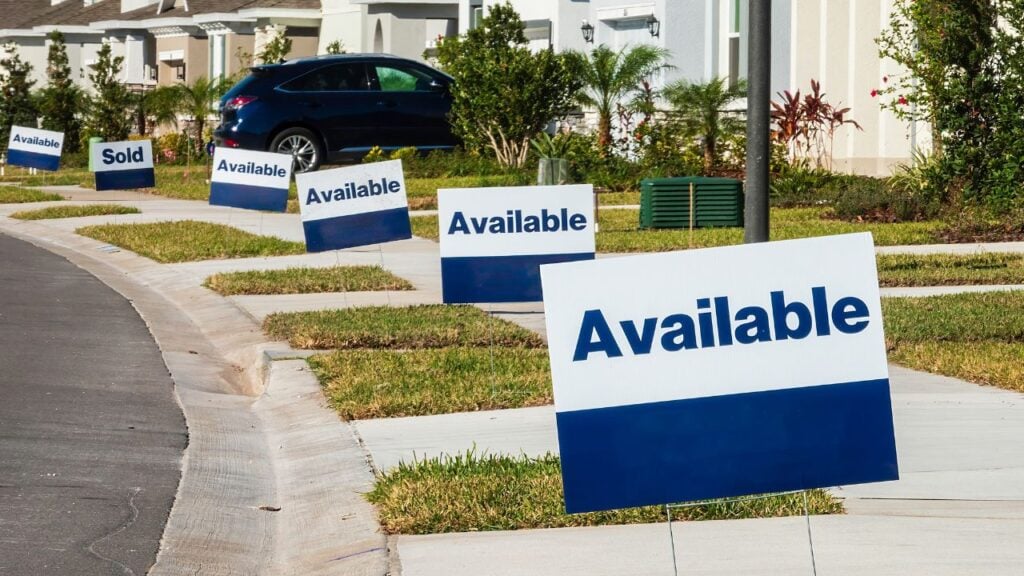
Florida gained thousands fewer new residents last year than it did two years earlier, and property taxes, condo bills, and hurricane season are showing up in the math.
The households that stay are running the numbers hardest.
7 Reasons People Are Leaving Florida in 2026
9 Things Florida Homeowners Get Wrong About Amendment 3 as We Head Towards November
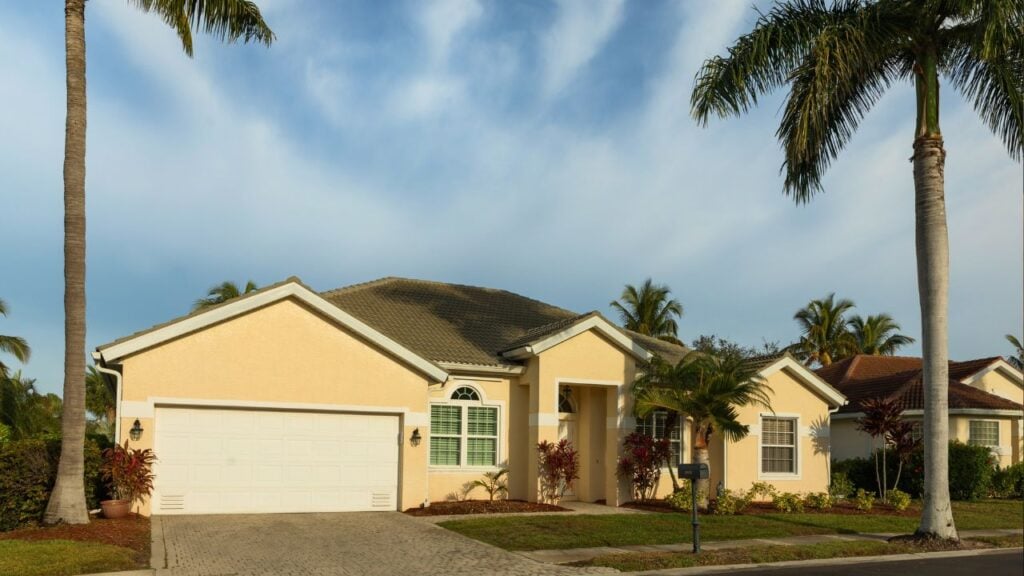
The property tax amendment on your November ballot borrows its name from a law you already have, and that’s the least of the confusion.
Homeowners are reading a $250,000 headline and doing math the fine print doesn’t support.
9 Things Florida Homeowners Get Wrong About Amendment 3 as We Head Towards November
