
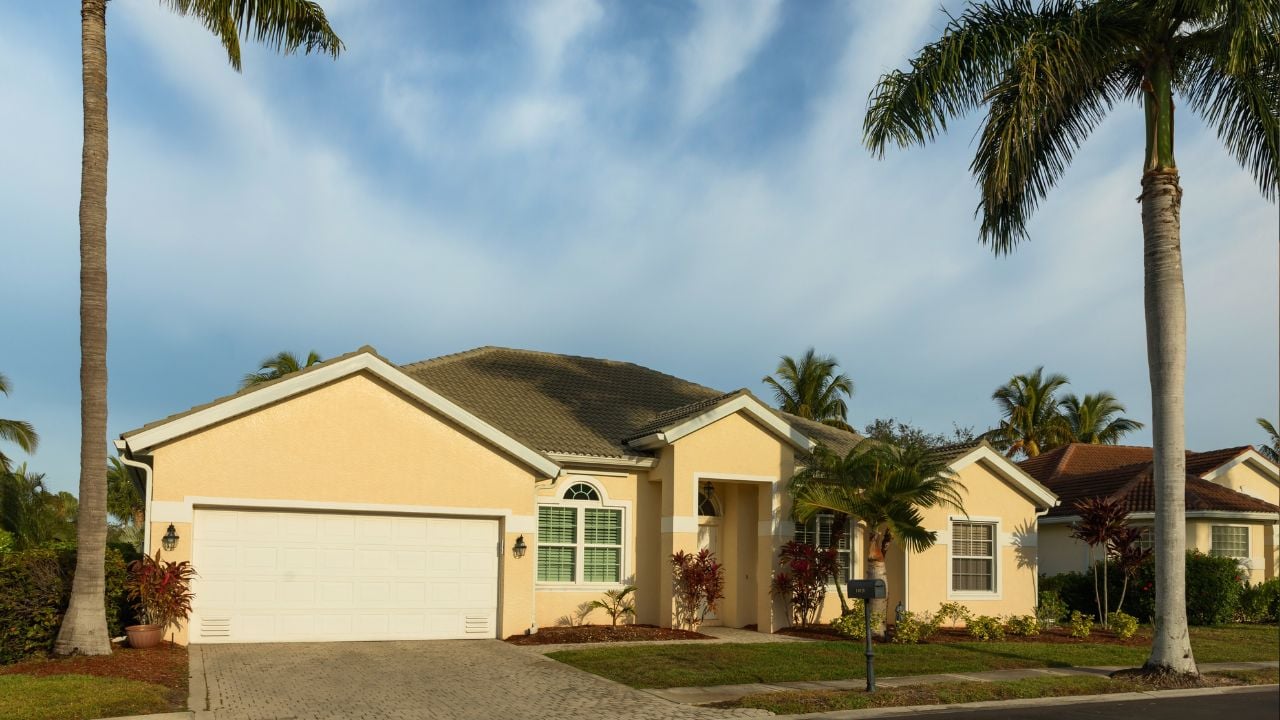
9 Things Florida Homeowners Get Wrong About Amendment 3 as We Head Towards November

The Florida property tax amendment that’ll be on your November ballot borrows its name from a law you already have.
That’s the least of the confusion.
Homeowners are reading a $250,000 headline and doing math the fine print doesn’t support.
These are the things Florida homeowners get wrong about Amendment 3.
Note: This is general information, not tax or financial advice. Property tax rules and dollar amounts are subject to change.
1. Wiping Out Your Tax Bill
Many Floridians hear the words property tax amendment and picture a bill that disappears.
Amendment 3 would leave the school district line right where it sits.
The homestead exemption for school taxes would stay at $25,000, the same amount Floridians claim today.
Schools were the sticking point.
Local property taxes cover nearly half of what Florida school districts spend.
A few districts lean on them for much more, so lawmakers walled that money off before sending the measure to voters.
Even with county and city taxes at zero, you would still owe the school portion every year.
Schools would keep taxing the same value they tax today.
2. $250,000 Comes Later
The $250,000 number Floridians keep hearing about doesn’t arrive until 2028.
Amendment 3 would phase the exemption in.
The first $150,000 of assessed value would come out of non-school taxes on January 1, 2027.
$250,000 follows a year later.
That’s a year of waiting.
From 2029 forward, the exemption would move with inflation each January.
None of that reaches your 2026 taxes, since a yes vote on November 3 would first apply to the 2027 tax roll.
The first Florida tax bill shaped by this amendment would arrive in the fall of 2027.
3. New Arrivals Wait Until Year Five
A single date splits Florida homeowners into two groups under Amendment 3.
Anyone who wasn’t a permanent Florida resident on December 31, 2026, would start at a $50,000 exemption and reach the larger amount in the fifth year of the exemption.
That’s four years at $50,000.
A family that moves to Florida in 2027 and closes on a Port St. Lucie house in March gets a $50,000 exemption while the neighbor across the street gets $250,000.
You’d spend four Januarys watching the neighbor come out ahead.
Floridians who already live in the state would keep the larger exemption when they move within Florida.
So selling in Ocala and buying in Stuart wouldn’t cost you the bigger number.
Counties and cities could shorten that wait by a two-thirds vote of their governing body, though not before 2030, and only for what the amendment calls a critical local need.
Nobody has defined that phrase yet.
4. Save Our Homes Isn’t Changing
The ballot title reads Save Our Homes From Excessive Property Taxes, and that borrowed name trips up Florida homeowners.
Save Our Homes is the cap that already limits how fast the assessed value of your homestead can rise, at 3% a year or the change in the inflation index, whichever runs lower.
Amendment 3 would leave that cap alone.
Portability survives too, so the savings you built under the cap would still follow you to your next Florida homestead.
You lose nothing there.
The new exemption would sit on top of the protection you already hold.
5. Fifty Percent Isn’t Enough
So what happens if Amendment 3 wins 55% of the vote?
It fails.
Florida requires 60% of the votes cast to write anything into the state constitution.
Lawmakers cleared their own supermajority bar during a two-day special session in June, passing the resolution 75-26 in the House and 30-9 in the Senate.
Voters face the tougher hurdle.
Two other statewide questions share the November ballot, covering farm equipment and the state’s reserve fund.
Each needs the same 60%.
Psst! How much do you know about Florida’s homestead exemption? Take our quiz and see if you can ace it.
Quiz
Homestead History Pop Quiz
Test yourself on Florida’s homestead exemption, the Save Our Homes cap, and the odd rules behind them. We bet you can’t get them all right. Prove us wrong?
Rent out your Florida homestead for more than 30 days a year, and the state treats the exemption as abandoned after how long?
6. No Break on Your Fire Fee
A homestead exemption cuts taxable value.
But a chunk of what shows up on your Florida tax bill never depended on value at all.
Your county and city charge separately for garbage collection, stormwater, fire service, and street lighting, as flat amounts per parcel or per unit.
Those charges are non-ad valorem assessments, and Amendment 3 doesn't cover them.
So a homeowner in Cape Coral whose county taxes fell to nothing would still owe the garbage collection charge and the fire service charge.
Neither charge moves a penny.
Those lines sit in their own section of the bill, below the tax rates your county sets, where many Floridians never look.
Read the bottom half of your November bill, and you'll see how much of it no exemption was ever going to cut.
7. Vacation Homes Get No Exemption
Second homes, rentals, and storefronts get no exemption out of Amendment 3.
They get a tighter cap instead.
The yearly limit on how much the assessed value of non-homestead property can rise would drop from 10% to 5% with the 2027 roll.
That covers commercial buildings, vacation condos, and residential rentals of nine units or fewer.
One caveat: That cap has never applied to school district taxes, and Amendment 3 wouldn't change that.
The exemption only follows a permanent residence, so a snowbird with a Naples condo gains nothing from it either.
Owners watch that saving build slowly, across years of rising values.
8. It Doesn't End Property Taxes
Gov. Ron DeSantis spent a year campaigning to wipe out property taxes on Florida homesteads, and many homeowners assume Amendment 3 is that plan.
It isn't.
He said as much himself, calling the hit to local governments a modest reduction and telling reporters that "what the Legislature did wasn't my proposal."
He'd have gone bigger.
His version raised the exemption to $250,000 right away and aimed at ending homestead property taxes altogether.
Lawmakers phased it in, walled off school taxes, and added the assessment cap for landlords and businesses.
Amendment 3 sets no date for ending property taxes on Florida homes, though it leaves room for a future Legislature to push further.
The governor says he'll vote for it anyway.
9. Your Tax Rate Can Still Rise
Homeowners keep talking about Amendment 3 as though a yes vote locks in a lower bill for good.
It never touches the rate.
An exemption shaves value off the amount your county can tax.
Your county commission and your city council still set the tax rate every summer.
Shrink what they can tax, hold the budget steady, and commissioners have to set a higher rate to land in the same place.
Lawmakers saw that coming.
A legislative staff analysis put the revenue loss for non-school governments at more than $4.6 billion in the first year and more than $8.4 billion the year after.
So the Legislature passed a separate law in June, and Gov. DeSantis signed it that same month.
Going above the rolled-back rate, the rate that would raise the same dollars as last year, now takes a two-thirds vote of the governing board.
Push more than 10% above it, and the board needs a unanimous vote, a three-fourths vote on a larger board, or a trip to the voters.
Nobody puts that on a yard sign.
That law is in effect now, and it applies whether Amendment 3 passes or not.
Psst! How much do you know about the fine print behind a Florida tax bill? Tap through these cards and see how many you can call right.
Ballot Wording in Court
Three separate court challenges landed before Floridians ever mark a ballot.
They target the ballot title and the summary as biased.
Save Our Voters, a nonprofit group, filed the first.
Former South Miami Mayor Philip Stoddard filed the second, and former state Sen. Jeff Brandes and former U.S. Rep. Al Lawson filed the third.
They argue that words like save, protect, and ensure fairness read like a campaign flyer instead of a neutral description of what the amendment does.
It's a fight over adjectives.
A judge can order that summary rewritten, though no judge can pull the measure off the ballot, since the challenges go after the wording rather than the amendment behind it.
Attorney General James Uthmeier would write any replacement, so the sentence Floridians studied in June may not be the sentence they mark in November.
9 Florida Squatter Laws Homeowners Learn Too Late
A snowbird flies back to her Cape Coral condo in November and finds the locks changed and someone else's patio chairs on her lanai.
The man inside waves a lease she never signed, and getting her own front door back runs through a Florida courtroom.
9 Florida Squatter Laws Homeowners Learn Too Late
How Much Does Home Insurance Cost in Florida in 2026?
Insuring a typical $300,000 house in Florida costs more than double the national average in 2026.
Move one county over, and the quote can change by thousands.
