
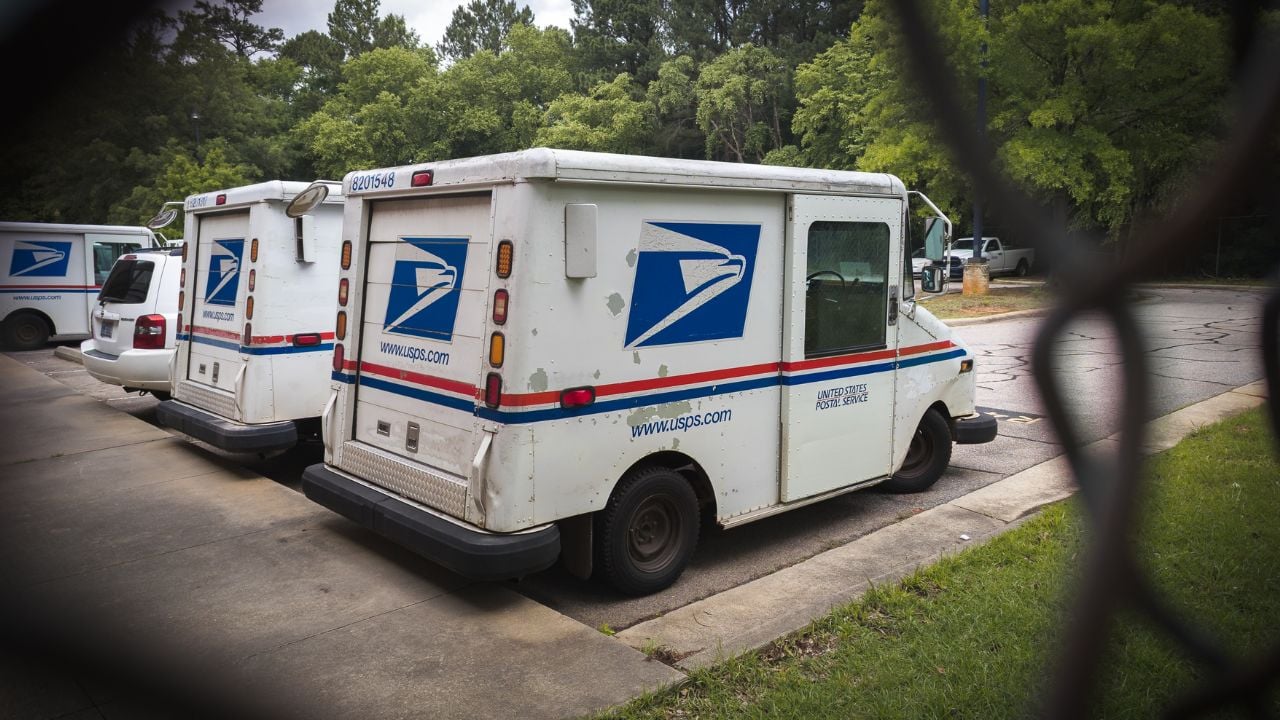
10 U.S. Towns Where Residents Still Get Their Mail in an Unusual Way, including 2 in Alaska

For more than a century, mail carriers on a Wisconsin lake have leapt off a moving boat to make their deliveries.
Nobody there thinks it’s strange.
Across the country, a handful of towns still get their mail in ways the rest of America gave up on generations ago.
These are the U.S. towns where a mailbox at the end of the driveway was never the plan, including two in Alaska.
1. Supai, Arizona
Supai sits at the bottom of a side canyon off the Grand Canyon, and nothing on wheels, not even a mail truck, can reach it.
The Havasupai village’s mail comes in by mule train, a string of up to 22 mules that carries letters, packages, and groceries nine miles down from the canyon rim.
Each mule can haul up to 200 pounds, split evenly across both sides.
That’s the limit.
A wrangler on horseback leads the string down five days a week, a trip that takes about three hours going down and closer to five coming back up with the outgoing mail.
The Postal Service has run mail this way since the 1930s.
The Smithsonian calls it the last official mule mail route left in the country.
2. Lake Geneva, Wisconsin
Lake Geneva runs one of the last true mailboat routes in the country, and it doesn’t stop moving to make a delivery.
Carriers known as mail jumpers leap off the boat at about 5 mph, land on a private pier, drop the mail, and jump back on before the boat pulls away.
As of 2024, the U.S. Postal Service itself called it a 108-year-old tradition, still running seven days a week each summer to about 75 lakeside homes.
Three jumpers work each run, one posted at the stern as a spotter.
Applicants try out for the job every spring.
Wet piers make it worse.
A slip means the mail lands in Geneva Lake, not on the dock.
3. Tangier Island, Virginia
Tangier Island sits about 12 miles out in the Chesapeake Bay, with no bridge or road to carry its mail in from the mainland.
The mail boat Courtney Thomas makes the run from Crisfield, Maryland, six days a week, weather allowing.
Tangier’s post office has no carriers at all.
That’s the rule.
Every one of the island’s roughly 400 residents keeps a P.O. box instead.
The whole community tends to show up when the boat comes in.
A package too big for the box gets what islanders call a golden ticket, a yellow slip that sends its owner up to the counter.
Chicks for a backyard coop and caterpillars for a school science project have both ridden that boat.
4. Kivalina, Alaska
Kivalina sits on a thin barrier island in Alaska, wedged between the Chukchi Sea and a coastal lagoon, far from any highway.
A federal audit found that 82% of Alaska’s communities without road access depend on planes, boats, or hovercraft to get their mail.
Kivalina is one of them.
Every letter and every box of groceries for its roughly 440 residents comes off a small plane onto the village airstrip, built back in 1960.
There’s no other way in.
Rising water has already forced Kivalina to plan a move to higher ground, so even the airstrip mail depends on isn’t guaranteed to sit where it does today.
What “Bypass Mail” Means
Bypass mail sounds like it means the Postal Service skips towns such as Kivalina, but the name works the opposite way.
It’s the Postal Service’s own term for shipping large volumes of mail straight to a cargo airline instead of routing it through a regional sorting plant first.
That shortcut is the only reason a village with no road still gets regular mail at all.
Without it, every box and letter would have to wait for space on a much slower, much pricier charter.
5. Ochopee, Florida
Ochopee sorts and hands out all its mail from the smallest working post office in the country.
The building measures just 61 square feet, barely room for one clerk and a counter, tucked along U.S. Route 41 in the Everglades.
It started out as a shed for irrigation pipes on a tomato farm.
When a fire took out Ochopee’s original post office in 1953, the postmaster moved operations into the shed the same week and never left.
It never closed.
Ochopee’s clerk still hand-sorts every piece of mail inside that tiny room and slots it into one of just 40 P.O. boxes, the only way in-person patrons collect it.
A single rural carrier also runs a 170-mile loop out of that shed six days a week, reaching roughly 300 patrons across the Everglades, including its Miccosukee and Seminole communities, according to Visit Florida.
Tour buses stop just to mail a postcard from it.
6. Weirs Beach, New Hampshire
Weirs Beach is home port for the Sophie C., the oldest floating post office in the country.
Built in the 1940s, the Sophie C. pushes off the dock twice a day each summer and stops at nine islands scattered across Lake Winnipesaukee.
Over a single season, the boat hands off up to 40,000 pieces of mail to island residents who have no other delivery option, according to New Hampshire Public Radio.
There’s no dock-to-door carrier out there.
That’s the whole system.
Families who’ve kept island cabins since the 1800s still walk down to meet the boat themselves, same as their grandparents did.
7. Smith Island, Maryland
Smith Island has no bridge, no causeway, and no airstrip, so its mail arrives strictly by water.
Its roughly 270 residents, spread across the villages of Ewell, Tylerton, and Rhodes Point, get every letter and every crate of groceries off a boat from Crisfield.
Winter can shut it down.
In one bad freeze, the Chesapeake Bay iced over thick enough that the state had to send an ice-cutting ship to clear a channel because the ice had made it too dangerous for the mail boats to run.
Once the channel opened back up, the mail started moving again.
8. Agness, Oregon
Agness sits 32 miles up the Rogue River from Gold Beach, and a jet boat has carried its mail since 1895.
A mountain road does connect Agness to town today, but it’s narrow, unpaved in stretches, and closes when weather turns.
Trucks can’t make that drive.
So the boat still runs the route daily instead of a truck.
Passengers ride along for the scenery, deer and otters included, but the boat’s job hasn’t changed since pioneers first needed a way to reach their new neighbors upriver.
Agness’s mail still gets there wet with river spray more often than not.
9. Bettles, Alaska
Bettles is Alaska’s smallest incorporated city, home to about 80 people on the bank of the Koyukuk River north of the Arctic Circle.
No road reaches Bettles from anywhere.
Nothing else gets through.
Scheduled flights and air taxis cover the roughly 180 air miles from Fairbanks.
That’s how every letter, box, and grocery order reaches Bettles.
Winter doesn’t slow the mail down.
Pilots keep flying through temperatures that regularly drop past 40 below because a delayed flight in Bettles means a delayed grocery order too.
10. Islesford, Maine
Islesford is the year-round village on Little Cranberry Island, a short run off Mount Desert Island near Acadia National Park, where the mail still comes in by boat.
Its mail comes over on the Beal and Bunker boat from Northeast Harbor, sorted by hand before it ever leaves the mainland.
Packages for Islesford ride on one side of the boat, packages for neighboring Great Cranberry Island ride on the other.
Nothing lands on a porch.
Every box lands in a shed at the town dock, where islanders dig through the pile for their own name, a system that works fine for a winter population of about 75 residents.
Psst! How much do you know about America’s postal history? Take our quiz and see how many you can get right.
Quiz
U.S. Mail History IQ
Answer these questions about America’s postal history and the people who built it. We bet you can’t get them all right. Prove us wrong?
Owney, the stray dog who became the unofficial mascot of the Railway Mail Service in the 1880s, is preserved and on display today. Where can you see him?
How Big Bypass Mail Is
Kivalina and Bettles are two names on a much longer list of Alaska towns that lean on aircraft instead of trucks.
Grant Aviation alone flew 17 million pounds of mail into rural Alaska in 2024, most of it bypass mail.
It's only one of several carriers doing the same job across the state.
Cutting that system would push grocery prices in dozens of villages higher overnight, since a chartered flight costs far more than a scheduled bypass run.
Lawmakers have proposed trimming the program more than once.
It has survived every time.
Alaska's congressional delegation has fought each attempt off so far, arguing the flights carry more than mail; they carry the only supply line some towns have.
The Country's Only Floating ZIP Code
Detroit runs a mail route that doesn't touch a single house at all.
The J.W. Westcott Company has run boats on the Detroit River since 1874, marking 150 years in business.
Its own boat holds the country's only non-military floating ZIP code, 48222.
Freighter crews don't dock to pick up a letter home.
Nobody stops moving.
The Westcott boat pulls alongside a moving ship and hands the mail up in a bucket on a rope instead, a routine sailors on the Great Lakes have counted on since 1948.
No house on that river gets a doorstep delivery, ever.
A deckhand two flights up on a moving freighter still gets a letter from home before the ship reaches its next port.
11 Things Ohioans Are Told About Their State That Aren't True

A kid in a Dayton classroom repeats what they've heard their whole life about the state, word for word, and nobody corrects it.
That's how a wrong fact about Ohio outlives the person who first said it.
11 Things Ohioans Are Told About Their State That Aren't True
11 Things Minnesotans Say That Baffle Everyone Else

Minnesotans didn't pick up their accent from the movie Fargo.
Fargo's writers borrowed it from them, along with a whole vocabulary that still confuses visitors at the gas station.
