
9 Fall Habits That Are Second Nature in Kentucky and Nowhere Else

Fall in Kentucky runs on a calendar all its own, and it’s busy right now.
Out-of-staters may call it odd, but locals just call it October.
Here’s a look at the autumn habits Kentuckians barely think about.
Housing Tobacco
Kentucky’s tobacco fields go from standing to empty within a matter of days every fall.
Farm families still cut the stalks by hand once the leaves turn thick and oily.
Then the stalks lie on the ground to wilt for a few hours before anyone touches them again.
Farm workers spear wilted stalks onto wooden sticks and haul them into a barn to hang, spaced apart so air can move around every leaf.
Families call it housing tobacco.
Few Americans outside a handful of tobacco counties have ever watched a barn fill top to bottom with drying leaves, let alone spent an afternoon hanging tobacco themselves.
Kentucky built its farm economy on burley and dark-fired tobacco for generations.
The University of Kentucky’s agricultural extension still publishes a curing guide every season for the families who keep doing it by hand.
Keeneland’s Fall Meet
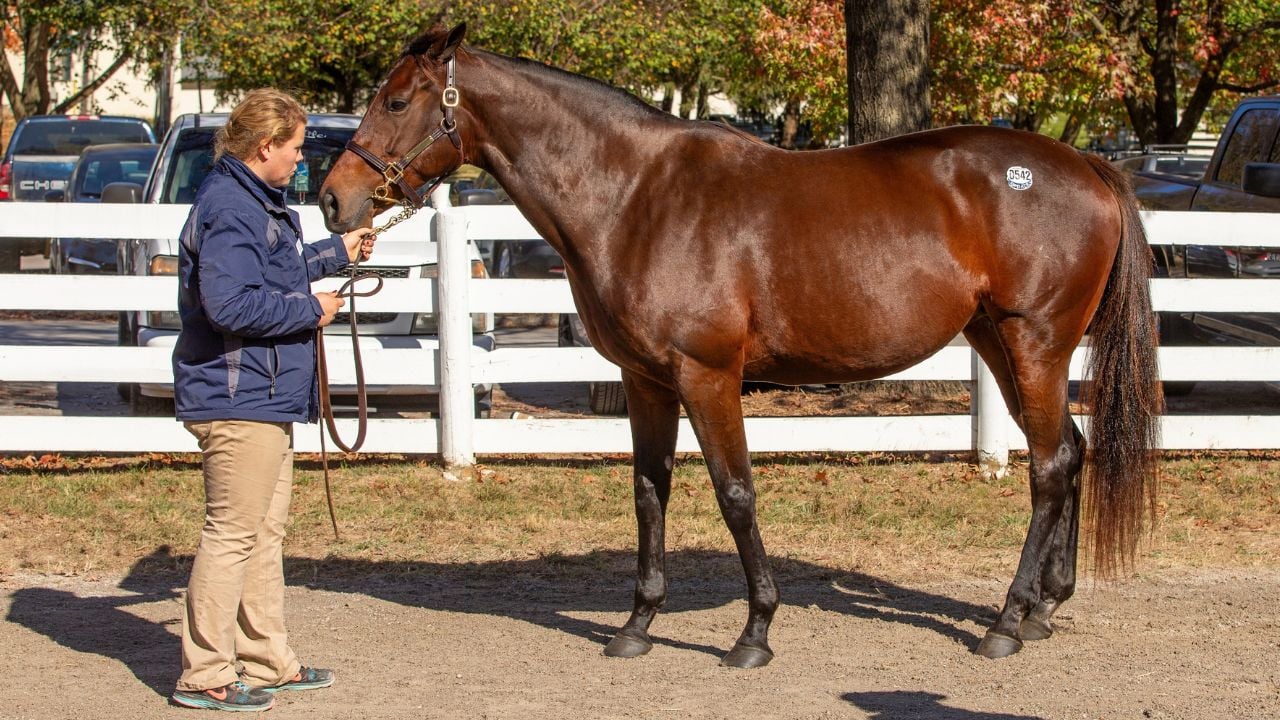
Keeneland runs its Fall Meet from October 2 through October 24 this year, seventeen days built around six Grade 1 stakes that double as Breeders’ Cup preps.
Race fans pack a tailgate spread into the parking lots and walk over to the paddock rail before a single horse loads into the gate.
The dress code shifts by room, from smart casual with denim allowed at the rail to a coat and tie required inside the dining rooms.
Nobody thinks twice.
Taking a weekday afternoon off work to watch horses circle a walking ring would raise questions almost anywhere else in the country.
In Lexington, it barely earns a second look.
Big Blue Madness
Big Blue Madness turns an October exhibition scrimmage into the closest thing Kentucky has to a bowl game.
This year it lands at Rupp Arena on October 2, the event Kentucky Athletics uses to open both the men’s and women’s basketball seasons.
Keeneland opens its Fall Meet the same Friday, a few miles across Lexington, and neither event treats the other as competition.
Students used to camp outside the arena for tickets days ahead of time.
That camping tradition traced back to when the event kicked off at midnight, the earliest hour NCAA rules once allowed a team to practice.
Tickets move through an online request process now, but the midnight kickoff itself never changed.
Football barely registers.
College football fills stadiums across the SEC that same October weekend, and many fans still check the basketball score first.
Bourbon Festival Season
Bardstown fills up every September for the Kentucky Bourbon Festival, four days built around Spalding Hall and running September 10 through 13 this year.
Teams race to muscle 500-pound bourbon barrels down a course during the World Championship Bourbon Barrel Relay, an event open to anyone willing to show up and lift.
A bottle auction inside the Oscar Getz Museum raises money by selling off rare pours few visitors ever get a chance to taste.
Just a normal Saturday.
Kentucky distillers craft about 95% of the world’s bourbon, according to the Kentucky Distillers’ Association, and festival season is where that math turns into a public party.
More Barrels Than Kentuckians
Kentucky’s distillers keep more than 16 million barrels of bourbon aging in warehouses at any given time.
That’s more barrels than the state has residents, since Kentucky’s population sits at about 4.6 million people.
Court Days Trading
Court Days returns to Mount Sterling’s courthouse square this year, October 16 through 18.
The festival traces its start to 1794, when a circuit judge came to town once a year.
Settlers turned the annual visit into a trading day for horses, mules, knives and guns.
The trading day stuck.
Roughly 1,000 vendors still set up on the courthouse square, and organizers put yearly attendance at somewhere around 200,000 people.
Locals still call it Court Days long after the event outgrew its original courthouse errand.
World Chicken Festival
London throws a party for fried chicken every September, and this year’s World Chicken Festival lands on the 27th.
Organizers built the festival in 1990 to mark 100 years since Colonel Harland Sanders’ birth, honoring the county’s ties to his chicken business.
A stainless steel skillet ten feet across and weighing 700 pounds anchors the festival grounds, big enough to fry about 8,000 chicken quarters over one weekend.
It never leaves that spot.
Volunteers work the skillet’s open flame in shifts all weekend.
Nonprofit groups use the crowd to raise money for themselves too, not just for the festival.
Burgoo at Fall Gatherings
Burgoo shows up at tailgates, church suppers and harvest gatherings all fall, a stew thick enough to stand a spoon in.
Other states along the Ohio River simmer a hunter’s stew too, but only Kentucky calls the dish burgoo and treats it as an official taste of fall.
Food historians credit the dish’s fame in the state to Gus Jaubert, a Civil War-era army cook who reportedly stirred thousands of gallons of it for soldiers passing through.
One Lexington grocer cooked burgoo well enough that a Kentucky Derby horse carried his nickname into the starting gate.
The horse won.
Burgoo King took the 1932 Derby outright.
A proper batch still has to cook outdoors over an open flame, letting the smoke work its way into the pot before anyone ladles out a bowl.
Psst! How much do you know about Kentucky’s fall history? Take our quiz and see how many you can get right.
Quiz
Kentucky Fall IQ
Answer these questions on Kentucky’s fall history and traditions. We bet you can’t get them all right. Prove us wrong?
Every October, ghost hunters fill a former tuberculosis hospital just outside Louisville. What’s it called?
Woolly Worm Forecast
Beattyville spends the last full weekend of October racing woolly worm caterpillars down a track, and the town has done it every year since 1988.
Contest judges check each caterpillar's stripes before the races start.
Local folklore holds that its 13 body segments predict the coming winter, light brown for mild stretches and black for bitter cold.
Whichever caterpillar wins the day's races becomes the year's official forecaster, outranking the local weatherman for one afternoon.
Nobody checks an app first.
Car shows, a parade and live music round out the weekend.
Organizers put attendance at up to 110,000 people.
Beattyville barely holds that many.
Chasing Leaf Season
Red River Gorge draws leaf-peepers from neighboring states every fall, packing narrow two-lane roads that were never built for that kind of traffic.
The Red River Gorge peaks in stages: Higher elevations turn color first, typically in the first two weeks of October.
Lower valleys and trails hold out until the last week of the month.
Getting there means taking the Mountain Parkway to the Slade exit, the same turnoff for Natural Bridge State Resort Park.
The parkway backs up.
Weekday mornings thin the crowd out considerably, but weekend afternoons in the back half of October pack the overlooks shoulder to shoulder.
7 Roadside Rules That Catch Kentuckians Off Guard on Rural Highways
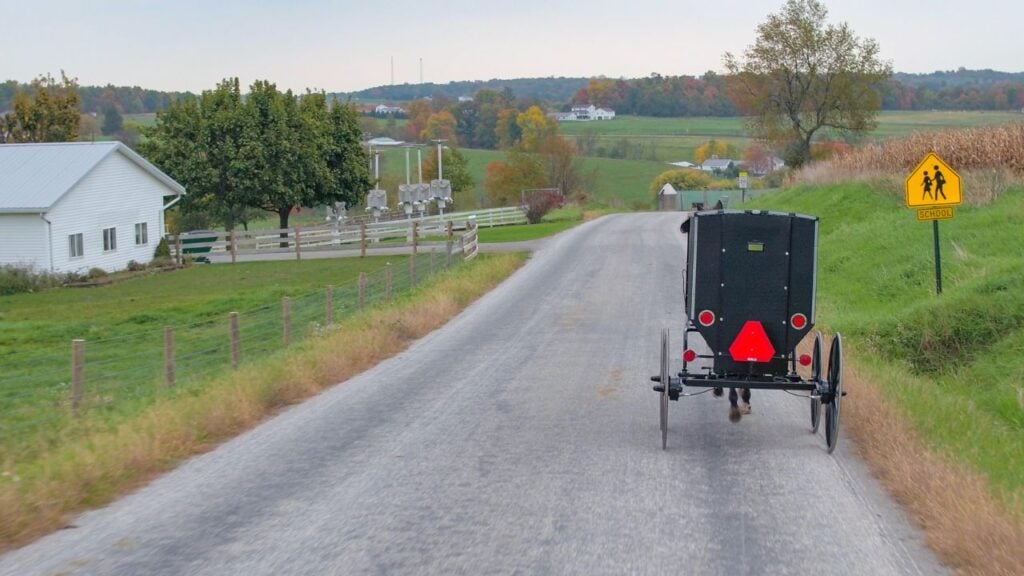
Kentucky law makes a cattle owner liable for the damage loose animals cause on a rural road, whether or not the fence around them met a lawful standard.
A cow standing on a dark back road isn't rare, and whose fault that collision becomes is packed into a chapter of state law many drivers have never read.
7 Roadside Rules That Catch Kentuckians Off Guard on Rural Highways
