
7 Roadside Rules That Catch Kentuckians Off Guard on Rural Highways

Kentucky law makes a cattle owner liable for the damage loose animals cause, whether or not the fence around them met a lawful standard.
A cow standing on a dark back road isn’t rare.
Whose fault that collision becomes is one of several answers packed into a chapter of state law most drivers have never read.
These are the roadside rules that catch Kentuckians off guard on rural highways.
Note: This is general information, not legal advice. Kentucky’s traffic laws and fines are subject to change, so confirm the current requirements with the Kentucky State Police.
1. U-Turns Near a Blind Curve
A driver can’t turn a vehicle around near a curve or the top of a hill in Kentucky unless traffic coming from both directions can see it happening.
The rule doesn’t bend for a road that looks empty.
State law sets that visibility at 500 feet in either direction before the turn is legal.
Rural Kentucky highways bend through hollows and climb ridgelines where that kind of sightline almost never exists.
If you miss a driveway or a farm gate out there, the legal move is finding a straightaway first.
That’s geometry, not guesswork.
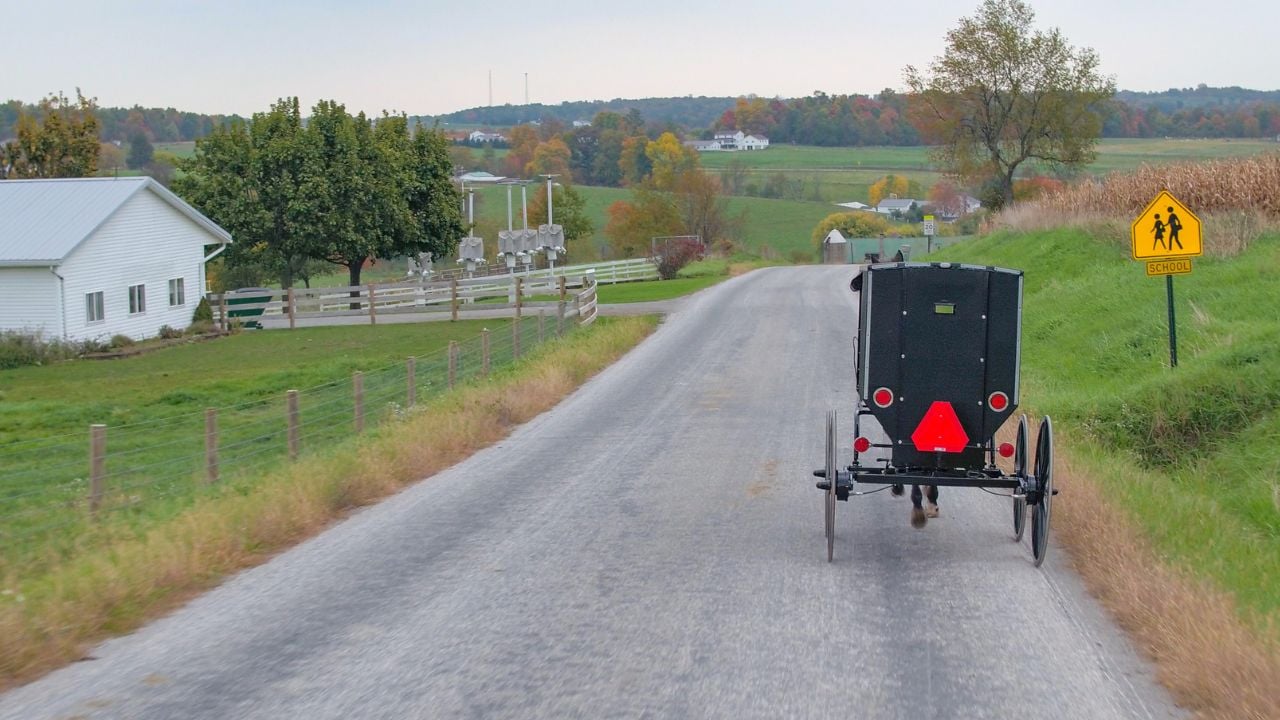
2. Passing an Amish Buggy
Kentucky’s traffic code treats a horse-drawn buggy as an ordinary vehicle, not a separate, slower category built with different rules.
That classification carries a consequence.
The same passing law that governs cars governs a buggy.
A driver can’t cross a solid double yellow line to get around a buggy, no matter how slow it’s rolling.
Christian, Todd, and Casey counties are commonly named as rural highways with regular buggy traffic from Kentucky’s Amish and Old Order Mennonite communities.
A driver stuck behind a buggy has to wait for a legal passing zone, the same as behind a tractor or a school bus.
It still counts as traffic.
3. Passing a Funeral Procession
Kentucky lets a driver pass a funeral procession, just not everywhere.
Many drivers assume passing a procession is flatly illegal.
State law says otherwise once the procession moves onto a road outside a city or town’s corporate limits.
Inside Bowling Green or Lexington, passing a procession stays off the table unless an officer waves a driver through.
Out on a rural highway between towns, that ban lifts.
A driver may pass with due caution, as long as nobody in uniform says otherwise.
City limits change the rule.
4. Crossing the Highway on an ATV
An all-terrain vehicle (ATV) can’t legally cruise down most Kentucky highways, but the law carves out a narrow crossing exception rural riders use constantly.
A rider can cross a two-lane highway at close to a 90-degree angle for no more than two-tenths of a mile before the exception runs out.
Farm work, construction, and snow removal earn a longer leash.
Those riders can stay on the highway itself instead of just crossing it.
The ATV still needs a headlight, taillights, and a driver holding a valid license.
Everyone else gets two-tenths of a mile, then it’s back to the shoulder.
Seconds count.
5. Passing a Car Stopped on the Shoulder
Kentucky’s move-over law used to protect police cars and tow trucks.
Since 2024, it covers any vehicle showing hazard flashers, flares, or another warning signal on the shoulder, a stalled farm truck included.
On a rural highway with fewer than four lanes, the law skips the lane-change option and asks for a slower speed instead.
Rural Kentucky mostly qualifies.
Psst! How much do you know about Kentucky’s rural driving rules? Flip these cards and see how many you get right.
6. Hitting Loose Livestock
Cattle loose on a Kentucky road are somebody’s legal responsibility because the state isn’t open range, whatever a driver who just moved in from out West might assume.
State law makes a cattle owner liable for the damage their animals cause once they’re loose, whether the fence around them met a lawful standard or not.
That liability can run the other way too.
A driver who plows into a cow standing in a dark stretch of highway can still end up sharing the blame if they were speeding or not watching the road.
Fault isn’t automatic.
7. The Unposted Speed Limit
Kentucky’s rural highways run for miles without a single speed limit sign, yet state law still sets an enforceable number.
State law sets a default of 55 mph on any state highway that carries no posted sign.
That default drops to 35 mph inside a business or residential district.
The 55 mph ceiling still applies on Kentucky’s narrow, curvy state routes that wind through farm country without a number ever posted along the shoulder.
No sign, no exception.
Meeting a Stopped School Bus
On an ordinary two-lane Kentucky highway, drivers coming from either direction have to stop for a school bus once its arm swings out, and its lights start flashing.
A 2026 law tightened that requirement further.
The stop requirement now lifts only for a driver approaching from the opposite direction on a wide, divided highway.
That highway needs at least four lanes with an elevated barrier or an unpaved median between them.
A painted turn lane doesn’t count anymore, and it never counted on a narrower rural route to begin with.
Guessing wrong here gets expensive.
What a Kentucky School Bus Ticket Costs
A first conviction for passing a stopped Kentucky school bus carries a fine between $200 and $500.
That first conviction also carries a mandatory minimum of 30 days in jail, up to 60 days.
A second offense within three years jumps to a $300 to $1,000 fine, with a mandatory minimum of 60 days in jail, up to six months.
Every conviction adds a minimum of six points to the driver’s record.
A judge can’t waive that minimum fine.
After a Cattle Impoundment
A Kentucky county sheriff who finds cattle loose on a rural highway can impound them on the spot instead of only noting the plate of whoever hit one.
Getting them back costs the owner a dollar a head plus feeding costs, and the impounding fee itself is capped at three dollars.
9 Kentucky Traditions Out-of-Staters Think Are Just for Derby Week

The Kentucky Derby wraps up in about two minutes, yet outsiders still talk as if the state’s whole spring calendar revolves around that single race.
It doesn’t come close, and several of the traditions outsiders assume live and die with Derby week run all year long.
9 Kentucky Traditions Out-of-Staters Think Are Just for Derby Week
9 Kentucky Foods That Horrify the Rest of the Country
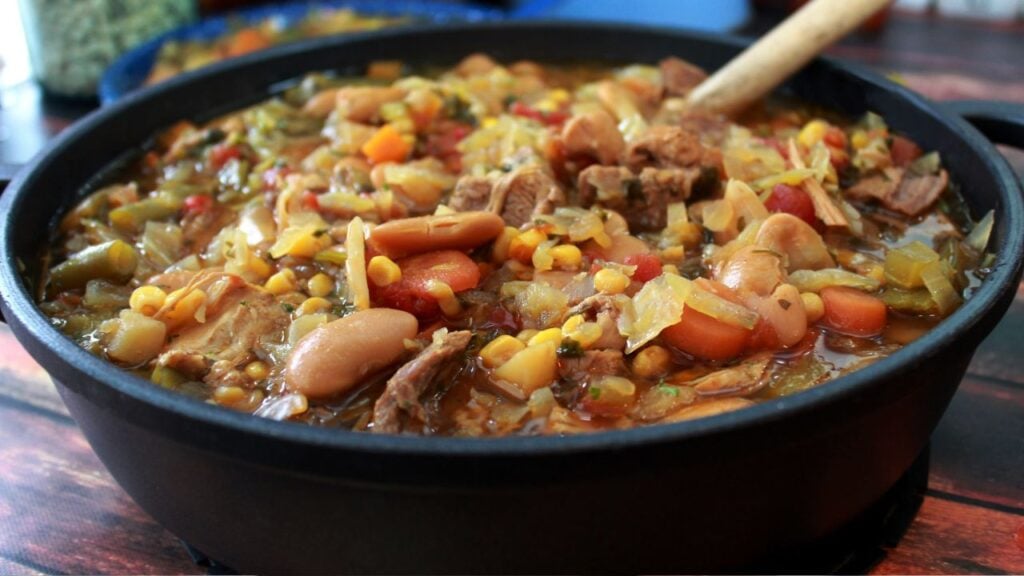
A diner outside Covington serves a breakfast dish the menu simply calls goetta, and first-time visitors rarely guess what’s in it before they take a bite.
These are the Kentucky foods that make visitors from other states do a double take, from a slow-cooked burgoo to dishes locals grew up on without a second thought.
