

How Long Is Too Long? The Awkward Question Georgians Face About Overstaying Houseguests

Southern hospitality has a shelf life in Georgia, whatever the postcards from Savannah promise.
Twenty-two percent of hosts admit they’ll flat-out tell a houseguest it’s time to go, according to a survey of 2,000 Americans conducted last fall.
That same discomfort shows up in guest rooms across the country, not just in Georgia.
So, how long is too long for a guest’s stay?
Note: This is general information, not tax advice. Federal tax rules are subject to change, so confirm the current requirements with the Internal Revenue Service (IRS).
Georgia’s Six-Day Number
Georgia’s houseguest question starts with a number every host in the country shares: Six days.
A survey of 2,000 Americans found that hosts hit their limit after six days, according to Talker Research, a national polling firm that fielded the study last fall on behalf of Avocado Green Mattress.
There’s not much wiggle room.
About a third of hosts start dropping hints once that line passes, and roughly one in five will just say it outright.
Georgia’s own etiquette culture decides what happens after that point, and it rarely involves saying so outright.
Georgia Hosts Run Four Different Clocks
Georgia hosts don’t count every overnight guest on the same clock.
The six-day survey average is only the baseline, the number that applies to an ordinary weekend visitor.
A host’s own kids get four extra days on top of that baseline, running the clock to 10 days total before it feels long.
Parents land in between, with an eight-day grace period before a visit starts to wear on a host.
In-laws and other extended family get the shortest runway of all, just five days, the same survey found.
Why Georgians Say It Last
Georgians raised on Southern manners are some of the last people willing to say a visit has run long.
Politeness runs deep enough that many hosts will rearrange an entire week before they’ll say the sentence out loud.
Emily Post’s own guidance keeps a houseguest’s stay to three nights.
Full stop.
Georgia hosts stretch that further for a family reunion, a new baby, or anyone flying in from out of state, but the base expectation stays short.
Reading the room matters more in Georgia than in many other places, since Southern manners run on hints instead of straight talk.
National etiquette expert Jan Goss says it plainly: “Better to leave when everyone’s happy than to overstay your welcome and end it on a bad note.”
A Georgia host will offer to drive a guest to the airport a full day early before ever saying the visit ran long.
Georgians tend to agree, even when they’d never say so directly.
Psst! How much do you know about Georgia’s hosting history? Take our quiz and see how many you can get right.
Quiz
Georgia Hospitality IQ
Answer these questions on Georgia hosting history and Southern hospitality. We bet you can’t get them all right. Prove us wrong?
Which restaurant chain, founded in Hapeville, Georgia, trains workers to answer “thank you” with “my pleasure” instead of “no problem”?
Signs Before the Ask
Georgia hosts tend to signal a long visit in small, physical ways long before anyone says a word.
A Georgia host starts folding the guest towels the way Southern hosts fold towels for company, not the everyday ones.
Once a houseguest's stay runs into a Georgia Bulldogs Saturday, the host starts talking through kickoff plans that don't leave room for company.
Grocery runs multiply once a Georgia summer adds a full house to the monthly electric bill.
July humidity keeps the air conditioning running against a full house of body heat and open doors.
That adds up fast.
The fried chicken plate at Sunday dinner stops coming with three sides and drops to two.
A host starts mentioning the week's errands out loud, a polite invitation for a guest to make other plans.
About four in 10 hosts don't have a dedicated guest room at all, the same survey found, and more than half of those hosts put an overnight guest on the couch instead.
A missing guest room rarely stops a Georgia host from taking someone in.
Augusta's Way Around It
Augusta, Georgia, found a way to dodge the whole houseguest question one week a year.
Federal tax law lets any homeowner rent out a primary residence for up to 14 days a year without reporting a dollar of that income, a provision known nationally as the Augusta Rule.
Homeowners near Augusta National lobbied Congress for the exception back in 1976, right as the Masters Tournament started turning their neighborhoods into a housing market unlike anywhere else in Georgia.
That's how Augusta earned the name.
Instead of putting up a houseguest for Masters week, many Augusta homeowners pack a bag themselves and rent the whole house out.
Booked revenue on sites like Airbnb and Vrbo topped $8.5 million ahead of last year's tournament, according to Front Office Sports.
Smith and Howard, an accounting firm that guides homeowners through the rule, says many owners collect $10,000 or more for the week.
Worth every dollar.
There are no towels to launder.
Some of those same homeowners spend Masters week as someone else's houseguest, renting out their own place while they crash with a sister in Evans or a cousin in Martinez.
It's the one week Augusta would rather collect a check than host anybody at all.
When the Whole State Faces It Together
Georgia runs into the houseguest question as an entire state a few times a year, not just household by household.
Savannah's St. Patrick's Day parade is one of them.
The parade dates to 1824 and pulled in crowds near 250,000 for its 200th anniversary, enough that Savannah's own schools and many downtown businesses close for the day.
Hotel rooms downtown book out months ahead of March 17, which pushes many visiting family from Atlanta and beyond onto a relative's pull-out couch instead.
Families across coastal Georgia open their guest rooms for the whole weekend, end date or not.
Hurricane season forces the same question with none of the planning.
Coastal Georgians evacuating inland turn Interstate 16 into a one-way route toward Dublin, a 125-mile run that reverses every lane to push traffic west during a mandatory evacuation.
Georgia's evacuees don't set a return date.
They just watch the radar.
Hurricane Helene cut power to more than 1.3 million Georgia Power customers after it tore through South Georgia near Valdosta in September 2024, and full restoration took more than a week.
A week without power turns any evacuee into an open-ended houseguest, whether the host ever set a checkout date or not.
8 Reasons Your Georgia Porch Feels Hotter Than the Rest of Your House
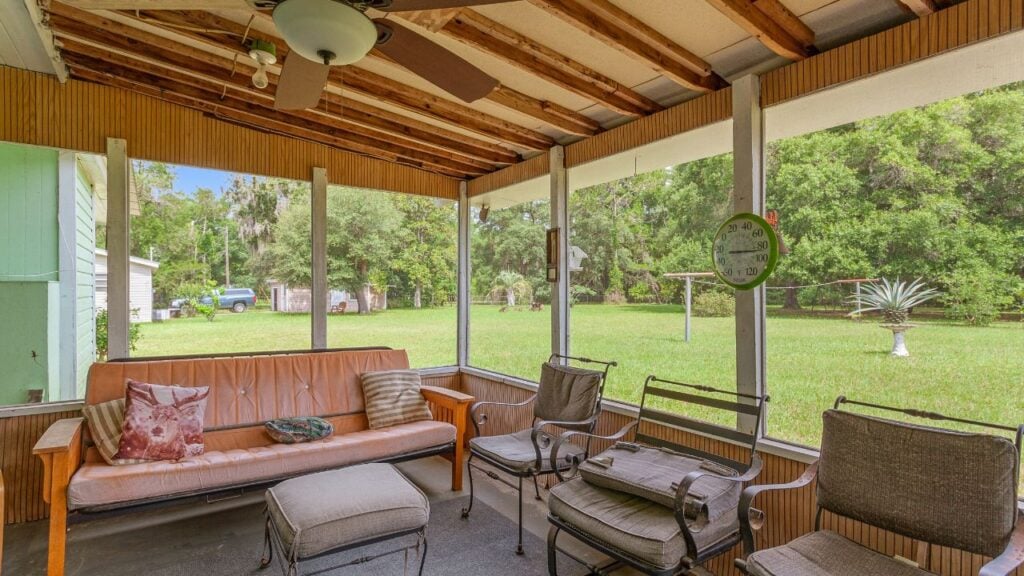
A homeowner outside Macon steps onto her covered porch expecting shade and gets a wall of heat instead.
Her living room, ten feet away, stays a comfortable 72 degrees the whole time.
8 Reasons Your Georgia Porch Feels Hotter Than the Rest of Your House
9 Cracker Barrel Ordering Mistakes Georgia Diners Make
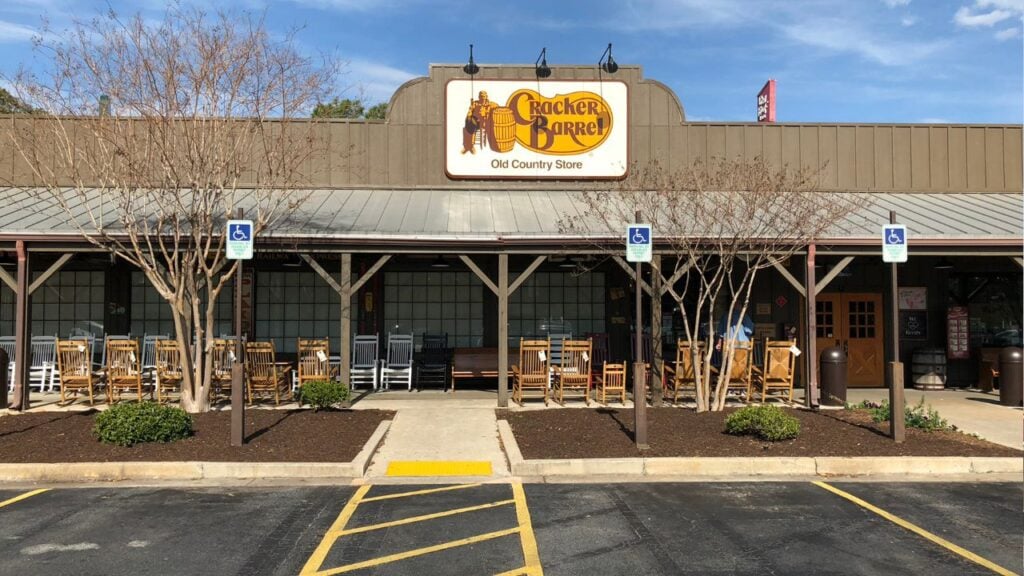
Two regulars slide into a booth at the Cracker Barrel off Exit 62 in Tifton at 6:20 on a Tuesday.
They order the same dinners they always order, missing the moves that would make the meal better.
