
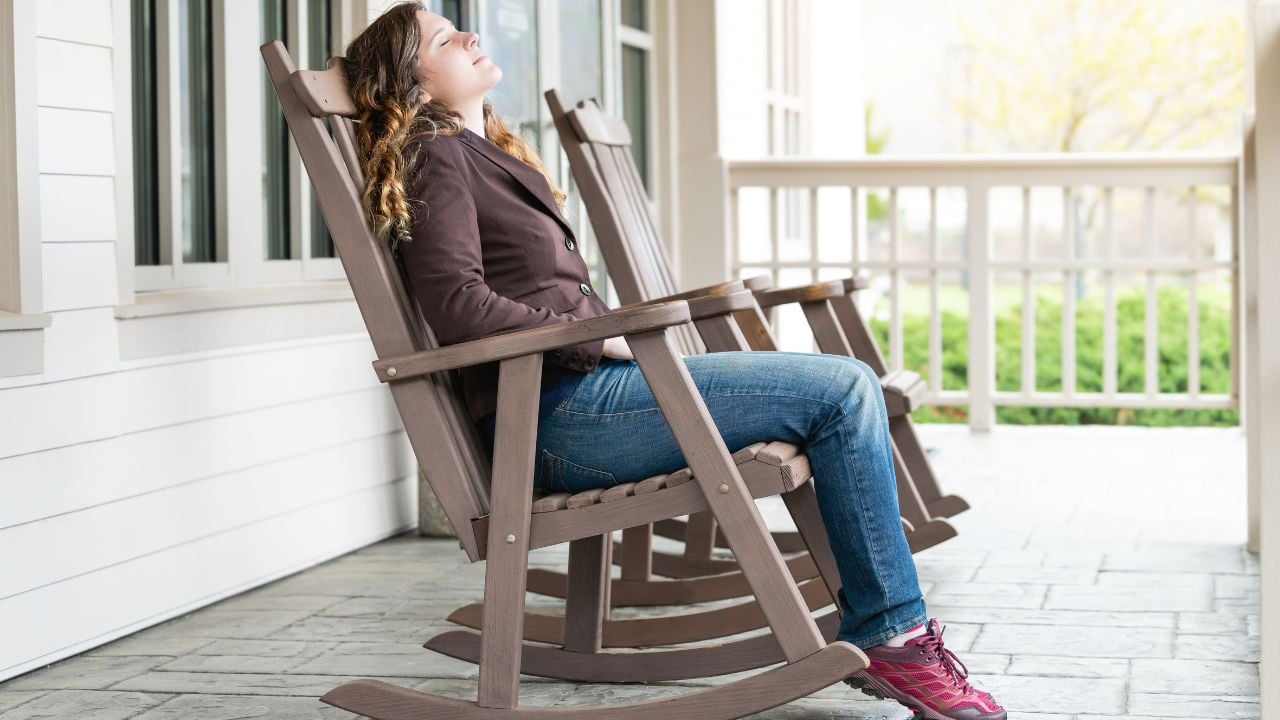
7 South Carolina Porch Traditions That Are Slowly Disappearing

South Carolina lost more than 2,100 working farms between 2017 and 2022, a drop of nearly 9%. Every one of them once needed a way to call people in from the fields for supper.
A bell mounted by the porch door did that job.
It’s a small, ordinary object, and it’s fading off South Carolina porches the same way it’s fading off porches on farms across the country.
These are the porch traditions that are slowly disappearing.
1. Piazza’s Cooling Job
Many of South Carolina’s grandest historic porches aren’t even called porches. In Charleston, they’re piazzas, a word borrowed from Italian that architects started building onto single houses in the 1700s.
Builders lined them up facing south or west on purpose, catching the breeze coming off the Cooper and Ashley rivers before a single window fan existed.
That was the whole point.
A piazza did the job a window unit does now, and a South Carolina family without air conditioning depended on it every summer afternoon.
Air conditioning changed the math.
Many piazzas still stand up and down the Charleston peninsula, kept for the view and the ceiling paint, and used far less for the one thing they were built to do.
Charleston’s Piazza Had Its Own “Come In” Signal
Charleston’s piazza carries a second door many visitors never notice, one that faces the street but opens only onto the porch itself, not straight into the house.
Whether that door stood open or shut was the actual message.
An open piazza door meant the family welcomed a visitor to climb the steps and knock at the inner front door waiting inside.
A closed door meant come back another day, no explanation owed.
2. Sleeping Porches
South Carolina summers used to be survived, not cooled, and the screened sleeping porch was how a family got through the worst of it.
Bedrooms held too much heat by nightfall, so households moved beds, cots, and hammocks onto a screened porch and slept there instead, letting the night air and the screen wire do the work air conditioning does now.
Mosquitoes stayed out.
Home air conditioning didn’t become common across the South until the late 1960s, and once it arrived, families gave up sleeping outdoors almost overnight.
Nobody tore them down.
Many older South Carolina homes still carry a sleeping porch, just repurposed now as a sunroom, a home office, or storage for porch furniture nobody uses anymore.
3. Shelling Peas and Snapping Beans
South Carolina kitchens used to run on field peas, and the porch was where the prep work happened before a single pea hit the pot.
Families sat together on the steps with a washtub or a bowl between their knees, snapping beans and shelling peas by hand while they talked.
It wasn’t a chore exactly.
It was closer to the evening news.
South Carolina’s own Sea Island red pea nearly disappeared amid war, failing economies, and shifting farm trends, per the state, and survives today only because a handful of small Lowcountry farms kept growing it.
Many peas now arrive already shelled, frozen, or bagged from the store, so that particular porch chore rarely happens anymore.
4. Joggling Boards
South Carolina invented its own piece of porch furniture for courting, and it’s called a joggling board.
The plank runs up to 16 feet long, balanced on springy stands at each end, and it bounces just enough to nudge two people sitting at opposite ends slowly toward the middle.
That was the entire design.
The board traces back to a Sumter County family in the early 1800s, and by the 1880s they sat on porches all over the Lowcountry, always painted a green so dark it reads almost black.
World War II nearly killed the tradition.
Lumber and hand labor both got expensive, and the boards mostly disappeared until a Charleston company revived the craft in 1970.
Many that survive today sit for looks rather than for joggling.
Psst! How old-school is your porch? Run through this checklist and see where you stand.
5. Weaving Sweetgrass Baskets
South Carolina’s sweetgrass baskets got their start on porches, generations before a single stand stood along Highway 17.
Gullah women in the Mount Pleasant area coiled the grass into baskets while sitting on their own porches in the evening, passing the stitches from mother to daughter by hand.
The craft is more than 300 years old, and for generations the porch was where it happened.
Highway 17 changed that.
Mount Pleasant weavers began setting up roadside stands once the highway was paved in 1931.
Weaving that used to happen porch to porch moved out to those huts, then increasingly to festival booths and online shops today.
Coastal development keeps shrinking the marshland where sweetgrass grows, and cheaper imported look-alike baskets now compete for the same buyers.
Fewer young weavers are learning the coiling stitches at all, so a skill that used to travel from one family’s porch to the next risks stopping with whoever knows it now.
6. Porch Dinner Bell
South Carolina farmhouses once mounted a bell right by the porch door for one job: Calling everyone home for supper.
A ring carried across a field a lot farther than a shout ever could, and it meant the same thing whether it reached a spouse, a child, or a hired hand two fields over.
Nobody needed an explanation.
South Carolina lost more than 2,100 farms between 2017 and 2022 alone, a drop of nearly 9%, according to the U.S. Department of Agriculture’s own count.
Fewer working farms means fewer people out in a field who’d need calling in, so that bell by the door rarely earns its keep anymore.
7. Open-Door Front Porch
South Carolina towns used to run on porch visits that nobody scheduled ahead of time.
Sitting out front, in view of the sidewalk, was itself the invitation, and a neighbor walking by felt free to stop, climb the steps, and stay a while.
No phone call. No text.
Air conditioning pulled people back inside, television gave them a reason to stay there, and cars made it easy to skip the sidewalk entirely and drive straight into a garage.
That combination gutted porch culture across the whole country, not just South Carolina.
Many South Carolina porches still exist.
Fewer of them still catch a neighbor mid-walk the way they used to.
Icemen Used to Deliver Ice to the Porch
South Carolina households once ran their refrigeration off a porch icebox and a card in the window, decades before anyone owned a refrigerator.
The card carried a number, 25, 50, or 100 pounds, turned to face the street so the iceman could read it without ever knocking.
No knock required.
He’d haul the block straight to the icebox parked on the porch and move on to the next house.
Electric refrigerators pushed the iceman out of a job through the 1930s and 1940s, and Charleston’s last delivery mules were sold off in 1951, with the city’s biggest ice plant shuttered by the early 1950s.
The porch icebox itself is mostly a flea-market find these days.
Not Every Porch Habit Is Fading
South Carolina porches aren’t disappearing from new construction, whatever the empty porch furniture suggests.
The South Atlantic Census region, which includes South Carolina, saw 74% of new homes built with a porch in 2024, one of the highest shares of any region the National Association of Home Builders tracks.
Builders never stopped.
What changed is what people do out there once the porch gets built, not whether it gets built at all.
Haint Blue Outlived Its Own Meaning
South Carolina’s porch ceilings carry a pale blue color across the Lowcountry, and many homeowners today pick it as simply a pretty paint choice.
One widely told account traces the shade to Gullah families along the South Carolina coast, who mixed a blue-gray wash from lime and indigo, believing it kept haints, or restless spirits, from crossing onto the porch.
By the 1800s, plantation owners were painting their own porch ceilings the same blue.
Charleston preservationists point to a plainer explanation.
Indigo dye was cheap and plentiful in 1700s Charleston, and a light, reflective ceiling simply made a shaded porch feel brighter.
No spirits required.
Nobody has settled which version is true.
Paint companies still sell the shade in a can today, with neither story mentioned on the label.
5 Heirloom Pie Recipes South Carolina Grandmothers Passed Down for Generations
Some of the best South Carolina kitchens still run on recipes with no measuring cup in sight, just a card in someone’s handwriting.
A few of those pies never even needed sugar to earn a spot at the table.
5 Heirloom Pie Recipes South Carolina Grandmothers Have Passed Down for Generations
11 Culture Shocks People Experience When Moving to South Carolina

A South Carolina retention pond can double as an alligator’s address, and nobody mentions it before closing.
New residents run into a handful of surprises like that before they’ve even unpacked the moving truck.
11 Culture Shocks People Experience When Moving to South Carolina
