
9 Things Nobody Warns You About Before Moving to Maine

Maine is the most rural state in the country, according to the U.S. Census Bureau, with a bigger share of its residents living outside any city or town than anywhere else in America.
That kind of space rewrites a few rules newcomers assume hold everywhere.
Some of what catches new residents off guard costs money.
These are the things nobody warns you about before moving to Maine.
Note: This is general information, not legal or tax advice. Maine’s tax rates, inspection requirements, and hunting and road rules are all set by state law and subject to change.
1. No Hunting on Sundays
Maine bans hunting outright on Sundays, and has since 1840.
Only Massachusetts still holds the same line. Every other state allows at least some Sunday hunting.
Maine’s Supreme Court took up a constitutional challenge to the ban in 2024 and upheld it, ruling that the state’s newer “right to food” amendment doesn’t cover illegal hunting.
The ban stands.
Hikers, dog walkers, and anyone letting kids wander toward the tree line get one day a week with no gunfire out there, a detail longtime Mainers rarely think to mention.
2. Yearly Inspection Stickers
Maine still requires every vehicle to pass a state safety inspection each year, no exception for a car fresh off the lot.
After New Hampshire ended its own inspection program in early 2026, Maine became one of just thirteen states left with the requirement.
The sticker isn’t optional.
A state with no inspection law lets a driver go years without popping a hood for anyone but a mechanic; Maine puts that check back on the calendar every twelve months.
The sticker runs around $25, due the same month every year, whether the car passed an inspection somewhere else the week before the move or not.
3. No Town Government
Maine’s unorganized territory covers more than half the state’s land area, and none of it has a town.
There’s no select board, no town meeting, and often no local police department out there to call.
The Maine Legislature itself serves as the governing body for that whole stretch, with day-to-day services split among several state agencies and the counties instead.
Some carry numbers, not names.
Buy a camp on a lake up north, and a neighbor may need to explain who plows the road, since it likely isn’t a town crew.
4. Your Car Tax Follows You
Maine’s excise tax charges car owners every single year, collected by the town, and due before the registration can be renewed.
A new vehicle starts at 2.4% of its manufacturer’s suggested price in year one, then steps down on a fixed schedule Maine sets by law.
It never fully disappears.
Anyone used to paying sales tax once and moving on gets caught off guard by a bill that lands in the mailbox every single year the car stays registered.
The Math Behind Maine’s Car Tax
Maine’s excise tax runs off the vehicle’s manufacturer’s suggested retail price, not what a buyer paid, so Maine still taxes a heavily discounted new car at the sticker number.
A $32,000 new vehicle owes about $768 in its first year, at the 2.4% rate.
That same vehicle drops to roughly $560 in year two and about $432 in year three, following Maine’s fixed decline schedule.
By year six, the rate bottoms out at 0.4%, but the bill keeps arriving every year after that for as long as the car stays registered in Maine.
5. Mud Season Road Limits
Maine posts weight limits on many of its roads every spring, restricting some routes to 23,000 pounds while the ground thaws.
The window can run anywhere from mid-November through early June, and towns mark the affected roads with signs at each end.
It’s not just a suggestion.
Cross a posted road at the wrong time in April with a fully loaded moving truck, and a town crew can turn it back, since the restriction protects a thawing roadbed from sinking under the weight.
Psst! Think you’ve already got Maine figured out? Flip these cards and see what holds up.
6. Heating Oil Deliveries
Maine heats just over half its homes with delivered fuel oil, a rate far higher than almost anywhere else in the country.
Nationally, natural gas supplies about 47% of home heating and electricity another 42%. In Maine, both combined still trail oil.
No monthly bill arrives.
Watching a tank gauge replaces opening a monthly bill, and scheduling a delivery truck means paying for a few hundred gallons at once instead of spreading the cost out.
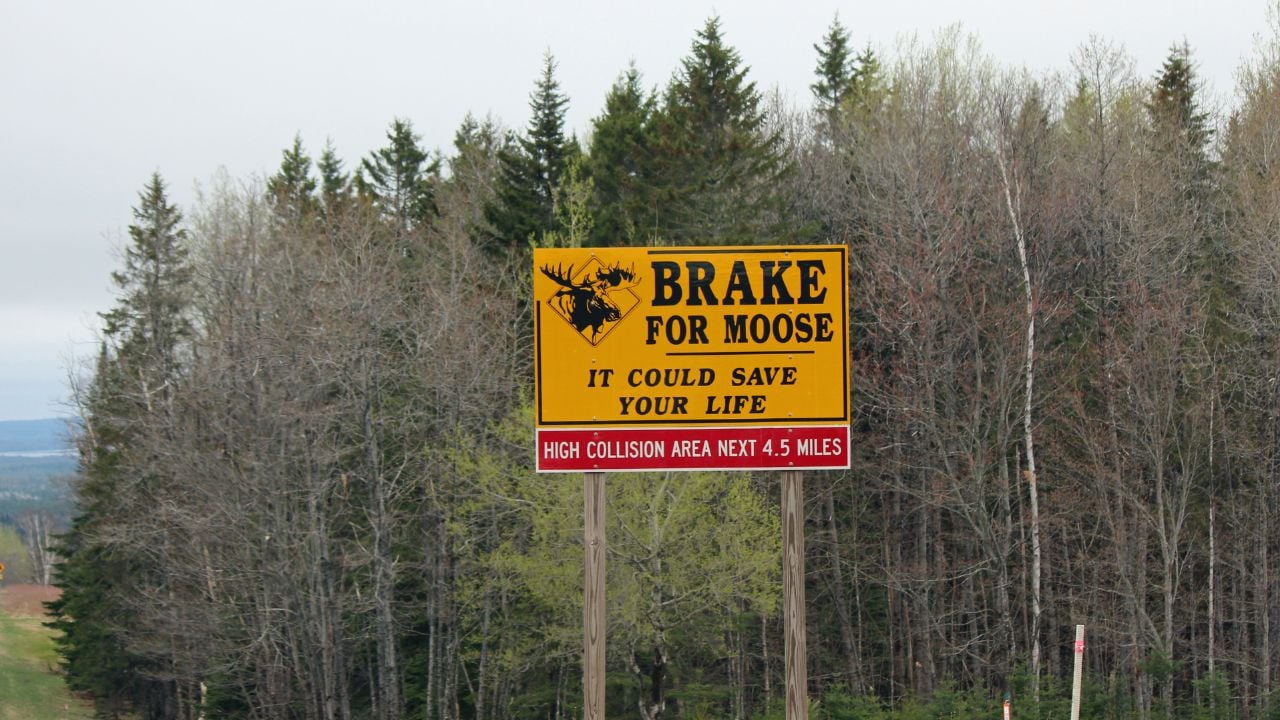
7. Moose on the Road After Dark
Maine’s moose crashes cluster inside two narrow windows many newcomers never think to ask about: 8 to 11 p.m., and again around 4 to 5 a.m.
Crashes peak in May and June, and close to three-quarters of them happen after dark, mostly inside those same hours.
The damage adds up fast.
Each moose collision costs an average of $179,221 in Maine, and three people died in moose crashes between 2020 and 2024, more than every other animal-related crash death in the state combined over that stretch.
8. Private Roads You Now Maintain
Maine towns have no legal authority to spend public money plowing or repairing a private road, no matter how many houses sit on it.
That responsibility passes straight to whoever owns property along it.
The town won’t come.
Buyers on one of Maine’s many private roads inherit the maintenance bill along with the house, and without a formal road association splitting the cost, one neighbor can end up covering the plow truck for everyone.
9. Twelve Months Before Tax Relief
Maine will knock up to $25,000 off a home’s taxable value through its Homestead Exemption, but new owners can’t apply on day one.
The state requires twelve straight months of owning and living in the home before the paperwork can even go in.
That’s $25,000 waiting.
Close on a house in March 2026, and the earliest possible filing date is March 2027, with the exact savings still hinging on the town’s certified ratio, so the discount looks different from one Mainer’s tax bill to the next.
