
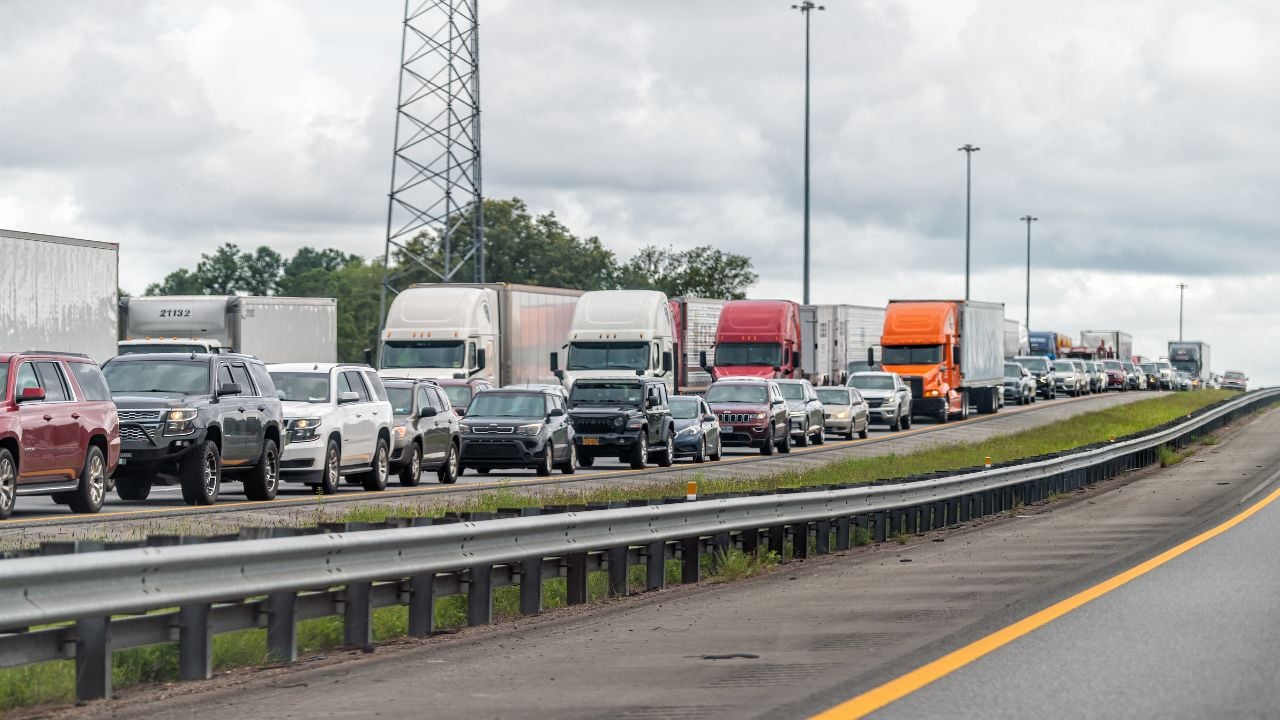
The 8 Worst States to Drive In, Ranked. Here’s Where North Carolina Lands

WalletHub recently ranked every state from the best to the worst to drive in for 2026, and the gap between first and last is nearly 20 points on its 100-point scale.
That’s big.
Here are the eight worst states to drive in, and where North Carolina falls compared to the rest of the United States.
Note: This is general information, not legal advice. Driving laws and conditions vary by state and are subject to change.
How This Ranking Works
WalletHub built its ranking by comparing all 50 states on what it costs—and feels like—to drive there.
The company grouped its factors into four buckets:
- What a car costs to own and fuel
- How bad the traffic and roads are
- How safe it is
- How easy it is to find a mechanic or a gas station nearby
Cost, traffic, and safety carry the heaviest weight.
Access counts for less.
These are the worst states to drive in, according to those metrics.
1. Hawaii
Hawaii finished last of all 50 states in WalletHub’s 2026 ranking, with an overall score of 43.34 out of 100.
Gas is the biggest culprit.
A gallon of regular runs $5.44 in Hawaii, one of the two highest prices in the country.
Everything else follows the same pattern.
Cars, parts, and repairs all travel to the islands by boat before they reach a driveway, so Hawaii also lands near the bottom for how easy it is to find a mechanic or a dealership nearby.
Only one category breaks the streak.
Hawaii’s drivers post one of the best safety records in the nation, but a high price tag still drags the whole state to the bottom of the list.
How WalletHub Adds Up a State’s Score
WalletHub splits its 100 points across four categories, and no single category decides a state’s fate.
Cost of ownership, traffic and infrastructure, and safety are each worth 30 points.
Access to vehicles and repairs makes up the last 10.
That’s why Hawaii can post one of the best safety scores in the country and still land dead last overall.
2. Washington
Only Hawaii scored worse than Washington in WalletHub’s 2026 ranking, a 49th-place finish out of 50 states.
Gas prices explain a lot of that.
Washington drivers pay $5.19 a gallon for regular gas, among the steepest prices in the country.
Traffic compounds the problem.
Washington’s traffic and infrastructure score lands at 34th out of 50, just inside the bottom third nationally.
Not a great combination.
Washington’s one strength is access, ranking a strong 14th in the country for how easy it is to find a repair shop, a dealership, or a gas station nearby.
3. Montana
Montana’s roads carry some of the lightest traffic in the country, yet the state still finished 48th out of 50 in WalletHub’s ranking.
Congestion is barely a problem.
WalletHub ranked Montana’s roads and traffic 3rd best in the nation, ahead of nearly every other state.
Safety is where it falls apart.
Montana posted the 3rd-worst safety score of any state, and its drivers die in crashes at a rate of 1.49 per 100 million miles driven, about 25% above the national average.
Open roads don’t mean safe roads.
4. California
Nothing costs more to own than a car in California, at least according to WalletHub’s 2026 data, which puts California dead last of all 50 states for cost of ownership.
That helped drag the state to 47th out of 50 overall.
Regular gas costs $5.57 a gallon in California, the single highest price in the country.
Insurance and repair bills stack on top of that.
There’s one bright spot.
California ranked 1st in the nation for access to vehicles and repairs, meaning dealerships, mechanics, and gas stations are never far away.
A car is just expensive to keep running once you own it.
5. Maryland
Maryland’s traffic and infrastructure score is the worst of any state in WalletHub’s 2026 rankings, and that single number was enough to sink the state to 46th out of 50 overall.
One highway shows why.
The outer loop of the Baltimore Beltway, between Baltimore National Pike and Providence Road, is the most congested stretch in the region.
The whole Baltimore metro area is projected to waste $8.1 billion in time, fuel, and emissions over the next decade.
Washington, D.C. adds to the picture.
Only Los Angeles and New York City recorded worse congestion nationally, the same report found.
Maryland’s costs and access to repairs both land closer to the middle of the pack, which is the only reason the state didn’t rank even lower.
6. Colorado
Colorado finished 45th out of 50 in WalletHub’s ranking, weighed down by a rough traffic and infrastructure score.
Blame the mountains.
The Colorado Department of Transportation flags Sunday evenings from 3 to 6 p.m. as the worst stretch on I-70’s mountain corridor, when the drive back to Denver crawls to a stop.
Ski season makes it worse.
Weekend crowds headed to the resorts jam the same two-lane passes that carry everyday commuters, and Colorado’s roads and traffic score lands in the bottom third nationally.
A ski trip and a rush hour end up stacked on the same road.
7. Missouri
Missouri’s seatbelt numbers are among the worst in the country, and it shows up directly in WalletHub’s safety data.
Only 88.5% of Missouri drivers and passengers buckle up, a few points behind the national rate of 91.2%.
That gap helped drag Missouri’s safety score to the worst of any state in WalletHub’s 2026 rankings, part of why the state finished 44th out of 50 overall.
Costs tell a different story.
Missouri ranked 12th in the nation for cost of ownership, one of the cheaper states to keep a car running.
A cheap car and a dangerous road don’t cancel each other out.
8. New Hampshire
A rough score for traffic and infrastructure held New Hampshire to 43rd out of 50 in WalletHub’s ranking.
Its safety laws stand out for a different reason.
New Hampshire is still the only state in the country with no seatbelt law for adult drivers.
That surprises many people.
Buckling up in New Hampshire is a choice, not a citation waiting to happen, and many point to the state’s slogan, “Live Free or Die,” as the reason why.
No law requires it, but no law stops a driver from buckling up anyway.
Psst! See how these worst-ranked states stack up against North Carolina, side by side. Tap a column to sort, or search for your own state.
Where North Carolina Lands
North Carolina doesn’t come anywhere near this list.
WalletHub ranked North Carolina 9th out of 50 states overall, with a score of 60.71 out of 100.
That’s the 9th-best state to drive in, not the worst.
Cheap gas helps explain why.
North Carolina’s cost of ownership ranked 6th in the nation, and its access to repair shops and dealerships ranked 10th, both well ahead of every state covered above.
Its traffic and safety scores are more ordinary, landing in the low 30s and high 20s.
Nothing about North Carolina drags it toward the bottom of the ranking.
The very best state on WalletHub’s list, Vermont, posted a 63.08.
That’s a gap of just 2.37 points between North Carolina and Vermont, the best state to drive in.
6 Lidl Habits That Give Away a North Carolina Shopper
North Carolinians had years to get to know Lidl before much of the country ever set foot in a store.
That head start still shows up at the register.
6 Lidl Habits That Give Away a North Carolina Shopper
10 Things North Carolinians Know Not to Do During Hurricane Season
North Carolina’s mountains used to feel like the safe half of the state once hurricane season rolled around.
That reputation didn’t survive Hurricane Helene, and locals who never worried about storms before are paying closer attention now.
10 Things North Carolinians Know Not to Do During Hurricane Season
