
7 Charges on Every South Carolina Power Bill That Have Nothing to Do With Electricity

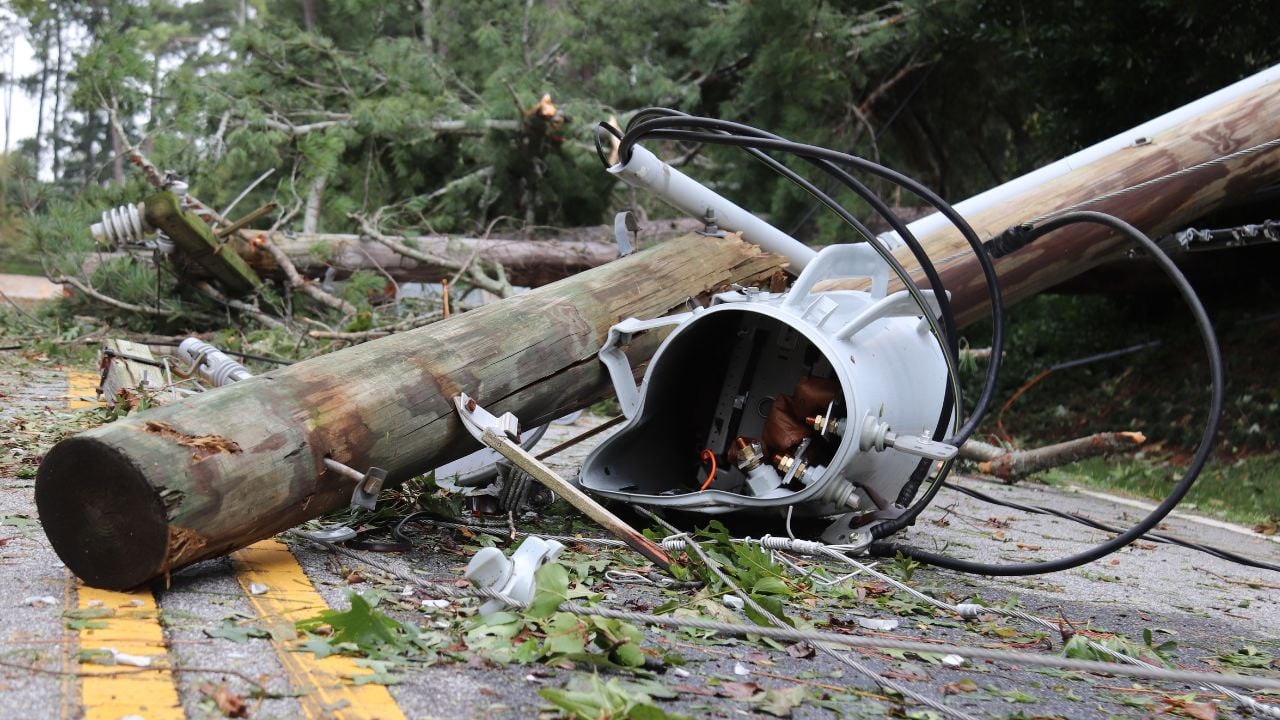
Duke Energy Carolinas customers started paying $4.58 more every month in January 2026 to retire bonds sold after Hurricane Helene, regardless of whether their lights went out.
It’s not the only line like that.
These are the fees folded into a South Carolina power bill that aren’t about your home’s energy consumption.
Note: This is general information, not financial advice. Utility rates and the riders described here vary by provider and are subject to change.
1. Your Basic Facilities Charge
Unplug every outlet in a South Carolina house for an entire month, and Dominion Energy South Carolina still mails a bill.
Every time.
That’s the Basic Facilities Charge, a flat $0.4274 a day, close to $12.82 over a typical 30-day cycle, showing up before the company counts a single kilowatt-hour.
Duke Energy Carolinas, Duke Energy Progress, Santee Cooper, and South Carolina’s electric cooperatives all bill some version of the same flat charge, usually under a different name.
It covers the meter, the wires, and the truck rolls, not the electrons.
2. Your DER Program Charge
A flat dollar a month lands on every Dominion Energy South Carolina bill, whether the house runs a single solar panel or not.
That’s the Distributed Energy Resource (DER) Program Charge.
Dominion’s own rate filings put it at $1.00 per account per month, collected to recover the state solar-interconnection program’s incremental costs.
Never touched a rooftop panel?
Doesn’t matter.
South Carolina requires its biggest utilities to run a net-metering program, and requires its electric cooperatives to write and publish net-metering policies of their own.
That means Duke Energy Carolinas and South Carolina’s co-ops carry the same kind of administrative cost too, just folded into the base rate instead of broken out as a line of its own.
3. Your DSM Rider
Dominion Energy South Carolina bills every residential customer for its own home energy audits and equipment rebates, whether that customer ever books an audit or claims a rebate.
Not optional.
It’s called the Demand-Side Management (DSM) Rider, and it funds the company’s own energy-efficiency programs rather than the electricity that reaches the meter.
The charge is small, $0.00278 a kilowatt-hour, about $2.78 on a 1,000-kilowatt-hour month.
Small, but it’s a line every residential customer pays, audit taken or not, rebate claimed or not.
4. Your Storm Recovery Charge
The storm that caused this bill is long gone from South Carolina.
The bill for fixing what it broke isn’t.
Duke Energy Carolinas added a new Storm Recovery Charge to South Carolina bills in January 2026, and it has nothing to do with the power flowing through the meter that month.
Every account pays it.
It costs a typical residential customer using 1,000 kilowatt-hours about $4.58 a month, financed through low-interest bonds sold to rebuild what Hurricane Helene tore down.
Duke Energy Progress customers farther east, in the Pee Dee region, carry a charge that started around $8.38 a month and has since dropped closer to $5, tied to a different run of storms between 2014 and 2022.
Psst! How much do you know about South Carolina’s power grid? Take our quiz and see how many you can get right.
Quiz
South Carolina Power IQ
Answer these questions on South Carolina’s power grid and the utilities behind it. We bet you can’t get them all right. Prove us wrong?
According to federal energy data, what generates the most electricity in South Carolina?
5. Reactor That Never Ran
Dominion Energy South Carolina customers pay toward two nuclear reactors at the V.C. Summer plant that were abandoned in 2017, years before either one ever produced a watt of power.
Nothing got built.
The remaining debt runs about $2.3 billion, and Dominion is still collecting it from customers, roughly $8 a month for the average residential customer and about 5.6% of a typical bill, on a timeline that runs until around 2039.
South Carolina's electric cooperatives owe a separate share of the same failed project to Santee Cooper, which sank $3.6 billion into the same two reactors before its board called off construction.
Why Two Different Nuclear Bills Exist
Dominion Energy South Carolina and Santee Cooper split the V.C. Summer nuclear debt into two separate piles, and that's why the numbers look so different.
Dominion's remaining $2.3 billion works out to about $8 a month per residential customer, spread over the roughly 15 years left on that debt.
Santee Cooper bills its own $3.6 billion share differently, spreading it across about 800,000 electric cooperative accounts and roughly 1.5 million South Carolinians over 40 years, including interest.
Add up the interest, and that side of the debt totals close to $6.5 billion, or about $4,200 per residential ratepayer over the life of the loan.
6. Your City's Franchise Fee
Cities and towns across South Carolina charge Dominion Energy, Duke Energy, and the local electric cooperatives a fee just for running poles and lines down public streets.
Dominion Energy South Carolina's own rate filings note that cities add franchise fees and business license taxes separately, city by city, on top of the base bill.
In Charleston, that fee has run around 5% of the total electric bill; a few miles away on James Island, the same kind of fee has run closer to 1% because each local government sets its own rate.
Same company, different city hall.
Some residents never see it at all.
Move outside city limits, and the whole line can disappear.
7. Funding the Utility's Pension
Dominion Energy South Carolina charges a Pension Cost Component on residential bills to help cover its own employees' retirement plan.
Wait, whose pension?
The utility's own, approved by state regulators as a legitimate cost of doing business, the same as the trucks and the transformers.
It's tiny, $0.00024 a kilowatt-hour, about 24 cents on a 1,000-kilowatt-hour month.
Duke Energy Carolinas and Duke Energy Progress fold the same kind of retirement cost into their own base rates instead of breaking it out as a line of its own.
Santee Cooper's employees are covered by the state's own South Carolina Retirement System instead of a company pension plan a ratepayer line would need to fund.
It's the smallest charge on this list, and also the strangest charge to find sitting on a power bill.
Why Sales Tax Isn't a Charge on Your Bill
South Carolina's tax code carries a full exemption for residential electricity, so unlike a restaurant tab or a store receipt, a South Carolina power bill never carries a state sales tax line.
Not a myth.
The break covers electricity, natural gas, and other home heating fuel at a primary residence, a vacation home, or a second home.
It stops at the front door of a business, though.
Convert the home to business use, and the exemption disappears.
Who Approves These Charges
South Carolina's Public Service Commission has to approve the riders on a Dominion Energy South Carolina or Duke Energy bill before they take effect, including the DER, DSM, and storm charges covered above.
Santee Cooper answers to a different boss entirely.
It isn't the commission.
As a state-owned utility, Santee Cooper sets its own rates through its own board, with the state legislature holding oversight instead of the Public Service Commission.
South Carolina's electric cooperatives work the same way, setting rates through boards elected by their own members rather than through a state regulator.
The commission often redirects a resident who calls about a Santee Cooper bill because its authority doesn't reach it.
Co-op boards vote on their own rate changes too, without filing a case at the Public Service Commission or arguing it in Columbia.
8 Money Mistakes That Cost South Carolina Homeowners Thousands

A homeowner near Myrtle Beach files an insurance claim after a summer storm, only to learn her policy never covered wind damage in the first place.
Nobody mentioned that part at closing, and she's not the only South Carolina homeowner missing pricey fine print.
8 Money Mistakes That Cost South Carolina Homeowners Thousands
8 Property Tax Deadlines South Carolina Homeowners Can't Afford to Miss

A Greenville homeowner can do everything right for years, then lose thousands over one date nobody circled on the calendar.
It happens to someone new every spring, right as South Carolina's property tax deadlines come and go.
8 Property Tax Deadlines South Carolina Homeowners Can't Afford to Miss
