
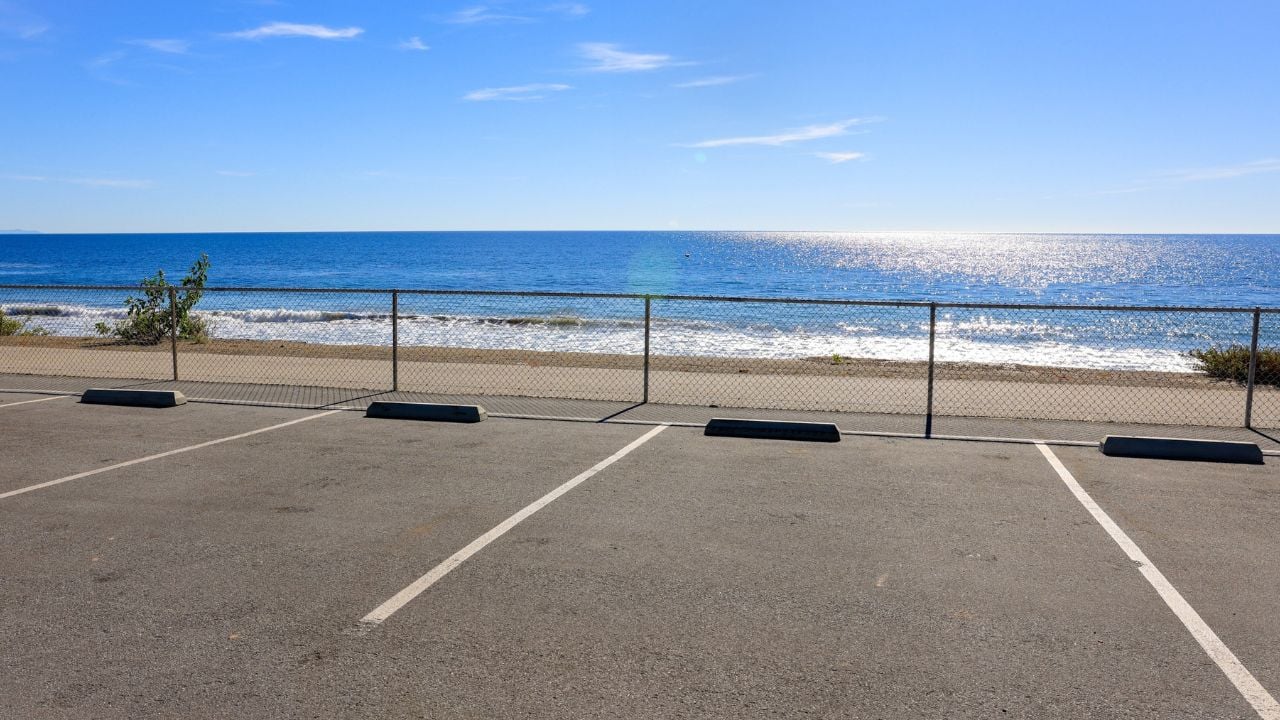
9 South Carolina Beach Driving Rules Tourists Get Wrong Every Year

A pickup rolls down a beach access ramp in Myrtle Beach, and a lifeguard waves it straight through.
The rental car idling behind it doesn’t get the same wave.
The truck’s driving under a town contract. The rental car’s about to get a ticket.
These are the South Carolina beach driving rules tourists get wrong every year.
Note: This is general information, not legal advice. Beach vehicle rules, permit terms, and fines vary by town and are subject to change.
1. Assuming Any Beach Allows It
No stretch of South Carolina’s coastline lets the public drive onto the sand, no matter how empty the beach looks.
Not one beach.
Sullivan’s Island’s town code bans any purpose whatsoever for a motor-driven vehicle on its beach, and Kiawah Island, Seabrook Island, and Isle of Palms all write nearly the same rule into their own ordinances.
Tourists who’ve driven a 4×4 down the sand in Georgia or on North Carolina’s Outer Banks show up assuming South Carolina works the same way.
It doesn’t.
2. Thinking Golf Carts Are Exempt
Beach towns across South Carolina treat a golf cart exactly like a truck once it hits the sand.
A cart still counts.
Sullivan’s Island’s ordinance calls out golf carts by name, and so does Isle of Palms, which spells out that motorized vehicles, including golf carts, aren’t allowed on the beach.
Myrtle Beach’s police department lists golf carts among the wheeled rides its officers can ticket on sight.
A slow, four-seat cart still counts as a vehicle to every one of these towns.
3. Missing the Turtle Patrol Exception
An occasional ATV or pickup truck does rumble down a South Carolina beach at dawn, and that’s not a rule violation.
It’s the turtle patrol.
State wildlife officials survey the beach each morning by walking, or by four-wheel drive pickup truck, and Seabrook Island’s ordinance names its own Turtle Patrol among the handful of groups allowed motorized beach access.
So the truck a beachgoer spots on many mornings through nesting season belongs to a permitted survey crew, not a rule-breaker.
4. Overlooking the Disability Permit
One narrow, permit-based carve-out loosens South Carolina’s blanket beach vehicle ban, and many tourists never hear about it.
Seabrook Island’s ordinance lets a person with a disability operate a small, open motorized vehicle or a medical device on the sand under a strict speed cap.
That same vehicle is the one exemption from the four-wheel-drive rule every other permitted vehicle has to follow.
That’s an accommodation.
It’s not a loophole.
A rental golf cart brought down for the day doesn’t qualify.
Neither does a personal ATV without the paperwork behind it.
5. Confusing Beach Service Trucks With Permission
South Carolina’s ban on beach driving doesn’t lift just because a pickup truck rolls past at sunrise.
That reading has it backward.
Beach service companies drive their own trucks onto South Carolina’s sand every morning to set out rented chairs and umbrellas.
Myrtle Beach’s police department lists beach service vehicles alongside law enforcement and government trucks as the only classes its ordinance allows on the sand.
That truck is working under a town contract.
Nobody else’s is.
6. Assuming a Golf Cart Skips the License Rule
A golf cart headed for the beach still needs a licensed driver behind the wheel under South Carolina law.
State law requires anyone operating a golf cart on a public road to be at least 16 years old and carry a valid driver’s license, registration, and proof of liability insurance.
It’s not optional.
Breaking that rule is a misdemeanor in South Carolina, punishable by up to $100 or 30 days in jail.
7. Treating a Highway Like a Golf Cart Path
Some golf carts headed to a South Carolina beach try to travel along a highway posted above 35 miles per hour instead of merely crossing it.
That same law only lets the cart touch a road like that at a marked intersection, for a direct crossing, never a ride along it.
A cart can dart straight across a highway like that when the intersection allows it.
It cannot ride the shoulder for the next mile toward the beach.
That rule holds firm.
That distinction trips up many visitors until an officer points it out.
8. Ignoring the Speed and Equipment Rules
A beach vehicle permit doesn’t free a South Carolina vehicle from strict limits once it’s on the sand.
Seabrook Island’s ordinance caps authorized vehicles at 10 miles per hour, restricts them to the wet sand, and requires four-wheel drive for every vehicle except a medical device or an e-bike.
Rules still apply.
Even the turtle patrol truck has to watch its speed.
The Steps Behind a South Carolina Beach Vehicle Permit
Getting a beach vehicle exception in South Carolina still means filing a written request, not making a case at the gate.
Seabrook Island requires anyone requesting a permit to submit a written application to the town administrator at least 30 days before they need it.
Town council then reviews the request and issues a permit only by formal resolution, which can carry its own added conditions.
The one shortcut is a genuine public health or safety emergency, when the town administrator can approve a vehicle on the spot.
9. Assuming the Fine Stops at the Cap
A beach vehicle citation in South Carolina follows a state rule many tourists never read past the posted number.
Municipal ordinance fines cap out at $500 or 30 days in jail, so a beach vehicle ticket usually lands right at that ceiling.
State law then adds a mandatory court assessment worth 107.5% of that fine.
So a $500 ticket turns into a bill closer to $1,037.50, not the number posted on the ordinance.
Ouch.
Nobody warns a first-time visitor about the extra half.
Psst! How much do you know about South Carolina’s beaches? Take our quiz and see how many you can get right.
Quiz
South Carolina Beach IQ
Answer these questions on South Carolina’s coastline, its beach laws, and its quirks. We bet you can’t get them all right. Prove us wrong?
Which South Carolina island has no bridge, so residents and visitors get around mostly by golf cart?
A Statewide Crackdown Is Pending
Lawmakers in South Carolina introduced a bill in 2025 that would turn the state's patchwork of local beach vehicle bans into one statewide law with criminal penalties.
The proposal would limit government beach vehicles to ATVs, golf carts, and similar small equipment between May 1 and October 1, and it would add fines and possible jail time for anyone caught driving illegally on the sand.
As of this year, the bill still sits with the House Judiciary Committee.
It hasn't passed yet.
The bill's sponsors point to the gaps between towns as the reason a statewide law is needed, since a violation in one county can draw a warning while the same act two counties over draws an actual charge.
The bill also escalates with each offense: A first violation would carry at least $100 or 30 days in jail, a second would rise to at least $200 or 60 days, and a third would reach at least $500 or 90 days.
9 South Carolina Small Towns Worth the Detour

The best hour in South Carolina rarely happens where the tour buses stop.
A short detour off the highway can turn into the best part of the whole trip.
9 South Carolina Small Towns Worth the Detour
9 South Carolina Foods That Confuse Anyone Who Didn't Grow Up With Them

South Carolina's menus carry names that sound more like a dare than a dish.
Order with confidence anyway because every one of them turns out to be dinner.
9 South Carolina Foods That Confuse Anyone Who Didn't Grow Up With Them
