
9 Ohio Storm Shelter Rules Homeowners Wish They’d Known Sooner

A locked door and four concrete walls don’t automatically make a legal storm shelter in Ohio.
The state has one set of rules that decide whether a shelter counts, whether a homeowner can get help paying for it, and whether an inspector ever signs off on it at all.
These are the Ohio storm shelter rules homeowners wish they’d known sooner.
Note: This is general information, not legal advice. Storm shelter permit, rebate, and inspection rules are subject to change.
1. Ohio’s Own Storm Shelter Standard
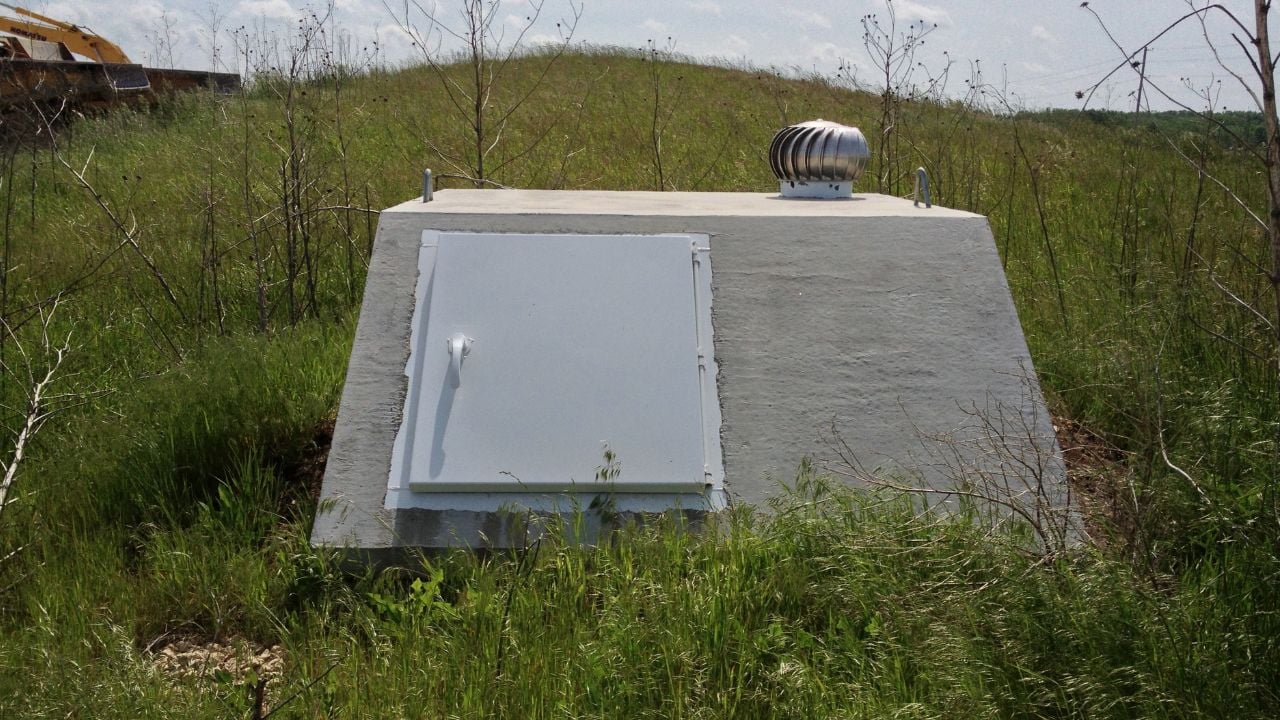
Ohio’s Residential Building Code drew a hard line under what counts as a storm shelter.
Since January 1, 2013, that code has required every storm shelter to meet the ICC-500 standard, published by the International Code Council (ICC), the national rulebook for storm shelter construction.
That’s the law now.
A room that skips it, no matter how sturdy the walls look, isn’t legally a safe room in Ohio.
Homeowners who built or bought a “storm room” without checking find that out only when an inspector or a buyer’s agent asks for the paperwork.
2. Permit Comes Before the Concrete
Ohio also requires a building permit before a safe room goes into a basement floor or the ground, plus a zoning permit too when the local jurisdiction calls for one.
Skip that step, and the shelter becomes a problem instead of a fix.
Paperwork first.
A home inspector or a title company can flag an unpermitted safe room during a sale or a refinance years later, long after the concrete has cured.
Fixing it after the fact costs far more than pulling the permit would have on day one.
3. No Building Department Still Means Inspection
Many of Ohio’s smaller townships don’t run a certified local building department at all.
That doesn’t mean a homeowner is off the hook.
Someone still checks.
When there’s no local department to issue the permit, the Ohio Board of Building Standards steps in to inspect the shelter for compliance instead.
A homeowner out in the country who assumes no department means no rules usually finds out otherwise the first time they try to sell the place or file an insurance claim.
4. Applying After You Build Forfeits the Rebate
Ohio runs a program that pays back a big share of what a safe room costs, the Safe Room Rebate Program, and it comes with one absolute rule.
Apply first.
A homeowner has to submit an application and wait for written approval from the Ohio Emergency Management Agency (Ohio EMA) before buying a single panel or breaking any ground.
Start construction first, then apply, and every dollar already spent becomes ineligible under the federal guidance behind the program.
No exceptions for good intentions.
Many Ohio homeowners build the safe room they’ve been planning for years, then discover the rebate application, and the money’s already gone.
None of that paperwork can be filed today, though.
A lack of funding has kept Ohio EMA’s program page from opening an application period for 2025 or 2026, so a homeowner can only join the notification list and wait for the next one.
Psst! How storm-ready is your Ohio home? Run through this checklist and see where you stand.
5. Homeowners Can’t Install It Themselves and Still Collect
Ohio’s rebate program also requires a licensed, bonded contractor to install the safe room, not the homeowner.
Not even a handy homeowner.
The contractor has to sign a Certificate of Installation confirming the shelter meets the design criteria set by the Federal Emergency Management Agency (FEMA).
A homeowner can’t sign that form for their own work.
Build it solo to save money, and the safe room might still be sturdy.
The rebate still says no.
6. Rebate Has a Hard Ceiling
Ohio’s rebate covers 75% of the eligible cost of a safe room.
But only so far.
The maximum payout caps at $4,875, whether the shelter ends up costing $7,000 or $10,000.
Not a dollar more.
A homeowner planning a larger, more comfortable shelter should budget the difference themselves because the state’s share doesn’t grow past that ceiling, whatever the price tag.
The Math Behind Ohio’s Rebate Cap
Ohio’s Safe Room Rebate Program pays 75% of an eligible safe room’s cost.
A $2,000 shelter earns a $1,500 rebate, the full 75% share.
Run that same math on a bigger project and the state’s share stops growing at $6,500 in cost, since 75% of that number lands right at the program’s $4,875 ceiling.
Anything spent above $6,500 comes straight out of the homeowner’s pocket.
7. Square Footage Decides Who It Legally Protects
Ohio’s program also sets a size rule for the storm shelter.
Three square feet.
That’s the minimum usable floor area required per occupant, and the state assumes two occupants for every bedroom in the house when it calculates how big a shelter needs to be.
A family of five squeezing into a shelter sized for two on paper can find their whole household doesn’t legally fit inside their own safe room.
Measure before you build, not after.
8. Flood Map Can Disqualify the Spot
Ohio also won’t let a homeowner tuck a safe room into just any corner of the yard.
FEMA’s flood rules block a shelter from sitting inside a mapped floodway, and homes near Lake Erie’s shoreline face extra restrictions in the coastal high-hazard zones.
Wrong spot, no shelter.
A basement or backyard corner that floods during a heavy storm defeats the purpose of a safe room built to survive a tornado, so a building official checks the location against those maps before construction even starts.
9. There’s No Such Thing as “FEMA Approved”
Ohio homeowners shopping for a safe room run into a lot of marketing language, and one phrase should raise an eyebrow every time.
“FEMA approved.”
Neither FEMA nor the Ohio Emergency Management Agency (Ohio EMA) approves, endorses, or certifies any safe room product or contractor, regardless of what a sales brochure claims.
The label is made up.
A shelter still has to meet the FEMA 320 or FEMA 361 design criteria to count, but no government seal comes with the receipt, so ask a contractor for the engineering paperwork itself, not a slogan.
Skipping the Insurance Call Costs More Than a Discount
Ohio’s own severe-weather guidance tells homeowners to notify their insurer any time they add something like a safe room to the house.
Not to earn a discount.
To stay covered.
Tornado damage in Ohio typically falls under the standard windstorm portion of a homeowner’s policy, and an addition nobody reported can complicate a claim on the very structure meant to protect the family.
A phone call now beats a dispute later.
A homeowner who assumes the new shelter comes with an automatic price break skips the single call that keeps the coverage current.
Public Shelters Aren’t on One List
Ohio doesn’t keep one statewide directory of registered storm shelters that a resident can search by address.
That job falls to individual counties.
Check locally, not statewide.
A homeowner who builds a private safe room should still tell their own county’s emergency management office or 911 dispatch exactly where it sits on the property, since a blocked door after a tornado is exactly when that information matters most.
Ohio’s own safe room guidance recommends sharing that location before a storm ever forms, not scrambling to explain it during one.
8 Lease Mistakes Costing Ohio Renters Hundreds of Dollars

Ohio gives renters money-saving rights that many leases never bother to spell out.
Many tenants never cash in a single one before the lease is already signed.
8 Lease Mistakes Costing Ohio Renters Hundreds of Dollars
9 Grocery Aisles That Look Completely Different in Ohio Than They Did 20 Years Ago

A Kroger checkout lane in Ohio looks nothing like it did twenty years ago, right down to the bank window that used to sit inside the store.
Self-checkout, curbside pickup, and a dozen other changes crept in one aisle at a time.
9 Grocery Aisles That Look Completely Different in Ohio Than They Did 20 Years Ago
