
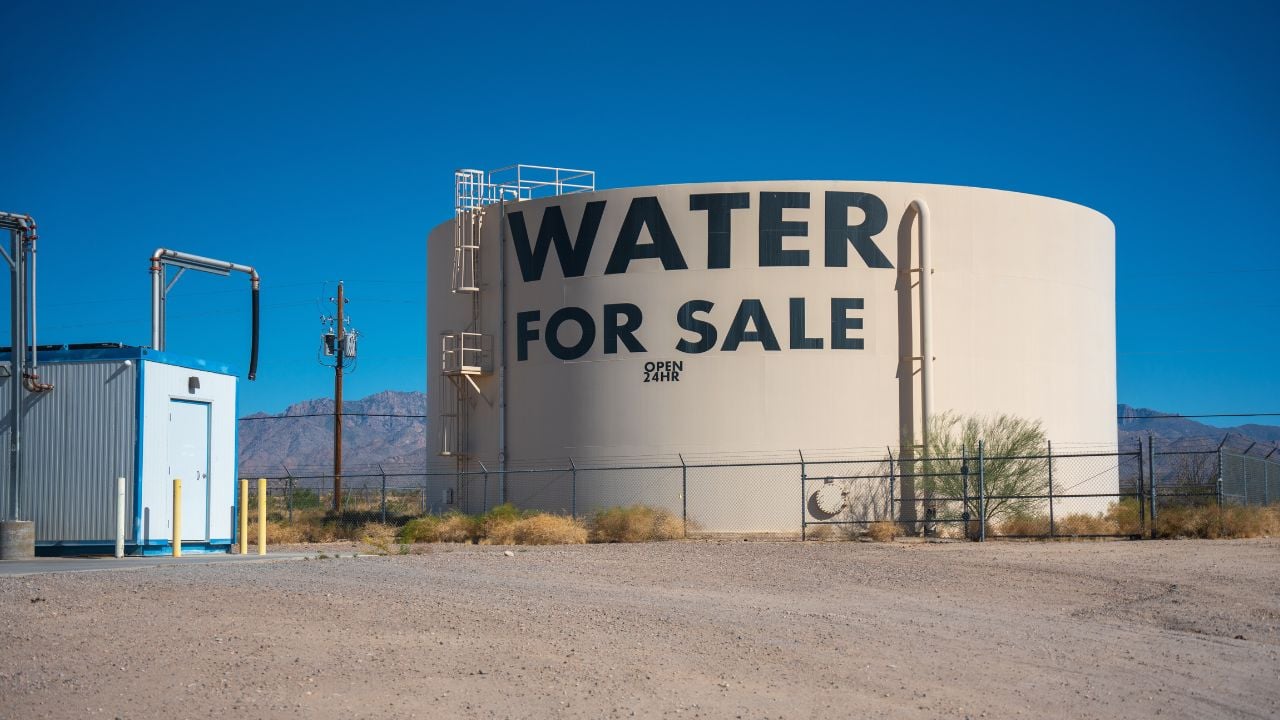
8 Arizona Water Rights Rules Rural Property Owners Get Wrong

A drill rig can put a well on almost any rural Arizona property.
That well doesn’t make the water underneath it yours to sell.
Arizona’s water law runs on doctrines dating back to the 1800s, and outside the state’s cities, much of it still catches rural landowners by surprise.
These are the Arizona water rights rules that trip up rural property owners again and again.
Note: This is general information, not legal advice. Arizona’s water rights rules and permitting requirements are subject to change, so confirm the current details with the Arizona Department of Water Resources.
1. Groundwater Isn’t Yours to Sell
Arizona lets most rural landowners pump groundwater from beneath their own property without asking the state for a permit first.
That sounds like ownership.
It isn’t.
Outside Arizona’s regulated zones, the reasonable use doctrine only protects water pumped for a purpose connected to that same parcel, not water bottled, piped to another property, or sold off as a product of its own.
Push past that line, and you can find yourself without any legal footing at all.
How Many Arizona Zones Regulate This?
Arizona currently regulates groundwater through eight Active Management Areas: Phoenix, Tucson, Prescott, Pinal, Santa Cruz, Douglas, Willcox, and Ranegras Plain, the newest of the eight, designated in January 2026.
Land outside all eight zones follows the looser reasonable-use rules above.
Land inside one of them, even a rural-feeling lot on the edge of Willcox or Douglas, follows the stricter permit-based system instead, since both basins only joined the list in the past few years.
2. Draining a Neighbor’s Well Is Legal
Many rural Arizona property owners assume that if a neighbor’s new well pumps their own well dry, they can sue over it or at least collect compensation for the water they lost.
Arizona law says otherwise.
A landowner can pump groundwater for reasonable use on their own land even if it dries up a neighbor’s well next door, and owe that neighbor nothing.
The Arizona Supreme Court set that standard in 1953, after a cotton farmer near Laveen sank eleven wells and dried up 38 neighboring wells.
The smaller landowners sued.
They lost.
As long as the pumping serves a genuine use of the pumper’s own land, Arizona doesn’t treat a neighbor’s dry well as their problem to fix.
3. Creek View Skips the Water
Arizona treats surface water, the kind running through a wash, creek, or river, as a completely separate legal system from groundwater.
Owning the land along it doesn’t come with a right to use it.
Not automatically.
Arizona runs on prior appropriation, first in time, first in right, which means only whoever first put that water to a legitimate use, and filed for it, holds a valid claim.
You have to track down and confirm that permit or certificate through the Arizona Department of Water Resources (ADWR) separately from the deed.
Nobody hands it over at closing.
4. Exempt Wells Still Need Paperwork
Arizona’s word for a small residential well is “exempt,” and that trips up many rural owners into thinking no paperwork applies.
Exempt only refers to the state’s heaviest well-construction and permitting rules, not to your filing duties.
You still have to register that well with ADWR and file a Notice of Intention to Drill before the rig ever shows up.
Arizona caps that kind of well at 35 gallons per minute, and an exempt well can still water a yard or garden under two acres without that counting as regulated “irrigation.”
Skip the filing.
You can end up with an unregistered well that complicates everything from a future sale to a routine ADWR records check.
5. Splitting Land Dodges the Water Check
Arizona only forces a water-adequacy review, the same ADWR check that flags whether a lot’s water supply can support it, once a subdivision reaches six lots or more.
Many rural sellers never trigger that water check at all.
State law lets a seller carve a parcel of 36 acres or more into five or fewer lots at a time, sell them, and let each buyer split their piece again up to five more times, all without the water-adequacy review a genuine six-lot project would face.
Water regulators call these wildcat lots.
That gap becomes your problem.
Assume every Arizona land sale comes with a water check, and this is the one that slips past you.
Psst! How much do you know about Arizona’s water history? Tap each card and see how many you get right.
6. Water Report Isn’t a Promise
Arizona does require an ADWR water report for genuine subdivisions outside its regulated zones, and rural buyers often read that report as a guarantee.
It isn’t one.
Arizona’s own water-adequacy statute, A.R.S. 45-108, shields the state from liability for that report, and even a finding of “inadequate” water supply mainly triggers a disclosure to the state real estate commissioner rather than a stop-sale order.
A subdivision can move forward and sell lots with a water supply the state itself flagged as insufficient.
Read the actual report before assuming a folder of paperwork means the water is settled.
7. Land Sale Can Skip the Water
Arizona land inside one of the state’s regulated zones can be sold completely apart from the groundwater rights tied to it.
A Type 1 grandfathered right stays attached to the land it came with.
A Type 2 right doesn’t.
ADWR allows a Type 2 grandfathered right to be sold off separately from the parcel it was issued for, so a previous owner may have already cashed out the pumping right years before your closing date.
Ask which type came with the deed because the county recorder won’t volunteer it.
8. Decades of Use Still Needs Filing
Arizona property with generations of ditch or stream irrigation doesn’t automatically hold a valid water right today, no matter how long the family used it.
The owner had to file that use and get it confirmed through the state’s general stream adjudication, a court process that has been running since 1974 and still hasn’t produced a final decree for the Gila River system.
Thousands of claims are still working their way through that court.
Paperwork wins.
If you never filed a Statement of Claimant, decades of honest use can go unrecognized whenever the court finally rules.
Filing a claim doesn’t cost anything beyond the paperwork itself, but missing the window can be permanent.
ADWR keeps a public locator for existing claims, so you can check whether a property’s historic water use was ever filed before signing anything.
Trucked-In Water Isn’t a Right
Rural Arizona communities that depend on hauled water learned this the hard way in Rio Verde Foothills, just outside Scottsdale.
Scottsdale cut off the standpipe that had filled water trucks for the community for years, effective January 1, 2023.
Roughly 500 homes lost their water source overnight, with no permanent right to fall back on.
Not a right.
Arizona lawmakers passed a bill in 2023 to keep water flowing through a third party while EPCOR, a private water utility, worked toward legal approval to serve the area on a permanent basis.
That approval, and EPCOR’s new filling station, didn’t arrive until January 1, 2026, three years to the day after Scottsdale shut off the standpipe.
A hauling arrangement, however many years it’s run, was never the same thing as a water right.
Rio Verde Foothills made headlines, but it’s not the only rural pocket of Arizona leaning on an informal water supply with no state-recognized right attached to it, according to Arizona State University researchers who track water insecurity across the state’s rural areas.
The same lesson applies wherever a handshake, a hauling contract, or a decades-old habit stands in for a filing at ADWR.
9 Things That Confuse First-Time Visitors to Arizona
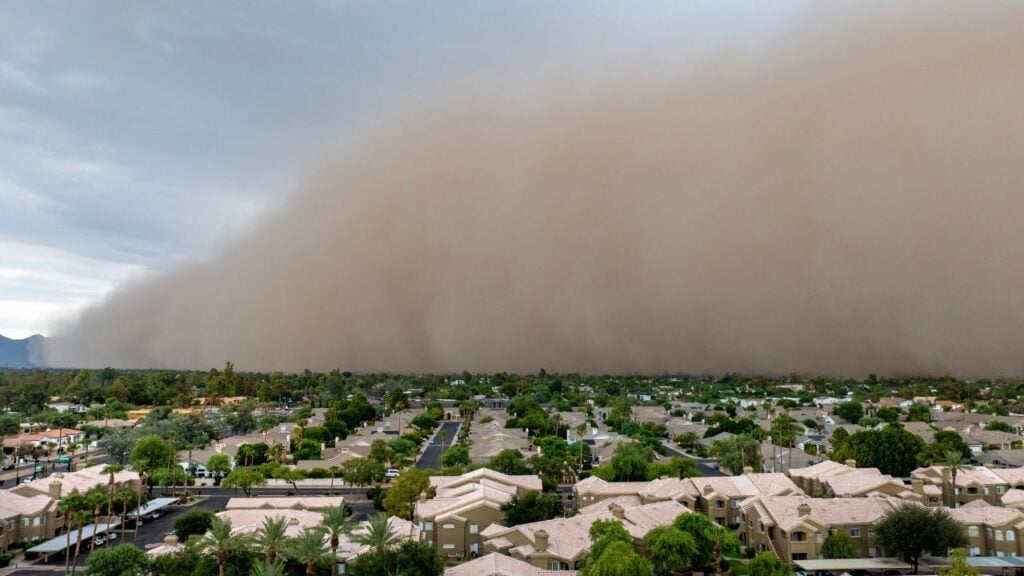
Cactus and sunshine are the picture many tourists carry into Arizona before they land.
The state also runs on a set of quirks that catch first-timers off guard, from the clocks to the summer storms.
