
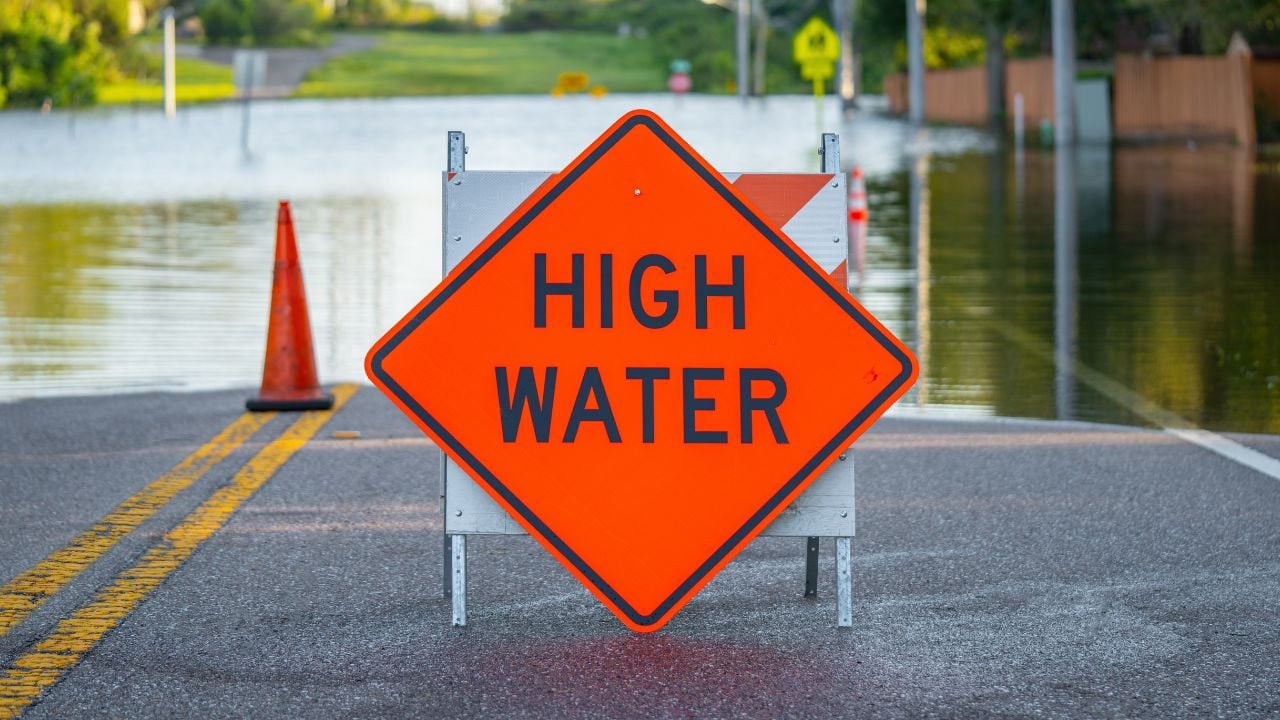
9 Texas Hurricane Evacuation Mistakes Coastal Residents Still Make

About four in ten Rockport residents stayed home in 2017 when Hurricane Harvey’s Category 4 winds were bearing down on the Texas coast.
The acting mayor told those staying behind to write their names and Social Security numbers on their arms in marker.
That’s how rescue crews would identify the bodies.
Rockport wasn’t the last Texas town this happened to. These are the evacuation mistakes some coastal Texas residents still make.
Note: This is general safety information, not official emergency guidance. Evacuation zones, routes, and orders can change as a storm develops, so follow real-time direction from the Texas Division of Emergency Management or your county’s emergency management office.
1. Not Knowing Your Evacuation Zone
Texas coastal counties split their most storm-exposed areas into evacuation zones, usually labeled Coastal, A, B, and C, so the people facing the worst storm surge leave first and the roads don’t lock up behind them.
Many coastal Texans have never looked up which zone their own address falls into.
That’s the gap the Houston-Galveston region’s “Know Your Zone” campaign exists to close, rerun every summer because so many residents still ask which zone means them only after a storm is already in the Gulf.
By then, there’s no time left to plan a route.
There’s only time to panic.
Look up your zone on your county’s emergency management site before hurricane season starts, not during it.
2. Waiting for the Official Order
Texas emergency managers don’t want anyone waiting for a mandatory evacuation order before they leave, especially in a zone facing serious storm surge.
Once a mandatory order goes out, everyone in that zone tends to leave at the same time, on the same handful of highways.
That’s exactly what turned Hurricane Rita’s 2005 evacuation into a bigger killer than the storm.
Rita’s official Texas death toll hit 111, and 107 of those deaths happened during the evacuation, not the storm.
Heat, dehydration, and hours stuck in traffic did what the hurricane itself didn’t.
Three years later, Hurricane Ike proved the lesson hadn’t stuck.
A Rice University study released six months after Ike found evacuation timing showed no improvement over Rita, with people who left ahead of Ike heading out just as late in the process.
Leaving a day early, ahead of the order, spreads that same traffic out over a wider window instead of dumping it all onto the highway at once.
What “Mandatory” Means in Texas
A mandatory evacuation order in Texas isn’t just a stronger version of a suggestion.
Under Texas Government Code, a county judge or mayor who orders an area evacuated can compel residents to leave.
They can also authorize reasonable force to remove people who refuse.
Once that order is active, first responders generally won’t attempt rescues until the storm passes.
The roads and the risk are both too dangerous to send crews into.
A voluntary evacuation works differently.
Texas is asking residents to take the danger seriously, but the choice to leave is still theirs.
Staying behind means being ready to shelter in place for several days if floodwater blocks the roads out.
3. Evacuating When No One Told You To
Texas coastal residents outside a mandatory zone cause their own kind of evacuation mistake by leaving anyway, just to be safe.
Emergency planners call them “shadow evacuees,” and during Hurricane Rita in 2005, roughly 3.7 million people left the Houston region, and many were never in an area ordered to go.
That’s not caution.
It’s extra cars on the same highways the at-risk zones need clear.
Texas hoped the lesson had sunk in by Hurricane Ike in 2008.
It hadn’t, not entirely: The same Rice University study found 21% of residents outside Ike’s evacuation zones left anyway, down from 40% during Rita but still enough extra traffic to clog roads the at-risk zones needed clear.
Houston officials cited that same risk nine years later, when they chose not to call a citywide evacuation for Hurricane Harvey.
An evacuation that’s too broad, they warned, can slow down the people in smaller, more vulnerable towns who need the road.
Leaving without an order isn’t wrong out of stubbornness.
It can defeat the entire point of the zone system Texas built after Rita.
4. Leaving on a Half-Empty Tank
Texas coastal drivers who wait to fill up until a hurricane is already aimed at the coast usually find themselves waiting behind everyone else with the same idea.
During Rita, stations along the evacuation routes ran dry, and drivers stuck in traffic burned through what little gas they had just running the air conditioning in 100-degree heat.
Hundreds abandoned their cars on the shoulder.
That’s a costly gamble.
Texas’ Department of Public Safety (DPS) still reminds residents every season to keep a vehicle fueled and ready before a storm even enters the forecast, not after.
A half-tank feels fine on a normal Tuesday.
It’s not fine with three hours of stop-and-go traffic ahead of you.
5. Refusing to Evacuate a Mobile Home or RV
Texas coastal residents living in a mobile home or RV sometimes assume a storm has to reach Category 3 before it’s their problem.
It doesn’t.
A Category 1 hurricane’s winds run 74 to 95 mph, enough to overturn a trailer or tear an RV’s awning straight into the rig.
Otto Barrera found that out anyway during Hurricane Beryl in 2024.
He rode out the storm in his RV in Matagorda, on the Texas coast, even as Beryl’s Category 1 winds and storm surge closed in.
He got lucky that time.
Federal guidance is blunt about why that’s a gamble: never shelter in a manufactured home or travel trailer once high winds arrive.
High-profile vehicles also get shut out of the roads before regular cars do, since bridges and causeways close to them earlier as wind speeds climb.
Waiting until the wind proves the point erases the head start a mobile home or RV needs most.
6. Riding Out the Storm in a Surge Zone
Texas coastal residents in a storm surge zone sometimes decide the storm won’t be as bad as the warnings say.
Rockport found out otherwise in 2017.
By the time Hurricane Harvey’s Category 4 winds closed in, only 60% of the town’s 9,500 residents had left, meaning roughly four in ten stayed through direct landfall.
Rockport’s mayor pro tem issued a stark warning to those planning to stay: Mark names and Social Security numbers on their arms in permanent marker, in case rescue crews later needed a way to identify them.
That’s not a metaphor.
It’s what a mandatory order in a surge zone is warning residents about.
7. Skipping the STEAR Registry
Texas runs a free program called the State of Texas Emergency Assistance Registry (STEAR) for residents who’d need help evacuating because of a disability, a mobility limit, or medical equipment that needs power.
Local emergency managers use it to know in advance who might need a ride, a wheelchair-accessible vehicle, or backup power during a storm.
Signing up takes a few minutes through the STEAR registry, and registrations expire after a year, so it isn’t a one-time task.
Jefferson County Emergency Management Director Robert Grimm says people who qualify shouldn’t wait until the last minute to sign up.
His office still gets sign-up calls after a hurricane is already spinning in the Gulf, he told 12News.
Too late, every time.
Texas relaunched the registry in January 2025 with an upgraded database, an admission that too many eligible Texans weren’t getting registered under the old one.
By the time a hurricane is 48 hours out, the buses, drivers, and medical transport it takes to help are already stretched across every county on the coast.
8. Leaving Without a Pet Plan
Texas coastal residents who evacuate without a plan for their pets often find out the hard way that not every shelter takes animals.
During Hurricane Harvey in 2017, CBS News reported the same pattern playing out in Houston that had played out during Hurricane Katrina twelve years earlier: Residents who wouldn’t evacuate without their animals, staying put rather than leaving a pet behind.
Houston’s Autumn Henley evacuated with four dogs and could only fit one, Charlie, in the car before rising water blocked her route.
A neighbor with a boat went back for the other three, stranded in an upstairs bathroom.
She got lucky.
Not every Harvey evacuee got that lucky.
Congress passed the Pets Evacuation and Transportation Standards Act (PETS Act) in 2006, after Katrina evacuees were rescued without their animals because vehicles and shelters wouldn’t take them.
The law now requires state and local emergency plans to account for pets.
That fixed the planning on paper, not always the reality on the ground.
A carrier, a leash, food, and proof of vaccination records make the difference between a pet riding out the evacuation with you and a pet turned away at check-in.
Pack that bag before hurricane season starts, not while you’re already loading the car.
9. Trusting the Forecast Cone Too Much
Texas coastal residents who watch a hurricane’s forecast cone swing away from their town often relax the moment they’re outside its edges.
The National Weather Service is clear that the cone only tracks where the storm’s center is likely to go, not how far its wind, rain, and flooding reach.
Hazards routinely show up well outside the cone’s edges.
No dotted line stops wind.
Hurricane Laura made that point in 2020, when its projected track kept sliding closer to Houston in the days before landfall.
A cone that misses your town today can include it by Thursday.
Watch the whole storm, not just the line down the middle.
Psst! How hurricane-evacuation-ready is your actual plan, not just the plan in your head? Run through this checklist and see where you stand.
How Fast a Hurricane’s Forecast Track Can Shift
Texas hurricane forecasts change fast: The National Hurricane Center updates a storm’s track every few hours once it forms, and the shifts between one advisory and the next can move a projected landfall by dozens of miles.
Six hours, dozens of miles.
Hurricane Laura showed how much ground those updates can cover.
Its track nudged toward Houston across a single day of advisories in 2020, even though the storm ultimately came ashore over the Louisiana line.
Checking the newest forecast, not the one from yesterday afternoon, is what tells a coastal Texan whether a storm still counts as someone else’s problem.
Six hours of updates can change that answer completely.
Signing up for a county’s own alert system closes a gap none of this covers: Harris County runs Ready Harris, Galveston County runs its “Notify Me” system, and Brazoria County pushes real-time alerts through its own emergency management app.
Any one of them puts a warning on a phone the moment local officials issue it, faster than waiting to hear it secondhand.
9 Odd Texas Laws Most Americans Have Never Heard Of
Everything is bigger in Texas, including a few surprises buried in its law books.
Some of these rules protect everyday freedoms, and others govern situations lawmakers in many other states never bothered writing down.
9 Odd Texas Laws Most Americans Have Never Heard Of
10 Small-Town Texas Diners Worth the Detour

Great Texas cooking often skips right past Austin, Dallas, and Houston.
You’ll find it in a town many drivers have never heard of, at a counter that’s been serving the same regulars since long before the interstate came through.
