
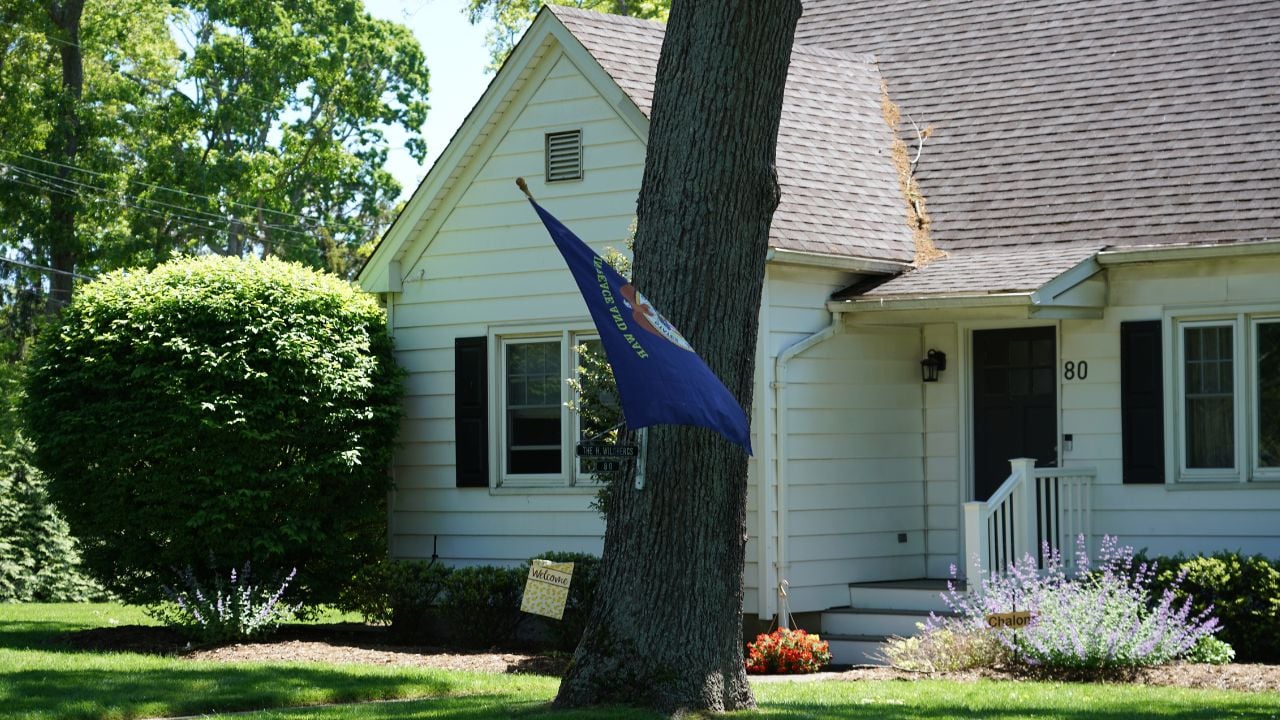
5 New York Property Tax Exemptions That Expire Without a Warning Letter

New York is sending $2.1 billion in School Tax Relief (STAR) benefits to nearly 3 million homeowners and seniors this year.
That’s the property tax break many New Yorkers know by name.
Several other tax breaks work differently, and they can shrink or disappear with no letter in the mailbox to warn you first.
These are the New York property tax exemptions that can end with little warning.
Note: This is general information, not legal or tax advice. Exemption rules, income limits, and deadlines are subject to change, so confirm the current details with your town or city assessor.
1. Cold War Veterans’ Ten-Year Clock
New York’s Cold War veterans exemption asks a veteran to file just once, and the state Department of Taxation and Finance confirms a veteran only needs to apply once to keep receiving it every year after.
That single filing knocks 10% or 15% off a home’s assessed value, worth up to $8,000 or $12,000 depending on the town’s local law.
Here’s the part the one-time filing hides: Unless the veteran’s own city, town, village, or school district passed a separate local law making the break permanent, it runs out after 10 years.
Then it stops.
New York let localities vote to remove that 10-year limit back in 2017. Places like the Town of Hempstead have already gone permanent, but many towns across the state never adopted the change.
The disability portion of the exemption never expires. The base benefit does, and nothing in state law forces the assessor to send a reminder before the clock runs out.
2. Alternative Veterans’ Moving Trap
New York’s alternative veterans exemption also asks for one application. State law says the exemption continues in full force without the veteran ever having to refile.
Sell that home and buy a different home, though, and the safety net changes.
In towns that adopted the transfer option, the exemption only carries over to the new address for the rest of that tax year.
The paperwork restarts after that.
To keep it going, the veteran has to file a fresh application by the next taxable status date, usually March 1.
Nobody has to send a courtesy reminder for that refiling.
Skip it, and the exemption a veteran assumed was locked in isn’t there on the new house.
Towns that never adopted the transfer rule in the first place offer even less cover. The exemption doesn’t carry over at all, and the veteran starts from zero at the new address.
3. Senior Citizens’ Five-Year Switch
New York’s senior citizens exemption can cut a home’s taxable value by up to 50%, and state law normally makes the town do the reminding: Assessors must mail a renewal application to every senior on the rolls before the deadline.
Local income limits for that full 50% exemption run as high as $50,000.
Towns that adopt the state’s sliding scale can then stretch a smaller, 5% break to seniors earning up to $58,400.
A 2025 law now lets some towns offer deeper 55%, 60%, or 65% tiers for lower-income seniors on top of that.
Stay on the exemption for five straight years, though, and many towns switch the rules.
No more mailed form.
Instead, the senior signs a sworn statement confirming they still qualify and files it themselves, on their own schedule, whenever they pay their tax bill.
Forget that one signature, and the exemption ends. This time, there’s no mailed form to blame.
4. Agricultural Assessment’s Annual Refile
New York’s agricultural assessment exemption taxes qualifying farmland at its worth as a farm instead of its full market value, and it never renews on its own.
A farm needs at least 7 acres and about $10,000 in average yearly agricultural sales to qualify, or $50,000 in sales on a smaller parcel.
Every single year, the landowner has to file a renewal by the taxable status date, usually March 1.
State law only requires the assessor to mail a result if the farmer asked for the result in writing and included a stamped envelope.
Not one phone call goes out otherwise.
Nothing pushes a reminder out the other way.
Convert part of that land to a driveway, a barn-turned-workshop, or a house lot, and different rules kick in.
New York gives the landowner 90 days to report the change to the assessor.
Miss that window, and on top of owing several years of back payments, the town can tack on a penalty of up to $1,000 for pulling the land out of the program early.
5. Volunteer Firefighters’ Yearly Proof
New York’s volunteer firefighter and ambulance worker exemption rewards the roughly 80,000 volunteers who still answer fire calls statewide, trimming up to 10% off a home’s assessed value in the cities, towns, and villages that vote to offer it.
New York doesn’t hand that break to a brand-new volunteer, though.
Local law sets a minimum length of service, typically two to five years, before a volunteer first qualifies.
A volunteer keeps the break by staying an enrolled, active member of their fire company or ambulance service.
Proving that status has to happen every year.
The fire company or ambulance service sends a certification letter to the assessor confirming the member is still active.
State law puts that job on the volunteer’s shoulders, not the town’s.
Miss a season, switch companies, or simply forget to ask for the letter, and the exemption comes off the roll with no warning first.
One exception exists.
Volunteers certified for 20 years of active service earn the exemption for life, without ever filing that annual proof again.
Why New York Won’t Warn You
New York does have a general law that makes assessors mail a notice, and it covers a rising assessment on a home, not a falling exemption.
Under that law, an assessor has to mail every homeowner a notice whenever their property’s assessed value goes up for the year.
An exemption doesn’t change that number.
Nothing about the house changed.
The Math Behind New York’s Notice Loophole
New York’s notice law only tracks the number an assessor assigns to a home, its assessed value.
Say a home carries a $300,000 assessed value and a $50,000 exemption, so the town taxes only $250,000 of it.
Drop the exemption, and the taxable number jumps to $300,000, but the assessor’s $300,000 valuation of the house never moved.
Because that valuation stayed put, the mailed-notice law never kicks in, even though the tax bill goes up.
Psst! How much do you know about New York’s property tax history? Take our quiz and see how many you can get right.
Quiz
New York Property Tax IQ
Answer these questions on New York’s property tax history. We bet you can’t get them all right. Prove us wrong?
What year did New York create the STAR program that later split into Basic and Enhanced STAR?
Where STAR Fits In
New York's School Tax Relief (STAR) benefit is probably the property tax break New Yorkers hear about most, and this year the state is sending $2.1 billion in STAR relief to 2.78 million homeowners and seniors.
Enhanced STAR, the version built for seniors, caps combined household income at $110,750 for the 2026 benefit year.
STAR isn't on this list on purpose.
New York's own law treats a STAR exemption the same way it treats a rising assessment.
If an assessor plans to end someone's STAR exemption, state law requires a mailed notice first.
Every time.
Homeowners still receiving the older, on-the-bill STAR exemption see that protection built into their school tax bill.
Newer STAR recipients never see an exemption line at all.
Their benefit arrives as a separate check or direct deposit from Albany, months after the school tax bill goes out.
9 Things New York Landlords Can Legally Do That Renters Assume Are Illegal
New York's Good Cause Eviction law has spread to more than a dozen cities since it passed in 2024, and many renters assume the whole state now works in their favor.
It doesn't, and landlords still have several legal moves many tenants never see coming.
9 Things New York Landlords Can Legally Do That Renters Assume Are Illegal
8 Reasons People Are Leaving New York in 2026
More than 400,000 people left New York for another state in a single year, about the population of Tampa walking out the door in twelve months.
High taxes are only one reason on a much longer list.
