
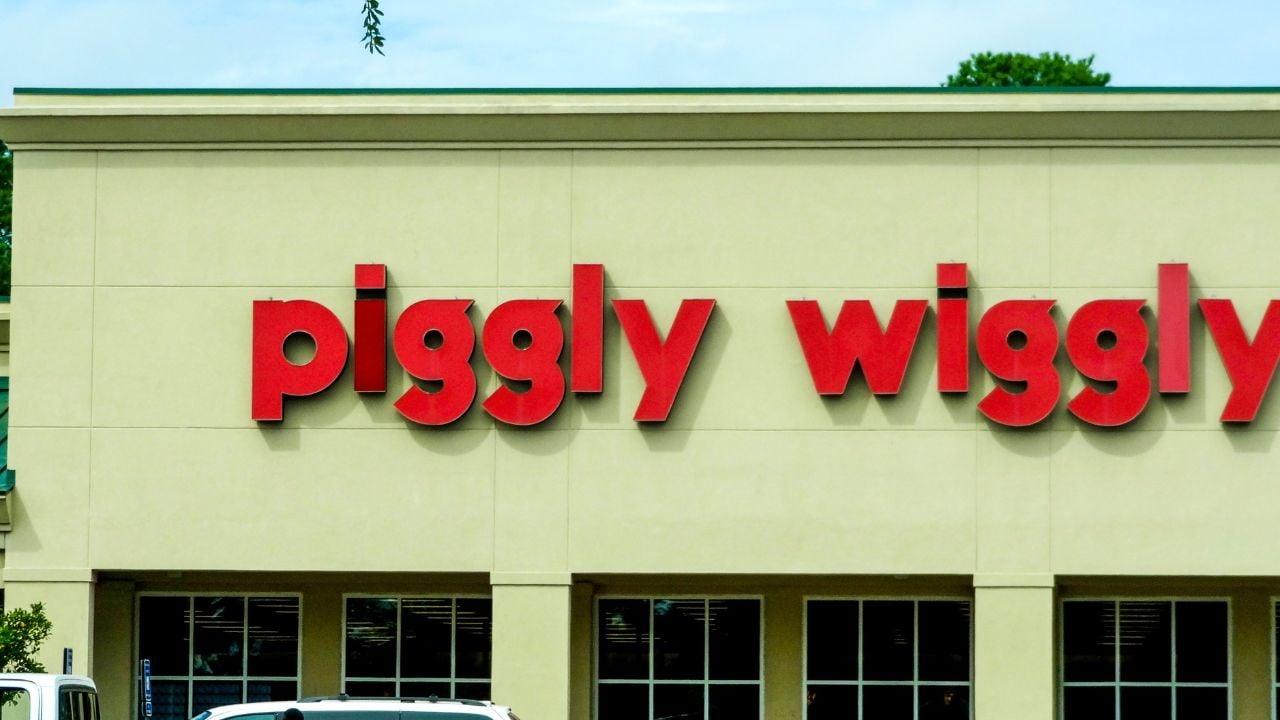
8 Things Alabama Shoppers Order Wrong at the Piggly Wiggly Meat Counter

Alabama has more than 100 Piggly Wiggly stores, stretching from the Gulf Coast up past the Tennessee line.
Every Piggly Wiggly store answers to a different owner.
So, the order that works at one counter can fall apart at the next.
Here’s where Alabama shoppers trip up before they even get their order out at the Piggly Wiggly meat counter.
1. Confusing Cube Steak With Cubes
Piggly Wiggly runs a tenderizing machine behind its meat counter, and cube steak is the name that confuses shoppers.
A shopper asks for cube steak expecting the meat diced into bite-sized pieces.
That’s not what it means.
Cube steak starts as a tougher cut, usually top or bottom round, and the butcher runs it through a mechanical tenderizer that leaves small cube-shaped dents across the surface.
The steak stays whole.
Order it wrong, and a shopper either walks off with a full tenderized steak when she wanted stew meat, or she asks a confused butcher to “cube” a ribeye that never needed tenderizing in the first place.
2. Not Naming an Exact Thickness
Piggly Wiggly still hand-cuts fresh meat to order instead of pulling everything from a pre-wrapped case, and that’s exactly where a vague request costs a shopper.
Ask for pork chops or a ribeye cut “thick,” and the butcher has to guess, since thick to one shopper is a half inch and thick to another is an inch and a half.
Say the number.
A one-inch ribeye sears differently than a half-inch ribeye, and a thin pork chop overcooks in the time a thick chop barely warms through.
The shopper who names the number in inches finds the cut in her buggy matches what she pictured.
3. Mixing up Butt and Picnic
Piggly Wiggly’s meat case usually carries two different pork shoulder roasts side by side, and Alabama’s pulled-pork culture makes this the mistake with the highest stakes.
A Boston butt comes from the upper shoulder, close to the spine.
A picnic shoulder comes from lower down, near the leg, and often still wears its skin.
They’re not the same roast.
Ask the counter for “a shoulder” or “a butt” without saying which, and you leave the choice to whoever’s working that day.
Cut a Boston butt the right way, and the bone splits through the rounded neck of the shoulder blade, not the leg bone a picnic carries.
A shopper who says only “butt” hands that decision to a butcher she’s never met.
4. Leaving off the Grind Ratio
Piggly Wiggly grinds its beef fresh in the store, often more than once a day, so a shopper who just says “a pound of hamburger meat” gets whatever ratio happens to be in the grinder.
By law, ground beef can carry up to 30% fat, and a shopper who checks the ratio on the label, 80/20 or 90/10, can see exactly how close her package sits to that line.
A fattier grind holds moisture for burgers.
A leaner grind works better for chili, where you skim the extra fat off the top anyway.
The ratio decides both.
80/20 or 90/10, said out loud, not left to the grinder.
Order it out loud at the counter instead of grabbing whatever’s already packaged, and the meat matches the meal.
5. Defaulting to Boneless
Piggly Wiggly’s butchers can bone out almost any cut on request, and a shopper who asks for “boneless” out of habit sometimes orders the wrong cut for the dish she’s making.
A bone-in pork chop or a bone-in ribeye typically prices lower per pound than the same cut boned out.
That’s yield, not a markup.
Once the bone comes out, the usable weight drops, so the counter has to charge more per pound just to break even on the same piece of meat.
A pot of collards or a slow-simmered roast wants the bone in anyway, for the flavor it releases into the pot.
A shopper who orders that same cut “boneless” pays more for meat that cooks worse in the pot.
Bone-in costs less per pound, and for that recipe, it was the right order all along.
6. Never Asking for a Grade
Piggly Wiggly’s meat counters carry beef graded by the U.S. Department of Agriculture (USDA), and a shopper who just points at “the good steak” leaves the grade up to the butcher.
Many Alabama Piggly Wiggly counters stock USDA Select beef alongside a premium Certified Angus Beef line.
Select is leaner and normally less tender.
Certified Angus Beef has to clear a stricter marbling bar before it earns the label.
That’s the difference.
Ask which grade you’re getting before you pay, not after you taste the difference in the first bite.
What Certified Angus Beef Requires
Piggly Wiggly’s Certified Angus Beef isn’t just a fancier sticker on the same cattle.
The certification belongs to the American Angus Association, and it only goes on beef that already grades in the top end of USDA Choice or better.
An independent USDA grader checks marbling and cattle characteristics against ten separate specifications before a package can carry the name.
A cut labeled simply “Angus,” with no certification, skipped all ten of those checks.
7. Ordering a Same-Day Special Cut
Piggly Wiggly’s on-duty butcher will take a same-day request for a whole turkey, a trimmed brisket, or a Boston butt cut to an exact weight, but a shopper who orders one at the counter on a busy Saturday afternoon finds out right then that this isn’t a normal cut.
That’s the mismatch.
The butcher already has that shift’s cuts queued up.
Piggly Wiggly’s own butchers ask customers to call ahead for anything outside a normal cut, and the shopper standing at the counter hears that only after she’s already placed the order.
What she gets instead is whatever the case can spare that afternoon, not the exact weight she asked for.
The cut list for that shift was already set before she walked in.
8. Ordering the Same Way at Every Counter
Piggly Wiggly operates as a franchise, and each of its more than 100 Alabama locations is independently owned and runs its own meat counter its own way.
A shopper walks up to her local counter and orders the whole-hog cutting or the deep custom-order menu her cousin’s Piggly Wiggly runs two counties over.
The butcher behind this glass has never been asked for that cut.
Nothing about the name on the sign guarantees it.
The owner does.
Ask this counter directly what it will cut, not the counter two counties over.
Some independently owned Piggly Wiggly meat departments keep their own Facebook page, separate from the store’s main one, posting the day a fresh grind comes in or a holiday order sheet goes up.
A five-minute look at that page beats a wasted trip every time.
Psst! How Piggly-Wiggly-savvy is your meat counter order? Run through this checklist and see where you stand.
7 Arguments Florida and Alabama Will Never Settle

A surveyor drove a stone into the ground in 1799 to settle exactly where Alabama ends and Florida begins.
It didn’t work, and the two states have kept arguing about that line, and plenty else, ever since.
7 Arguments Florida and Alabama Will Never Settle
9 Alabama Small Towns Locals Love (and 3 Tourists Overrun)
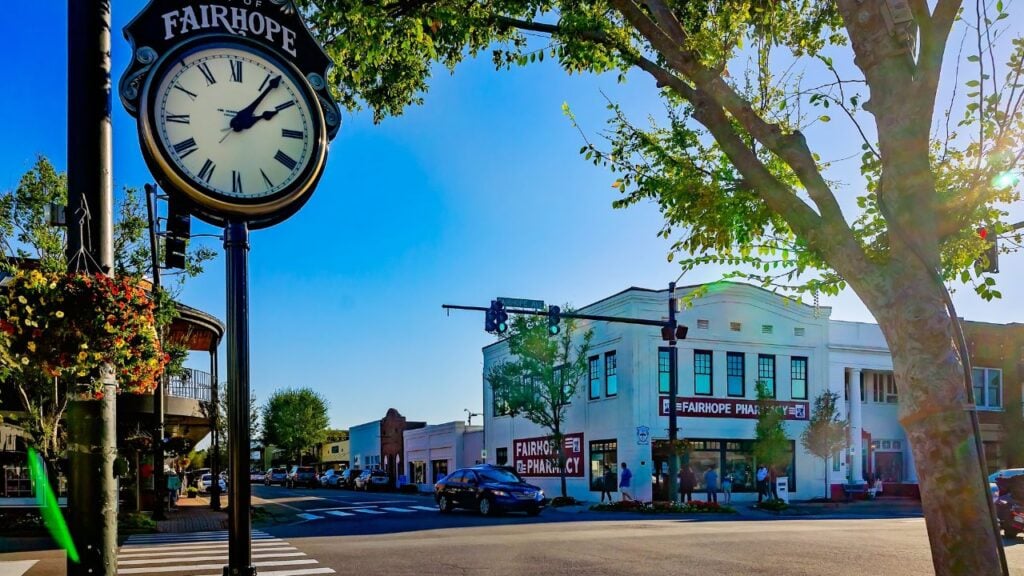
Not every small town in Alabama stays small.
Some still run on one stoplight and a courthouse square that empties out by six, while others turned into a tourist stop with traffic backed up every weekend from spring through fall.
