
9 Alabama Small Towns Locals Love (and 3 Tourists Overrun)

Not every small town in Alabama stays small.
Some still run on one stoplight and a courthouse square that empties out by six.
Others grew a whole tourism industry, and visitors back up the traffic every weekend from spring through fall.
These are the small towns Alabamians love, and the small towns tourists turned into something else.
1. Wetumpka
About 80 million years ago, a meteorite slammed into the ground that’s now downtown Wetumpka, in Elmore County.
Auburn University researchers confirmed the impact crater in 2002, and the blast measured 175,000 times stronger than the Hiroshima bomb.
An asteroid did that.
Wetumpka’s official nickname is the City of Natural Beauty, and the fishing holes and downtown bluff along the Coosa River are proof, even though most tourists never hear about either.
The population runs a little over 7,200, and a Saturday morning downtown means kayaks going in the water, not a line for a table.
2. Valley Head
A short drive from the DeSoto Falls trailhead, the historic Winston Place Inn has taken guests since the 1800s, long before Lookout Mountain had a tourist season.
DeKalb County’s Valley Head sits at the top of that mountain, and winter mornings there run colder than almost anywhere else in Alabama.
Temperatures can land close to 18 degrees cooler than the coast the same week, and Valley Head holds many of the state’s monthly record lows, though nearby New Market still owns the all-time record.
A cold worth bragging about.
Ask why anyone stays through January, and the answer is usually a shrug and a grin, not a complaint.
3. Demopolis
A shipload of French exiles picked the spot where the Black Warrior River meets the Tombigbee, in what’s now Marengo County, hoping to grow grapes and olives on 92,000 acres the federal government handed them in 1817.
By the next year, only 69 of them were still around.
The vines never took.
The location did, and Demopolis grew into a river port with two antebellum mansions, Bluff Hall and Gaineswood, both still open for tours downtown.
Demopolis counts about 6,640 residents today, down from 7,162 in the 2020 census, and most of the people who stayed will tell you the sunset over White Bluff beats anything on a postcard.
4. Greensboro
In 1968, Martin Luther King Jr. hid from Klan members in a Greensboro house that operates today as the Safe House Black History Museum.
Volunteers keep it open now.
Greensboro, the seat of Hale County, holds about 2,200 residents, and its courthouse square looks like a movie set nobody rented out.
The historic district around that square carries homes on the National Register of Historic Places, from Glencairn to Magnolia Grove.
Nobody sells a T-shirt about it.
5. Camden
Gov. Kay Ivey grew up in Camden, working her father’s farm before politics ever entered the picture.
Her official biography credits that small-town upbringing for teaching her to live within her means.
That’s small-town roots, straight from the official record.
The red-brick courthouse from 1857 anchors downtown in this Wilcox County seat, and the William “Bill” Dannelly Reservoir nearby draws anglers without pulling in a crowd big enough to notice.
No line forms there.
Fewer than 2,000 people live in Camden today, and most of them know each other by name.
6. Livingston
A blind mule walked in circles for three years to bore Livingston’s biggest landmark, an artesian well finished downtown in the 1850s.
It never stopped flowing.
Word spread that the mineral water cured whatever ailed you, and this Sumter County seat, in the heart of Alabama’s Black Belt, became a health spa destination decades before anyone paved a highway to it.
The University of West Alabama anchors downtown today, and the well sits under its own pavilion a block from campus, drawing more local dog-walkers than out-of-town visitors.
7. Elba
Elba sits in a bend of the Pea River in Coffee County, and the town has survived that river more than once.
The river crested at 48 feet in March 1990, a broken levee buried Elba for four days, and the town nearly didn’t come back from it.
It came back anyway.
Neighbors rebuilt house by house, and the levee got stronger.
Today about 3,500 people live behind it.
The downtown square throws a Christmas parade every December, like nothing ever happened.
That kind of comeback is why locals love Elba from the inside, not because of a sign at the city limits.
8. Opp
Every March, Opp fills its ballfield with rattlesnakes on purpose.
Restaurant owner J.P. Jones and the Opp Jaycees started the Covington County tradition in the early 1960s as a fundraiser, and the Rattlesnake Rodeo marked its 65th year in 2026.
Sixty-five years running.
It has grown to include a car race, snake races, and a beauty pageant, but the crowd still skews local, neighbors who grew up going and now bring their own kids.
Opp holds around 6,800 residents, and most of the year it settles back into an ordinary Wiregrass town with a name three letters long.
9. Vernon
Train robber Rube Burrow grew up on a farm outside Vernon, and after a string of mail and train robberies across four states, Alabama folklore nicknamed him the Alabama Robin Hood.
There’s little evidence he ever gave any of it away.
Old news now.
He died in a shootout in 1890, and the courthouse square in this Lamar County seat gets more attention today for hometown songwriter Dan Penn, who moved to Vernon as a teenager and later wrote hits recorded by Aretha Franklin and Percy Sledge, than for any outlaw.
Everybody waves first in Vernon, strangers included, in a town of fewer than 2,000.
Not Every Small Town Stayed Small
Three towns took a very different path, and the difference shows up every single weekend.
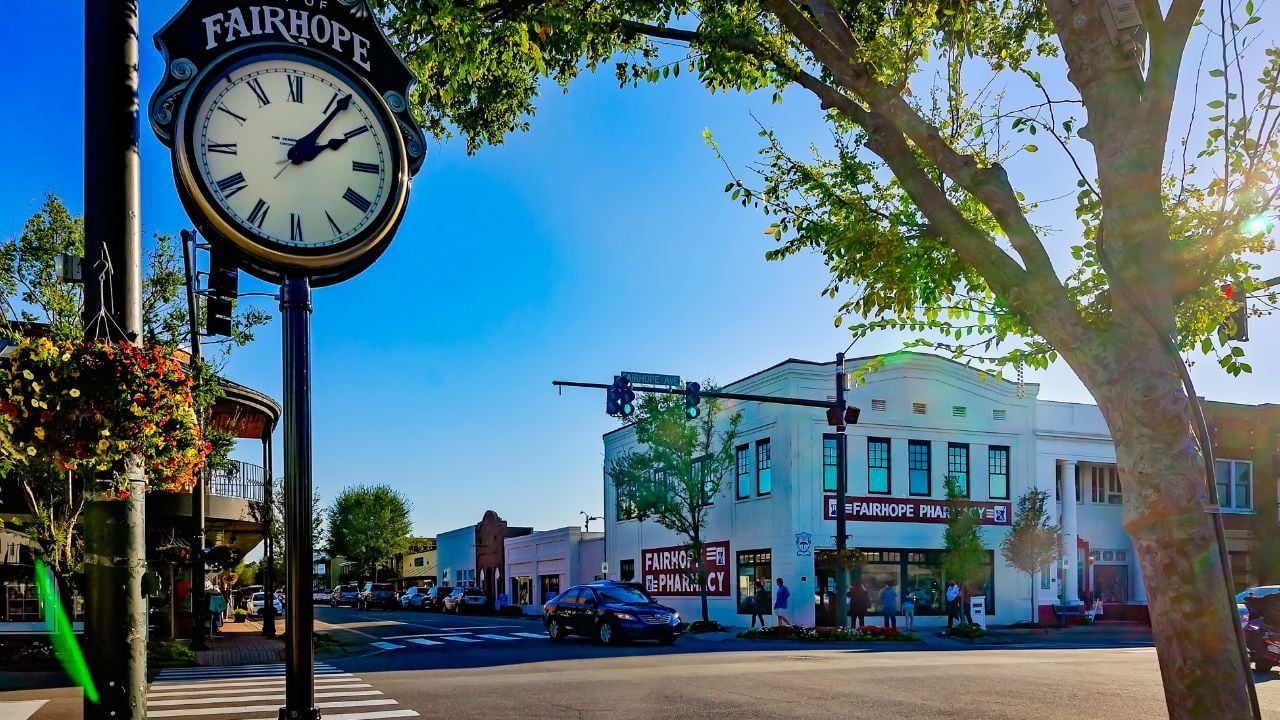
1. Fairhope
Fairhope started in 1894 as a Utopian single-tax colony on a bluff over Mobile Bay, a small experiment in fair land use.
It stopped being small.
The population grew by about 16.6% in just five years, and Section Street backs up with browsing traffic most weekend afternoons.
Downtown Fairhope still has the bookshop and the pier locals remember, but both now come with a line that starts before the shops open.
2. Gulf Shores
Gulf Shores counts about 15,000 year-round residents, and from Memorial Day to Labor Day, locals barely recognize their own hometown.
Gulf Shores and neighboring Orange Beach together hold more than 18,000 vacation rental units and hotel rooms, and most of them fill up at once.
Highway 59 becomes a parking lot most summer weekends, the same two lanes carrying every beachbound car in the region.
Every lane fills up.
Locals plan their errands around it now, not the other way around.
3. Dauphin Island
Dauphin Island is a fifteen-mile barrier island in Mobile County, and exactly one bridge gets a car on or off it most days.
The Gordon Persons Bridge carries State Route 193 across open water, and it’s the only route in for the roughly 1,800 residents who call the island home year-round.
One road in, one out.
Psst! How much do you know about Alabama beyond its small towns? Take our quiz and see if you can ace it.
Quiz
Alabama Firsts and Facts
Answer these questions on Alabama history and hometown pride. We bet you can’t get them all right. Prove us wrong?
Which Alabama city held the country’s first Mardi Gras celebration, more than a decade before New Orleans even existed?
Summer beach traffic backs that single bridge up for miles some Saturdays, and islanders learn to time a grocery run around the tide of visitors, not the tide of water.
Locals still call it the Sunset Capital of Alabama, and they'll tell you the sunset never got old, only the traffic did.
9 Things Alabamians Do on Game Day That Baffle Everyone Else
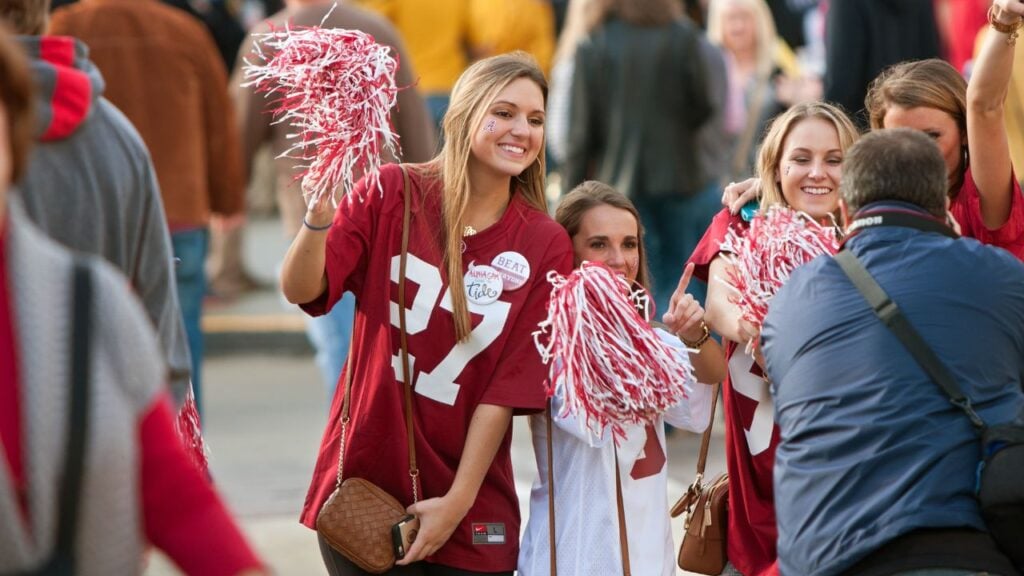
Alabama families reschedule weddings around a kickoff time nobody knows until the Monday before, sometimes later.
Restaurants shift their hours and Sunday dinner moves back an hour, all because a television network hasn't picked a time slot yet.
9 Things Alabamians Do on Game Day That Baffle Everyone Else
14 Things Alabamians Are Proud of That Outsiders Don't Appreciate
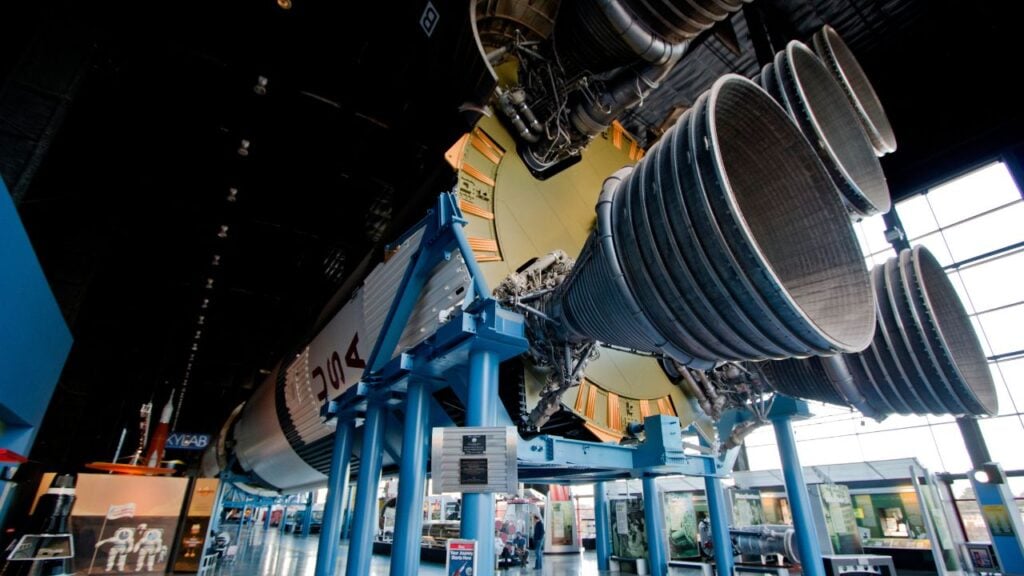
Many road-trippers cross Alabama on the interstate and never get off it.
Pull off the highway, and you find rocket labs, recording studios, and kitchens worth driving hours to reach.
14 Things Alabamians Are Proud of That Outsiders Don't Appreciate
