
9 Things Self-Employed Ohioans Get Wrong Before the September 15 Tax Deadline

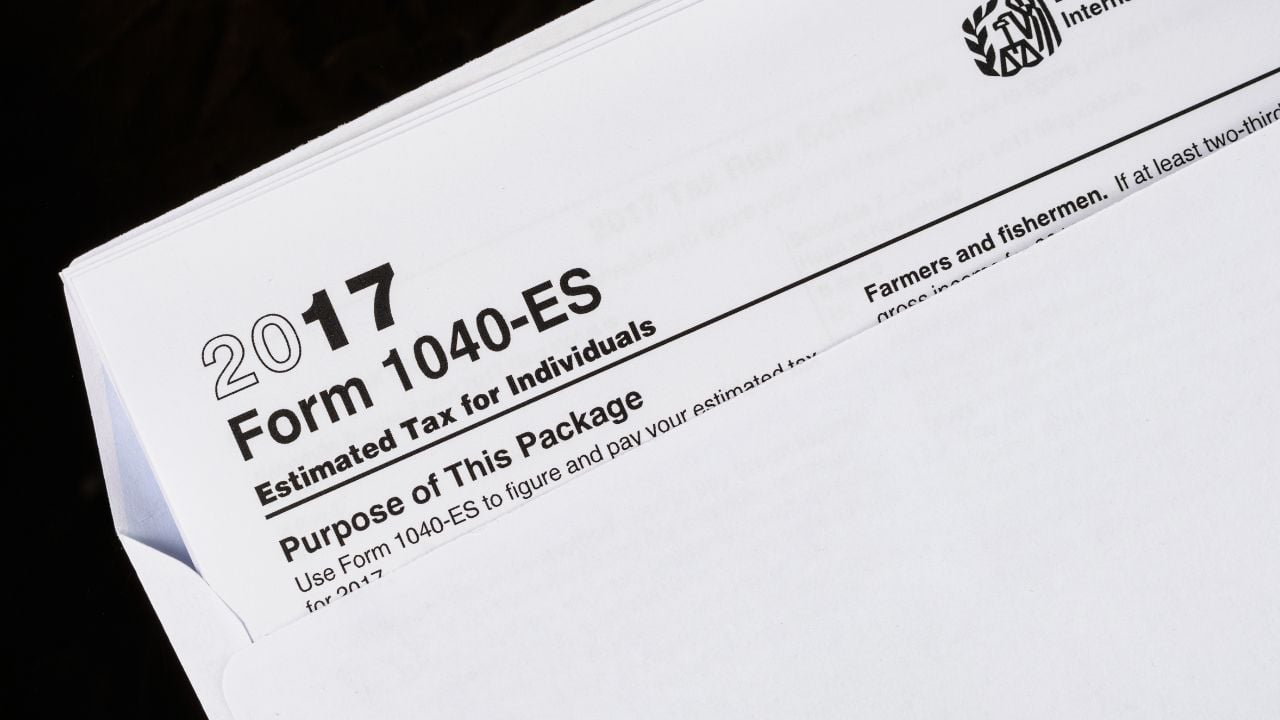
The IRS spreads estimated tax payments across four fixed dates every year for self-employed Americans.
September 15 is the third due date for 2026.
It applies to self-employed workers and side-income earners across Ohio, whether their income shows up in a steady stream or in bursts.
These are the assumptions that catch self-employed taxpayers off guard before that date.
Note: This is general information, not tax advice. Federal, Ohio, and municipal tax rules and deadlines are subject to change, so confirm the current details with the IRS, the Ohio Department of Taxation, or RITA.
1. Assuming Side Income Stays Small
A side gig can look too small for the IRS to notice, and many self-employed Ohioans bank on that gap.
That’s the wrong bet to make before September 15.
The IRS requires quarterly estimated payments once a taxpayer expects to owe $1,000 or more for the year after subtracting withholding and credits.
Self-employment tax alone runs 15.3%, 12.4% for Social Security plus 2.9% for Medicare, on net earnings up to $184,500 in 2026.
It adds up fast.
A few thousand dollars of freelance or gig income clears that $1,000 line well before fall arrives.
2. Missing the Net Profit Tax
Many self-employed Ohioans figure a check to the IRS and a check to the state cover their whole estimated tax bill.
It doesn’t cover the Regional Income Tax Agency, or RITA.
Self-employed Ohioans who live inside a RITA city owe a third payment every quarter, on top of the IRS and the state.
RITA collects net profit tax for a large share of Ohio’s hundreds of taxing municipalities, and anyone who expects to owe $200 or more to their city after credits and withholding has to send quarterly estimated payments, same as the IRS.
Those city due dates match the federal calendar exactly.
It’s three bills, one date.
September 15 covers the IRS, Ohio, and often a city bill all at once.
Nobody warns freelancers about that third one until a notice shows up.
3. Trusting the Business Deduction
A good year can push a freelance consultant or contractor well past what Ohio’s Business Income Deduction shields, and self-employed Ohioans rarely see that line coming.
The deduction has a ceiling.
It fully shields the first $250,000 of business income for single and joint filers, $125,000 for those filing separately.
Ohio taxes everything above that line at a flat 3% rate, deduction or not.
Crossing it happens faster than expected, especially once a spouse’s income joins the same return.
That extra income still owes an Ohio estimated payment by September 15.
4. Paying the Same Each Quarter
Splitting a year’s estimated tax bill into four equal payments feels like the safe move for self-employed Ohioans with seasonal or lumpy income.
But it can trigger a penalty they never saw coming.
The IRS calculates the underpayment penalty period by period, checking each quarter’s payment against that quarter’s income, not against how the full year nets out.
A landscaper who earns the bulk of a year’s income between April and October can pay a flat one-fourth every quarter and still face a penalty for an early-quarter shortfall, even in a year that owes nothing extra by next April.
The fix sits in the Form 2210 annualized income installment method, which matches each payment to when the money showed up instead of splitting the bill evenly.
Few self-employed Ohioans with seasonal income ever file it.
That’s the form likeliest to erase a penalty nobody thought they’d owe.
5. Banking on a Refund
Self-employed Ohioans banking on a refund the following spring assume it cancels out a skipped payment somewhere along the way.
The IRS doesn’t see it that way.
The underpayment penalty can still apply even when the full-year return ends up showing a refund because the IRS calculates it period by period, not against where the year lands.
Skip a payment in July and land a refund next April, and the September 15 payment can still owe a penalty for the months it sat unpaid.
Ouch.
Psst! Is your Ohio side business ready for September 15? Take a lap through this checklist and see where you land.
6. Assuming a Flat Safe Harbor
The standard safe harbor rule says pay 100% of last year’s tax, and the penalty stays off the table. Self-employed Ohioans whose income keeps rising tend to assume that number holds steady for them too.
Once income crosses a certain point, though, the rule changes.
That 100% threshold jumps to 110% of the prior year’s tax once a taxpayer’s adjusted gross income for the year before topped $150,000, or $75,000 for those married filing separately.
Many successful self-employed Ohioans clear that bar without ever adjusting their payments.
Miss the higher 110% target, and the safe harbor stops protecting the shortfall.
The Safe-Harbor Math, Worked Out
A self-employed Ohioan who owed $16,000 in federal tax last year, and expects to owe more this year, can send the IRS a quarter of that $16,000, or $4,000, on each of the four due dates.
Paid that way, the penalty disappears no matter what the final bill looks like next April.
Cross $150,000 in prior-year adjusted gross income, though, and the target grows to 110% of last year’s total, $17,600 instead of $16,000.
Each quarterly payment grows with it, to $4,400 instead of $4,000.
7. Treating the Penalty as Flat
Self-employed Ohioans picture the underpayment penalty as a flat fine, a fixed number tacked onto a late payment no matter what.
The IRS runs it as interest instead.
It calculates the rate using the federal short-term rate plus three percentage points, compounded daily, and that rate sits at 7% for the third quarter of 2026.
The later the payment, the more days that rate has to compound.
A payment three months late costs noticeably more than one three weeks late, even on the same balance.
8. Saving for a Vanished Tax
A growing side business used to mean setting money aside for Ohio’s Commercial Activity Tax, and self-employed Ohioans running one often still budget that way out of old habit.
Not anymore, for almost anyone this small.
Ohio raised the Commercial Activity Tax exclusion to $6 million in annual taxable gross receipts starting with the 2025 tax year, up from $3 million the year before.
That threshold moved just about every solo, self-employed operation below the line entirely.
Cash set aside for a tax that’s no longer owed is cash that isn’t covering the September 15 payment that is.
9. Trusting the Day Job’s Withholding
A regular paycheck’s withholding feels like it should cover everything, side income included, and self-employed Ohioans working a day job alongside a side hustle often assume exactly that.
It covers the paycheck only.
Paycheck withholding only accounts for wage income unless a worker files a new Form W-4 to pull out extra for the side hustle too.
Skip that step, and the IRS still expects a separate estimated payment covering the freelance or gig income by September 15.
There’s a fix hiding in the fine print, though.
Withholding raised evenly counts as paid across all four periods, not just the quarter it came out of a paycheck.
A side-income earner who under-paid all year can sometimes close the gap by boosting withholding in the last few months instead of writing a bigger September 15 check.
8 Lease Mistakes Costing Ohio Renters Hundreds of Dollars

Ohio gives renters more built-in money-saving rights than many leases ever spell out.
Many tenants never cash in on a single one of those rights, and the fine print only pays off if you know it’s there before you need it.
8 Lease Mistakes Costing Ohio Renters Hundreds of Dollars
The States With the Highest Property Taxes, Ranked. Here’s Where Ohio Falls

Forty-one Ohio counties ran fresh property reappraisals this year, and some homes jumped in value by nearly 19%.
That doesn’t mean the tax bill jumps the same amount, but it’s the kind of number that makes homeowners nervous every reappraisal cycle.
The States With the Highest Property Taxes, Ranked. Here’s Where Ohio Falls
