
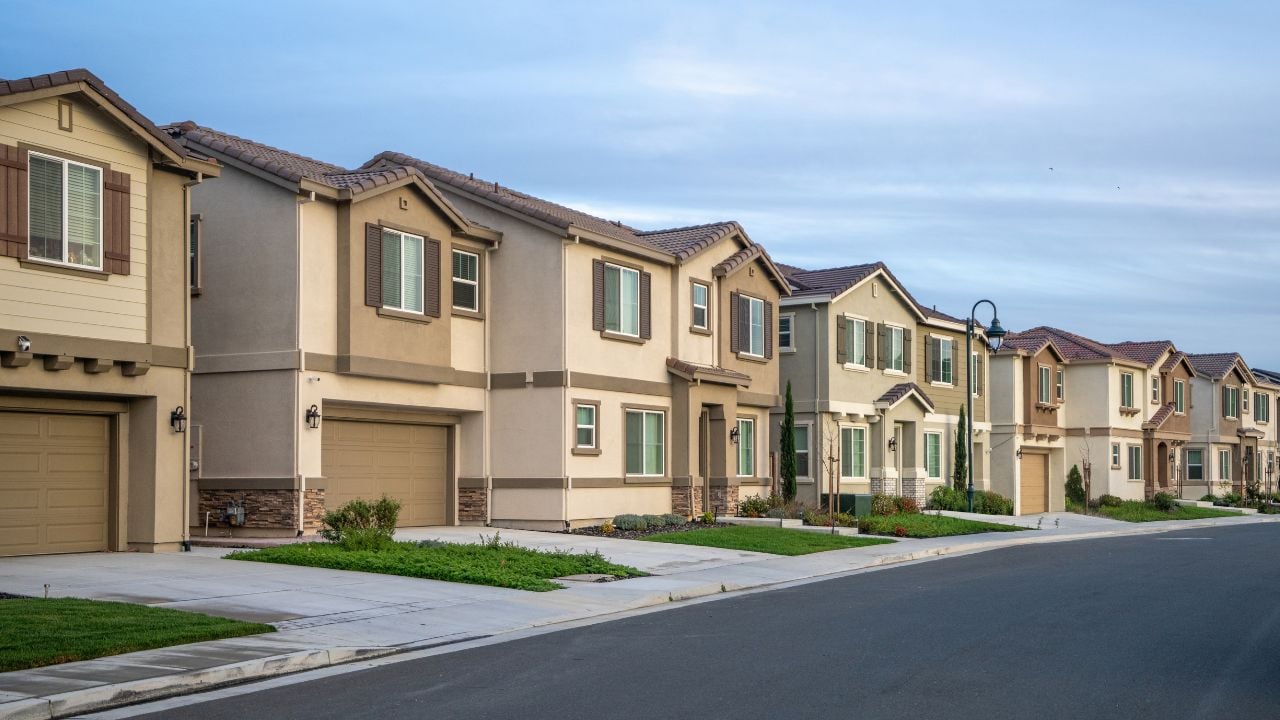
The States With the Highest Property Taxes, Ranked. Here’s Where Ohio Falls

Forty-one Ohio counties ran fresh property reappraisals this year. Some saw home values jump nearly 19%.
None of that means a tax bill jumps the same amount, but it’s the kind of number that makes homeowners nervous every reappraisal cycle.
Every state handles property taxes differently, and some hit homeowners harder than others.
These are the states with the highest property taxes and where Ohio falls among them.
Note: This is general information, not tax advice. Property tax rates, rankings, and dollar figures are subject to change.
How Rankings Work
This ranking leans on the Tax Foundation, a nonpartisan tax policy nonprofit that publishes a fresh property tax report every year.
Their team calculates an effective property tax rate for every state, comparing what homeowners paid to what their homes are worth.
A higher effective rate means property taxes take a bigger bite out of a typical home’s value, no matter what the sticker price says.
The states below are ranked from that effective rate, highest to lowest, using the Tax Foundation’s newest 2026 numbers.
New Jersey
New Jersey homeowners pay more in property taxes than residents of any other state.
New Jersey’s effective rate sits at 1.88%, tied for the highest in the country.
In dollar terms, a $100,000 home generates $1,880 in property taxes each year under that rate.
New Jersey funds many of its schools and local government through property taxes, on top of already collecting a state income tax.
A modest $400,000 home in New Jersey can carry a tax bill north of $7,500 a year.
That makes New Jersey the most expensive state in the country to own a home, tax-wise.
Illinois
Illinois ties New Jersey at the very top, with a 1.88% effective property tax rate across the state.
Local bills swing even higher in spots like Lake County, where the median tax bill runs $9,591 a year on a $383,700 home, a 2.50% effective rate.
Illinois leans on property taxes to cover a heavy load of local school and pension costs.
Pensions eat up the difference.
Connecticut
Connecticut’s effective property tax rate runs 1.54%, third-highest in the nation.
Translated to dollars, that’s $1,540 annually for every $100,000 a home is worth.
Connecticut has no county government to speak of, so cities and towns lean almost entirely on property taxes to run schools and police departments.
Towns carry the load.
Vermont
A typical Vermont homeowner pays 1.51% of a home’s value in property taxes each year, the fourth-highest rate in the country.
Vermont funds a statewide education fund largely through property taxes, and Vermont lawmakers have wrestled with rising school costs for years.
A $300,000 home in Vermont owes roughly $4,530 a year at that rate.
Education costs keep rising.
New Hampshire
New Hampshire’s 1.50% effective rate makes more sense once you look at what the state doesn’t tax.
New Hampshire collects no state income tax and no general sales tax, so property taxes carry nearly the whole weight of funding local government.
New Hampshire homeowners pay about $1,500 a year for every $100,000 their house is worth.
The trade-off is real.
Psst! Curious where your own state ranks? Explore the full property tax table below, from the highest effective rate down to the lowest.
Nebraska
Nebraska’s effective property tax rate comes in at 1.44%, the highest in the Great Plains.
On a $100,000 home, that adds up to a $1,440 annual property tax bill.
Nebraska raises a bigger share of its local budgets from property taxes than many of its neighboring farm states do.
Farmers in the state feel that reliance most when the tax bill lands.
Texas
Texas’ 1.40% effective rate comes from the same trade-off as New Hampshire’s.
Texas collects no state income tax, so cities, counties, and school districts lean harder on property taxes to cover the gap.
A $350,000 home in Texas owes close to $4,900 a year at that rate.
Still no free lunch.
Ohio
Ohio’s effective property tax rate lands at 1.36%, the eighth-highest in the nation.
Ohio homeowners aren’t catching a break in 2026, either.
Forty-one Ohio counties ran fresh property reappraisals this year, and Summit County saw home values rise as much as 18%.
Ohio lawmakers passed property tax relief bills in March 2026 to limit how much those higher values can push up a bill.
A $275,000 home in Ohio owes about $3,740 a year at the state’s 1.36% rate.
Rate, Bill, or Value? The Difference That Trips People Up
Ohio’s 1.36% figure here is an effective property tax rate, not a flat bill every homeowner pays.
An effective rate divides the property taxes a home paid by what that home is worth.
A $250,000 home in Ohio at that rate owes about $3,400 a year.
A $600,000 home in Illinois at 1.88% owes closer to $11,280 despite the small-looking rate gap.
Iowa
Iowa’s effective rate sits at 1.33%, just behind Ohio.
That’s $1,330 a year for every $100,000 of home value, among the highest rates in the Midwest.
Iowa’s farmland and rural counties carry some of the heaviest agricultural property tax bills in the country.
Rural counties feel it most.
Wisconsin
Wisconsin’s effective property tax rate comes in at 1.32%.
That translates to roughly $1,320 in property taxes for every $100,000 a home is worth.
Psst! How much do you know about Ohio’s history and geography? Take our quiz and see if you can ace it.
Quiz
Ohio Trivia IQ
Answer these questions on Ohio history and geography. We bet you can’t get them all right. Prove us wrong?
Ohio became the 17th state in 1803, but Congress never finished the paperwork. What year did lawmakers finally pass a resolution making it official?
Wisconsin has leaned on property taxes to fund its schools for decades, a pattern that hasn't slowed down.
Homeowners in America's Dairyland have gotten used to paying for it every year.
9 Kroger Traps That Cost Ohio Shoppers Every Week
Kroger saves Ohio shoppers money every week, but no grocery store is perfect.
A few checkout habits cost Ohio shoppers money every single week.
9 Kroger Traps That Cost Ohio Shoppers Every Week
11 Things Ohioans Are Told About Their State That Aren't True
What Ohioans hear about their own state growing up doesn't always hold up once you check the facts.
These are the Ohio myths worth setting straight.
11 Things Ohioans Are Told About Their State That Aren't True
