
9 Items New York Residents Can Be Fined for Leaving at the Curb

A sanitation officer doesn’t need to learn your name before writing up what’s sitting at your curb.
A quick photo, or a neighbor’s phone call to 311, is often all the evidence a citation needs.
These are the items New York residents can be fined for leaving at the curb.
Note: This is general information, not legal advice. Sanitation and disposal rules vary by city, town, and county and are subject to change, so confirm the current requirements with your own municipality’s sanitation department or the New York State Department of Environmental Conservation.
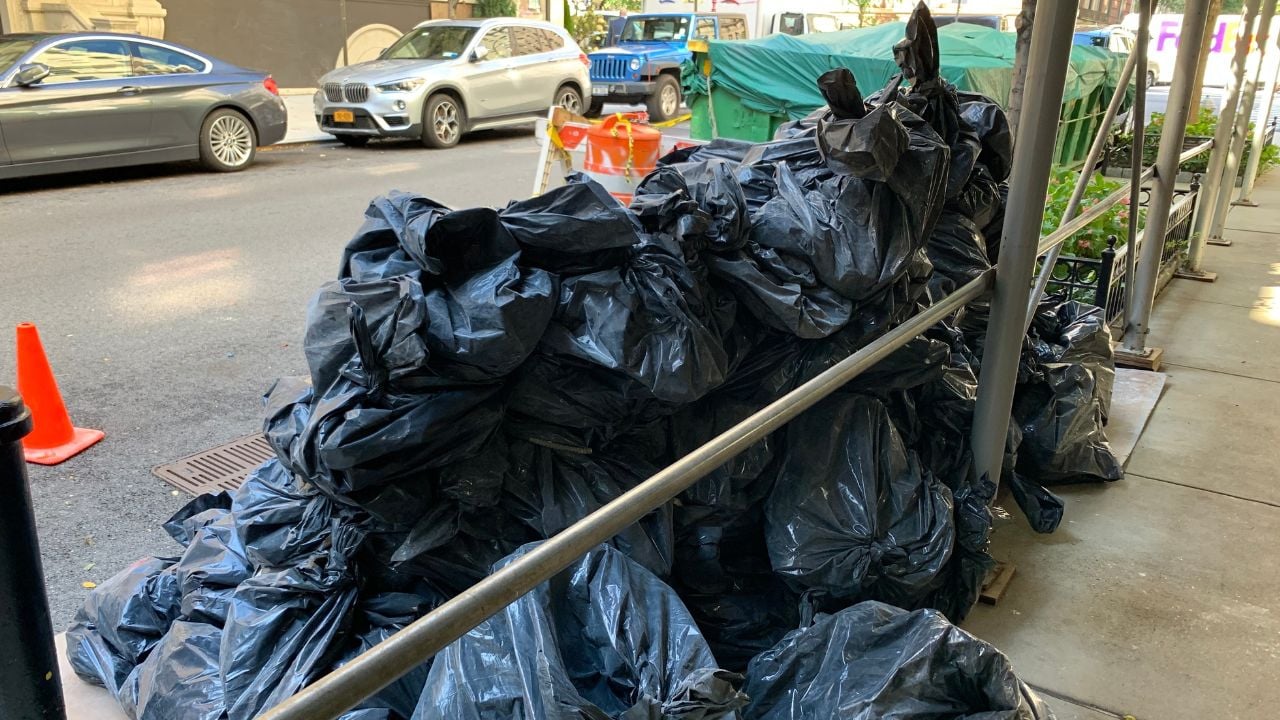
1. Loose Trash Without a Secured Bin
New York City now requires trash to go out in a bin with a secured lid, not a loose bag dropped at the curb.
Bags alone don’t cut it anymore.
Single-family homes and buildings with up to nine units need a container of 55 gallons or smaller with a lid that closes tight, and since this past June that container has to be the city’s official NYC Bin.
Skip the bin, and the fines rise fast: $50 for a first offense, $100 for a second, and $200 for every offense after that within a year. That’s not exactly pocket change.
Long Island and upstate towns run their own versions of the same idea, usually built around timing and container type rather than a citywide bin mandate, but the principle holds everywhere.
Garbage left loose in the street is a violation, not a shortcut.
2. Recyclables Mixed Into the Trash
New York’s Town of Brookhaven, on Long Island, splits recycling into two streams: Paper and cardboard one week, plastic and metal the next.
Mix them into the regular trash instead of sorting them, and the container gets stickered and left right where it sits.
No pickup, no exceptions.
That same principle runs citywide in New York City, just with bigger numbers attached.
Dump metal, glass, or cartons in with household trash there instead of separating them, and the city’s Department of Sanitation (DSNY) can fine a small building up to $100 and a larger one up to $300 for repeat offenses.
Every borough and many Long Island towns draw the line in the same place.
3. Food Scraps and Yard Waste in the Trash
New York City has required residents to keep food scraps and yard waste out of the regular trash citywide since October 2024, sorting them into a brown bin or a compostable bag instead, but the city didn’t start writing tickets for skipping it until April 1, 2025.
Mayor Zohran Mamdani restarted enforcement of that rule on January 1, 2026, after his predecessor had paused it, and inspectors had already written 425 summonses within about two months of the fines coming back.
That’s not a slow rollout.
A building with eight units or fewer faces $25 for a first offense, rising to $100 by the third violation; a bigger building starts at $100 and can reach $300.
Grass clippings, leaves, and food-soiled paper plates all fall under that same brown-bin rule, and DSNY treats skipping it exactly like skipping the recycling bin.
The requirement doesn’t stop at the five boroughs, either.
New York State’s own Food Donation and Food Scraps Recycling Law makes large generators outside New York City, restaurants, grocery stores, hotels, and colleges among them, separate their food scraps for recycling once they produce a ton or more of it a week, with that threshold dropping again in 2028.
4. Electronics Left at the Curb
New York’s ban on electronics in the regular trash has been on the books since January 1, 2015, when the state’s disposal law took full effect, covering TVs, computers, and monitors alike.
Buffalo’s own sanitation code spells that out directly, banning electronic waste from the curb even when someone hides it inside a carton or container.
New York City backs the same rule with a fine: Property owners who set out banned electronics face a $100 penalty per violation.
Businesses face far steeper consequences, since the state can fine a company up to $25,000 for every day a violation continues.
5. Rechargeable Batteries in the Garbage
New York State outlawed throwing a rechargeable battery in the regular trash back in 2010, and the ban covers laptops, phones, power tools, and e-bike batteries alike.
The rule applies either way.
Any retailer that sells those batteries has to take used batteries back for recycling, so a hardware store or pharmacy is required by law to accept them at no charge.
An individual who breaks the ban faces a civil penalty of $50 for a first offense, $100 for a second within a year, and $200 after that.
Psst! Think you know which of these are myths about New York’s curbside rules? Take a guess on each one, then flip the card and see how you did.
6. Car Tires Left at the Curb
Any tire retailer in New York has to take back a customer’s old tires when they sell new ones, matching the number purchased, under the state’s take-back law.
That’s the legal way out.
Skip the shop and haul a set of tires to the curb in a car or truck instead, and a town can treat that trip as illegal dumping rather than an ordinary trash violation.
New York City’s Administrative Code backs that up with steep numbers for material dumped from a vehicle: A civil penalty starting at $4,000 for a first offense, $9,000 for a second within eighteen months, and $18,000 for every one after that.
A trunkload of tires at the curb can be read the same way, though how they got there, hauled in a vehicle or simply carried out and set down, often decides whether that citation sticks.
7. Trash Bags Set Out Too Early
The Town of Hempstead, New York’s largest township, cites the trash bag itself when it hits the curb before 7 p.m. the night before collection, and requires it gone again by 5 a.m. on pickup day.
Set that same bag out any earlier, and it counts as litter under the town’s own code.
Hempstead’s littering law treats a bag left out at the wrong time the same as any other violation, punishable by a fine of up to $500 or up to 15 days in jail per offense.
Several other Long Island and upstate towns run near-identical curfews on their own trash containers, just with the hours shifted a little.
8. Unbagged Mattresses
New York City requires every mattress and box spring set out for collection to be sealed inside a clear plastic bag, tied shut, before it ever reaches the curb.
Bed bugs are the reason.
A mattress dragged out bare, without the seal, draws its own fine schedule under the city’s sanitation code: $50 for a first offense, $100 for a second, $200 for a third, and $300 for every one after that within a year.
Furniture doesn’t carry the same rule, but a mattress does, every time, in every borough.
9. Illegally Dumped Bulk Debris
A Brookhaven resident who piles old cabinets, tires, or leftover renovation debris at the curb well past what regular collection allows can be cited under the same illegal-dumping law the town built for contractors.
That’s not a fine reserved for hauling companies.
The Town of Brookhaven, Long Island’s largest township by land, raised those penalties sharply after a resident found a pile of construction debris dumped in the Mastic Beach wetlands.
A first offense now runs $5,000 to $10,000 with up to 15 days in jail, and a second offense rises to $10,000 to $20,000.
Town officials adopted the higher penalties to stop residents and contractors alike from treating a vacant lot, a wetland, or their own curb like a free landfill.
How New York City’s Fines Escalate
New York’s curbside penalties don’t run on one dial.
New York City spreads its rules across a three-tier ladder: A first slip on trash, recycling, or composting costs the least, and each repeat offense inside a year costs more.
Long Island runs the opposite model in places.
Not everywhere agrees.
Hempstead’s littering code caps every citation at $500 no matter how many times the town cites a resident, while Brookhaven’s dumping law works the other direction entirely, rising into the tens of thousands with a repeat offense.
How New York City’s Fines Reset Each Year
New York City’s setout, recycling, and composting fines all escalate on the same rolling 12-month clock.
That responsibility falls on the property owner, not on whichever resident set the trash out.
A first offense lands at the bottom of that rule’s scale, a second inside the same 12 months costs roughly double, and a third jumps again.
Once a full 12 months passes without another citation, the next slip counts as a first offense again, not a fourth.
What Upstate Towns Do Differently
Upstate New York handles curbside rules its own way, too.
Same idea, different rules.
Rochester and 14 towns in Monroe County run separate curbside pickup for yard waste instead of folding it into the regular can, following the state’s ban on sending leaves and grass clippings to a landfill.
Buffalo’s own code goes a step further, banning electronic waste from the curb even when it’s hidden inside a sealed box, closing the same loophole New York City closed with its $100 fine.
Rochester spells out exactly how that yard waste has to look at the curb, too.
Residents have to bundle loose branches and hedge trimmings with string or twine, capping each bundle at four feet long, 18 inches across, and 60 pounds, or the crew skips right past it.
9 Things New York Landlords Can Legally Do That Renters Assume Are Illegal
New York’s Good Cause Eviction law has spread to more than a dozen cities since it passed in 2024, and many renters assume that means the whole state now works in their favor.
It doesn’t, and these are the moves a New York landlord can still legally make that catch many renters off guard.
9 Things New York Landlords Can Legally Do That Renters Assume Are Illegal
8 Reasons People Are Leaving New York in 2026
More than 400,000 people left New York for another state in a single year, roughly a city the size of Tampa walking out the door in twelve months.
These are the reasons people keep giving for finally making the move.
