
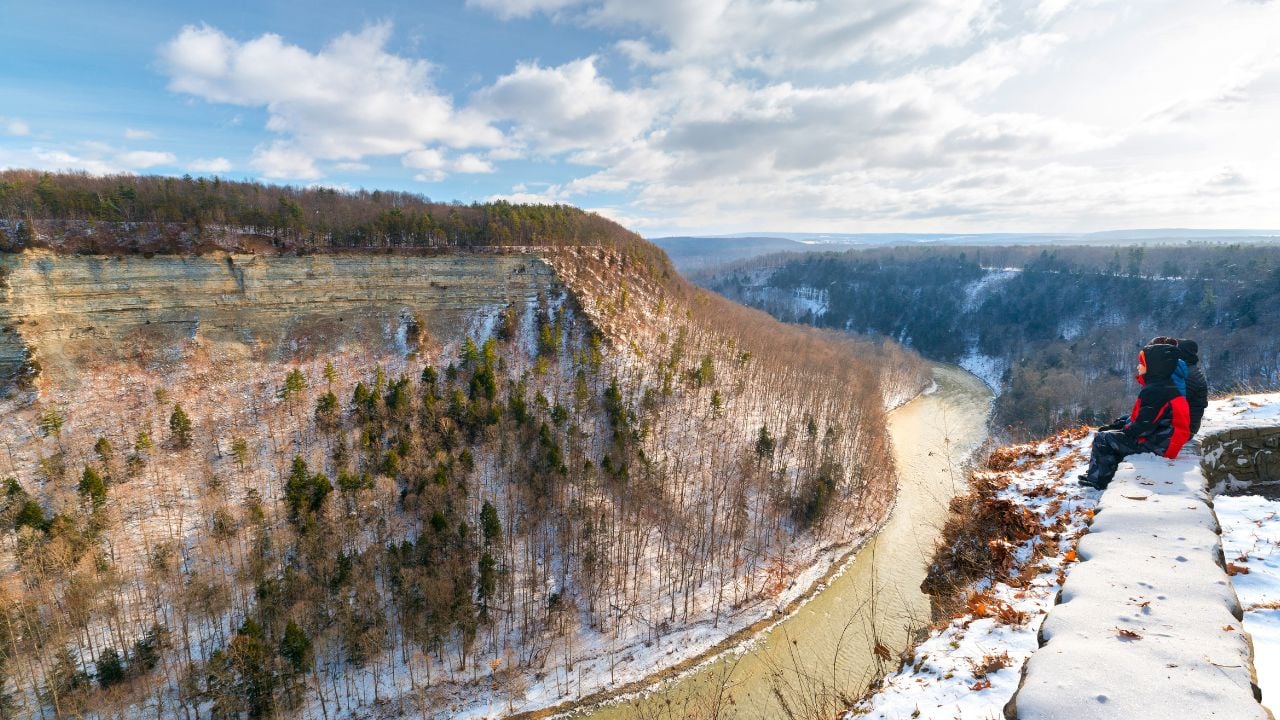
7 New York State Park Rules Visitors Break Every Weekend

Is a $250 fine worth ten minutes in a waterfall pool?
At Watkins Glen State Park, someone decides yes almost every weekend.
These are the New York State park rules that too many visitors break.
Note: This is general information, not legal advice. Park rules, fines, and permit requirements are subject to change.
1. Metal Detecting Without a Permit
New York State Parks require a paid permit before anyone sweeps a beach or lawn with a metal detector.
Long Island’s parks enforce that one closely, since beach sand and boardwalk lawns are where many detectorists show up.
Under state regulation, running a metal detector without that permit is off-limits anywhere in the system, and a Long Island annual permit runs $40.
Rangers can shut the search down on the spot.
There’s a second catch even permit holders miss.
Anything worth more than $20, or older than 100 years, legally belongs to the park, not the person who found it.
Many pocket it anyway.
Digging tools have limits too, capped at a small blade so the sand and turf come back looking untouched.
2. Bringing Glass or Alcohol
New York State Parks don’t carry one single statewide ban on glass containers, but many individual parks post their own outright rule against it, Minnewaska State Park Preserve among them.
Bathing areas across the Palisades region parks go further, banning glass and glassware outright under state regulation.
Alcohol carries its own separate rule.
Consuming or even carrying an open container of alcohol requires a standard permit under state regulation, unless a park has designated the area exempt.
Many picnic areas haven’t.
A cooler of beer bottles still shows up at a state park picnic table many summer Saturdays.
Rangers pour it out, write a ticket, or both.
Cans travel better anyway, and a plastic tumbler solves the wine problem without breaking a single rule.
3. Flying a Drone Over the Falls
Niagara Falls State Park sits inside a federal no-fly zone, and drones are banned there entirely.
The park’s own rules confirm it: Every flight below 3,500 feet near the Falls is restricted, so the park issues no drone permits.
Visitors launch one anyway for a better shot of the mist.
New York’s other state parks aren’t a free-for-all either.
Statewide, the parks agency requires written permission from a regional director before any drone leaves the ground on its property, whether the goal is a wedding video or a sunset over Jones Beach.
Almost nobody bothers.
They just fly.
4. Bringing a Dog to Jones Beach
Jones Beach State Park bans pets entirely, year-round, with no exception for a leashed dog or a quick walk near the boardwalk.
The park’s own listing spells it out in plain language: No pets allowed, all year round.
There’s no wiggle room in that rule.
Many other New York State Parks do allow dogs, just on a six-foot leash and never on a guarded swimming beach.
Visitors carry that assumption straight into Jones Beach’s parking lot.
Not here.
Then a ranger points them back to the car.
That’s the U-turn drivers make at the Meadowbrook and Wantagh parkway exits on many summer weekends.
5. Wading Into the Gorge
Watkins Glen State Park draws crowds for its 19 waterfalls.
Some visitors decide a hot day calls for a swim anyway.
The park’s own trail signage is blunt about the cost.
Entering the gorge or swimming in any of its pools carries a $250 fine per person, and that’s the good outcome.
The water runs 45 to 55 degrees even in August.
That’s cold.
Currents hide under the surface.
The rock underneath is slicker than it looks too.
Fatal drownings have happened to hikers who stepped off the marked path.
Stick to the trail, and the park’s swimming pool near the campgrounds handles the cooling-off instead.
6. Feeding the Wildlife
Bear Mountain State Park and its Hudson Valley neighbors carry black bears, deer, and a steady stream of visitors eager to get close.
Feeding any of them breaks the law.
Under state regulation, deliberately feeding a black bear is illegal from the first offense, and a repeat feeding after a warning can bring a fine up to $250 and as many as 15 days in jail.
A snack tossed from a picnic table looks harmless.
It isn’t.
Fed wildlife loses its fear of people fast, and a bear that connects picnic tables with food rarely gets that fear back.
Why $250 Keeps Turning up on New York Park Tickets
New York’s state park system keeps reaching for the same fine amount no matter which rule a visitor breaks.
Watkins Glen charges $250 per person for entering its gorge.
The state’s black bear feeding law tops out at that same $250 fine for a repeat offense.
Niagara Falls State Park uses that identical $250 ceiling for something that has nothing to do with water or wildlife: Riding a recreational scooter or bike along its walking paths, per the park’s own posted rules.
Psst! How much do you know about New York’s state parks? Take our quiz and see how many you can get right.
Quiz
New York State Park IQ
Answer these questions on New York’s state park history and records, and see how many you can ace.
Which New York state park holds a genuine first in American history?
7. Making Noise After Hours
New York's state park campgrounds run on a strict clock after dark, and that's the rule many campers ignore first.
Reservation policy sets a nightly no-noise window from 10 p.m. to 7 a.m. at many campgrounds, though hours shift slightly park to park.
Late-arriving groups routinely miss it.
Campers also have to register and occupy their site by 9 p.m. on the first night, or the reservation counts as a no-show and the park releases the site.
A long drive up from the city with a stop for dinner can blow that deadline without anyone realizing it.
New York's parks agency keeps a state park in 56 of 62 counties.
Stays at any of them cap at 14 continuous nights.
Skipping the Bear Canister
New York's state park system ends at the edge of the Adirondacks, but many of the same visitors keep driving north into the High Peaks Wilderness, where a different agency's rules take over.
Overnight campers there need a rigid canister approved by the New York State Department of Environmental Conservation (DEC), built to hold food and anything scented, required in the Eastern High Peaks Wilderness Area between April 1 and November 30.
A stuff sack tied to a tree branch doesn't count.
Neither does a cooler bag.
Forest rangers patrol those trailheads checking packs during peak season, and hikers without a canister can be turned back before they ever reach a campsite.
The rule exists because Adirondack black bears learned years ago that a hanging food bag is just a puzzle.
A canister rental runs about $5 a night at the High Peaks Information Center in Heart Lake, cheaper than explaining an empty pack to a ranger at the trailhead.
Hiking in an Oversized Group
New York's state park entry rules don't cover group size the way the Adirondack and Catskill Forest Preserve does, where the DEC caps how many hikers or campers can travel together without a permit.
In wilderness and primitive areas, state regulation limits an unpermitted group to 15 people for a day hike.
Overnight camping in the Eastern High Peaks Wilderness cuts that number to 8.
Weekend meetup hikes and college outing clubs blow past both limits.
They do it every time.
Nobody counts heads at the trailhead.
Groups over the limit need a permit from the forest ranger covering that area, arranged in advance, not worked out at the parking lot.
Affiliated groups hiking the same route also have to stay at least a mile apart.
10 Words New Yorkers Use That Confuse Everyone Else

New York doesn't run on one accent, and it definitely doesn't run on one word list.
The vocabulary splits by county almost as much as the landscape does, and a few of those words trip up New Yorkers talking to each other.
10 Words New Yorkers Use That Confuse Everyone Else
8 Reasons People Are Leaving New York in 2026

More than 400,000 people packed up and left New York in a single year, a group roughly the size of Tampa.
Taxes lead the list of reasons, but they're far from the only reason pushing people toward the state line.
