

How Long Does a California Employer Have to Give You a Final Paycheck?

Fire someone in California, and their final paycheck is due immediately, the same day, at the same place they worked.
Quitting with at least 72 hours’ notice doesn’t change that deadline. The check is still due the moment the job ends.
Walk off without warning instead. The employer then gets up to 72 hours, never longer, to get the money out the door.
Miss any of those windows, and California’s penalty kicks in: A full day’s wages come off the employer for every day the check runs late, up to 30 days straight.
Many workers never hear about that penalty until it happens to them. The check itself usually owes more than one last week’s pay too, once vacation and commissions factor into the total.
Note: This is general information, not legal advice. Final paycheck deadlines and penalty amounts are subject to change, so confirm your situation with the California Labor Commissioner’s Office.
When You’re Fired or Laid Off
Losing a job in California, whether by firing or layoff, puts every dollar of earned wages up for payment immediately, the moment employment ends.
A worker let go mid-shift at a Fresno warehouse has every right to that same-day check, whether the layoff was planned for months or announced five minutes earlier.
No grace period.
That includes overtime already worked, any bonus that’s already been earned, and the vacation time still sitting on the books.
California also names the spot where that money has to change hands: The place of discharge itself, not some branch office across town.
When You Quit With 72 Hours’ Notice
California hands an employee who quits with fair warning almost the same deadline as a fired worker.
Give an employer at least 72 hours’ notice of your last day, and the final paycheck is due that same day, the moment you clock out for good.
Same clock, same rules.
The paycheck still has to include every earned wage plus any accrued vacation, exactly like a discharge does.
A worker who gives a Sacramento call center three days’ notice on a Monday can expect that final check the moment they clock out Thursday, not on the next twice-a-month payday.
When You Quit Without Notice
California gives the employer breathing room only when a resignation catches them off guard.
Quit on the spot with no notice, and the employer has up to 72 hours to deliver the final paycheck.
Not a day longer.
That’s the outer limit, not a default the employer gets to lean on out of habit.
An employee can also ask the employer to mail that final check to a chosen address instead of picking it up in person, and the mailing date itself counts as the official payment date.
Retail and restaurant workers who walk out on a Friday shift in Bakersfield without warning are still owed that money by Monday morning, weekend included.
Does Your Paycheck Have to Include Vacation Pay?
Under California law, accrued, unused vacation time rides the exact same immediate-or-72-hour clock as the rest of your final check.
That’s because California treats earned vacation as wages, not a perk the employer can erase at will.
That rule blocks the “use it or lose it” policies many workers assume are legal.
No expiration date.
California employers can cap how much vacation a worker piles up going forward, but they can’t erase time already earned once it’s on the books.
Sick leave works differently. Unused sick days don’t have to be paid out when the job ends, so a worker banking sick time instead of vacation time loses that balance the moment they walk out the door.
Psst! California’s wage laws go back over a century, and many workers have never heard the wildest parts. Take our quiz and see how many you can get right.
Quiz
California Wage Law IQ
Answer these questions on California’s wage and labor history. We bet you can’t get them all right. Prove us wrong?
California briefly refunded a century-old wage board in 2023, then stripped that funding back out just 11 weeks later. What’s the board called?
What Happens to Commissions and Expense Reimbursements
California folds an earned sales commission into the same wage rules as regular pay.
A commissioned salesperson who's fired or laid off gets those commissions on the same immediate or 72-hour clock, as long as the sale is already final.
Commissions still tied to something outside the worker's control, like a customer's payment clearing, become due the moment that condition is finally met.
Not before.
Expense reimbursements run on a different track entirely.
California law requires an employer to reimburse every necessary cost a worker covers on the job, from mileage to a phone bill run up for work, but that money doesn't ride the same 72-hour clock as regular wages.
A worker still owed for gas money or a hotel bill has to chase it separately, usually through the same wage claim process that recovers a late paycheck.
Psst! Not every California job follows the standard fired-or-quit timeline. Run through this table and find your own situation.
The Penalty When the Deadline Is Missed
California's waiting time penalty runs on a clock of its own: One full day of a worker's regular pay for every day a final paycheck stays late, up to 30 days.
Miss the discharge deadline, the 72-hour window, or the same-day rule for a well-noticed quit, and that clock starts running.
That clock includes weekends and holidays, not just business days.
A good faith dispute over the amount owed can excuse the penalty, but only if the employer has a legitimate legal or factual reason to withhold the money.
Even then, they still have to pay whatever part isn't in dispute on time.
Miss the deadline outright.
The final tab then covers the original wages plus up to a second paycheck's worth of penalties stacked on top.
The Math Behind a Late California Paycheck
California's 2026 minimum wage sits at $16.90 an hour, so a worker on a standard 8-hour shift earns a daily rate of $135.20.
Run that daily rate through a 12-day-late final paycheck, and the waiting time penalty alone adds $1,622.40 on top of the wages already owed.
A worker earning more than minimum wage sees the same math scale up fast, since the penalty always tracks that worker's own regular daily pay, never a flat statewide number.
How Long You Have to File a Wage Claim
A worker has three years to file a wage claim over a late final paycheck, the same three-year window the California Supreme Court applied to waiting time penalty claims in Pineda v. Bank of America.
That clock starts on the date the paycheck should have arrived, not the date a worker finally notices it's missing.
Filing that claim costs a worker nothing.
Free and simple.
The Labor Commissioner's Office, formally the Division of Labor Standards Enforcement, takes wage claims online, by mail, by email, or in person at any of its district offices around the state.
Bring pay stubs, the employer's name and address, and a record of hours worked. The more detail on the claim, the faster it moves.
Once the office assigns the case, claims typically head to a settlement conference first, and only move to a formal hearing if that conference doesn't resolve things.
A hearing officer's decision, called an Order, Decision, or Award, can be enforced as a court judgment if the employer still refuses to pay.
California enforces many other rules people only run into once they need them, from wage claims all the way to what a resident can't legally toss in a household trash bin.
Psst! Final paycheck myths spread fast at the water cooler. Flip these cards and see how many you already had right.
FAQ
Quick answers to what California workers ask most about their final paycheck.
Does a California employer have to pay you the same day you're fired?
Yes. State law makes wages due and payable immediately at the time of discharge, paid at the place where the discharge happened.
How long does a California employer have to pay you if you quit without notice?
Up to 72 hours. If you gave at least 72 hours' notice instead, the paycheck is due the moment you quit, the same as a firing.
Does a California final paycheck have to include unused vacation?
Yes. Earned, unused vacation counts as wages under state law and has to be paid out with the rest of the final check. Unused sick leave doesn't carry the same requirement.
What happens if a California employer pays your final check late?
The employer owes a waiting time penalty equal to one day of your regular pay for every day the check is late, up to a maximum of 30 calendar days.
Where do you file a complaint if your final paycheck is late in California?
With the California Labor Commissioner's Office, formally the Division of Labor Standards Enforcement. Claims can be filed online, by mail, or in person, and the process doesn't require a lawyer.
Direct deposit doesn't automatically carry over into a final paycheck, even for a worker who's used it for years.
California law cuts off that standing authorization the moment employment ends, whether by resignation or termination, so the last check often has to be a physical one unless the worker asks in advance to keep direct deposit running.
10 Things California Employers Can't Legally Ask You

A hiring manager doesn't get to ask whatever comes to mind once a California interview starts.
Several everyday questions are flatly off-limits, and many job seekers have already answered a few of them without realizing it.
10 Things California Employers Can't Legally Ask You
9 California Squatter Laws That Cost Homeowners Who Ignore Them
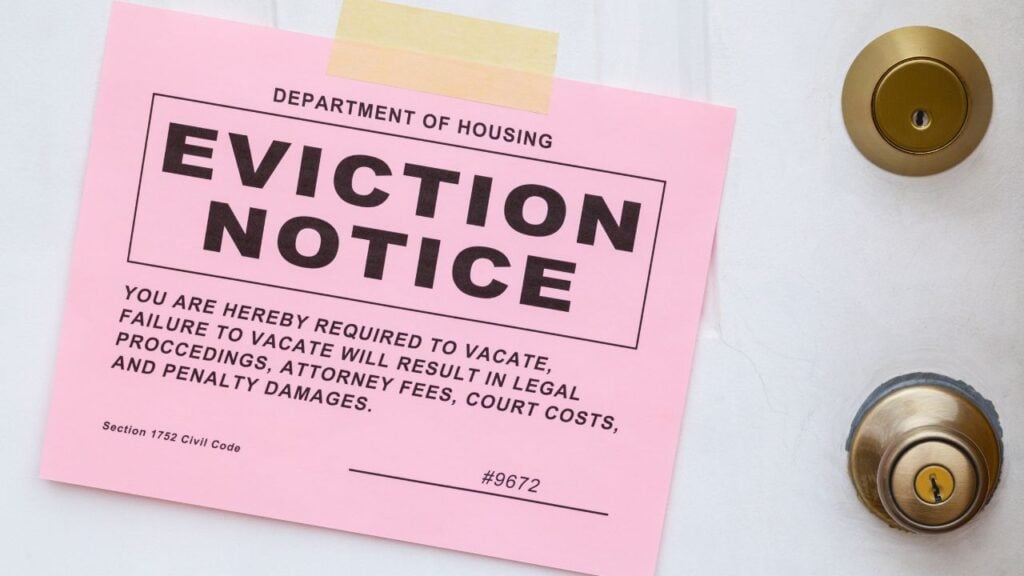
A family's cabin above Highway 50 near Lake Tahoe sits buried under snow every winter, and nobody checks on it until spring.
This April, the padlock on the door wasn't the one they left, and someone's boots were still drying next to the fire.
9 California Squatter Laws That Cost Homeowners Who Ignore Them
