
7 Meijer Etiquette Rules Illinois Shoppers Break Without Noticing

Ever plan a midnight run to Meijer, assuming the doors are unlocked the way they’ve always been?
That assumption alone trips up more Illinois shoppers than almost anything else on this list.
Old habits die hard, and Meijer has changed more about the way it runs its stores than many regulars realize.
These are the Meijer etiquette habits Illinois shoppers keep breaking without realizing it.
1. Skipping the Shop & Scan Check-In
Meijer turns a shopper’s phone into the register with its Shop & Scan tool, but only after they check in first.
A sign near the entrance carries a quick-response (QR) code, and the Meijer app needs a scan of it before a single item goes into you cart.
Skip that step and start scanning groceries anyway, and none of those scans attach to a verified order once you reach the self-checkout lane.
It’s a pain for employees.
A team member has to walk over, sort out why your cart’s full and your phone’s tally is empty, and rebuild the order by hand.
That’s a five-minute interruption that a ten-second scan at the door would have skipped entirely.
Meijer rolled out the tool to 23 Chicago-area and northwest Indiana stores in a 2019, and it’s now standard at Meijer locations across Illinois, from Algonquin to Champaign.
2. Filling Your Cart Before the Bag
Meijer built Shop & Scan for one continuous motion: Scan an item, then bag it, right there in the aisle.
Shoppers who fall into scanning a whole cart’s worth of groceries and dropping them loose back into the same cart don’t think of it as skipping a step.
In the moment, it just feels faster.
It isn’t.
That shopper still has to bag every one of those items before they can leave.
Shop & Scan’s exit point is a self-checkout kiosk built for a quick phone scan and a walk-out, not a five-minute bagging job while the person in line behind you waits their turn.
It also makes a mismatch between the phone’s tally and the cart’s actual contents more likely, which is exactly what Meijer’s checkout staff is trained to catch.
Bag as you scan, and checkout is fast.
Bag at the end, and it’s the shopper behind you who feels it.
3. Getting Irritated With the Rescan
Meijer runs a spot check on its Shop & Scan shoppers.
A team member walks up to a self-checkout lane and rescans a handful of items already bagged, comparing the count against what the phone rang up.
It happens at random, and it’s built into how the app prevents fraud.
It’s not a reaction to anything a particular shopper did wrong.
Snapping at the employee is rude and unnecessary.
What Happens When Meijer’s Rescan Turns Up a Mismatch
Meijer doesn’t treat a mismatch as theft.
If the team member’s rescan turns up an item nobody scanned, like a second yogurt cup stuck to the first, they add it to the total right there, and the shopper pays for what’s in the bag.
Meijer doesn’t flag a shopper’s mPerks account over one missed item.
The check exists to catch honest misses, not to build a case against anyone.
4. Fumbling for Coupons at Checkout
Meijer’s mPerks app is where the coupons live now, not a stack of paper clipped from Sunday’s insert.
Shoppers are supposed to clip digital coupons in the app before they ever reach a register, then redeem them by keying in their account phone number or letting the cashier scan a barcode on their phone.
Waiting until the belt is already moving to start hunting through the app holds up everyone behind you.
So does asking a cashier to manually apply a coupon that you didn’t clip ahead of time.
Clip before you shop.
Psst! How Meijer-savvy are your store habits? Run through this checklist and see where you stand.
5. Parking in Someone Else’s Pickup Spot
Meijer marks a handful of parking spots by the entrance for shoppers picking up an online order, not for people running in for a gallon of milk.
Pickup windows run for hours at a time, and Meijer asks shoppers to arrive inside the window they picked instead of showing up whenever it’s convenient.
Pulling into one of those spots without an active order ties up a space, and a staff member ends up walking farther to reach the shopper waiting on their groceries.
Showing up an hour early and idling in the spot causes the same headache.
6. Blocking the Pump for Your Discount
Meijer runs fuel centers at many of its Illinois supercenters, and the per-gallon discount tied to a shopper’s mPerks account only applies if it’s entered before the pump starts running.
That means keying in an account phone number or ID at the pump itself, ahead of squeezing the handle, not after the tank’s already halfway full.
Before, not after.
A driver who pulls up and only then starts digging for their phone number holds up the car waiting behind them for a pump that isn’t even occupied yet.
Enter the discount before you get out of the car.
It takes ten seconds parked, and a lot longer once you’re blocking a line.
7. Assuming the Doors Never Close
Meijer built its identity on being open 24 hours, and for decades that was simply true.
That changed during the pandemic, when Meijer shifted to closing at midnight and reopening at 6 a.m.
The schedule stuck.
Years later, a shopper who lingers past midnight at a Meijer near Elgin or Evergreen Park runs into a closing crew that’s already clocked the store as closed.
Arguing with that crew, asking for “just five more minutes,” or wheeling a half-full cart toward the registers after the closing announcement doesn’t change the outcome.
It just means a Meijer employee stays late explaining a policy that isn’t theirs to bend.
Meijer hasn’t brought 24-hour hours back, though leadership has said the company hasn’t ruled out a return.
Until then, midnight is the plan to work around, not a suggestion to negotiate with the person locking the doors.
How Meijer Invented the Supercenter
Meijer wasn’t always the sprawling one-stop store Illinois shoppers know today.
The company opened its first store as a small grocery in Greenville, Michigan, in 1934, then spent decades expanding before trying something nobody else had.
In 1962, Meijer opened a store called Thrifty Acres in Grand Rapids, combining a full grocery store with a department store under one roof, a format that predated the supercenters other national chains built decades later.
Every Meijer an Illinois shopper walks into today, whether it’s in Bloomingdale or Danville, traces back to that one Grand Rapids experiment.
One trip covered it all.
The name changed to Meijer at every location in 1986, once Thrifty Acres had already proven the idea worked.
Illinois got its first taste of one-stop shopping years before the word “supercenter” was a word anybody used at the register.
9 Habits That Embarrass Illinoisans the Second They Leave the State

Illinoisans swear up and down they don’t have an accent, a walk, or a single tell.
Step off a plane in Arizona still calling them gym shoes, and the room finds out fast.
9 Habits That Embarrass Illinoisans the Second They Leave the State
9 Illinois Foods That Horrify the Rest of the Country
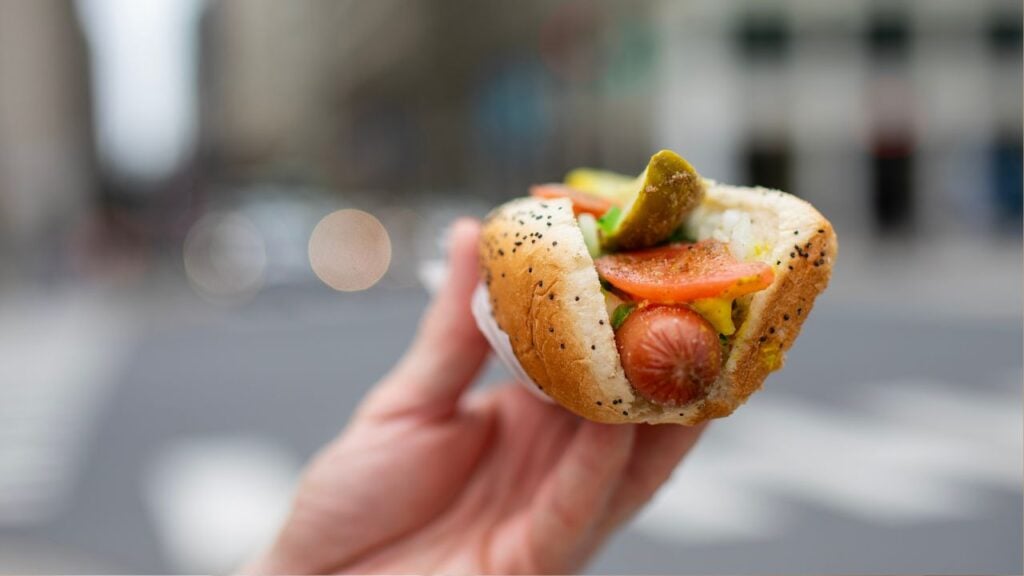
Ketchup on a hot dog is an argument Illinois settled a long time ago, and Chicago vendors still roll their eyes if you ask for the bottle anyway.
That’s just the opening move in a state that piles sandwiches higher than many forks can handle.
