

8 Alabama Car Warranty Traps Drivers Fall For at the Dealership

A $3,000 warranty rolled into a five-year car loan can cost you an extra $450 in interest.
And that’s just the start. A Consumer Reports subscriber survey found car owners nationwide pay a median of $1,214 for an extended warranty.
More than half of those people never file a single claim.
These are the warranty traps Alabamians and Americans across the country fall for at the dealership.
Note: This is general information, not legal or financial advice. Warranty and service contract terms vary by provider and are subject to change, so confirm your rights with the Alabama Attorney General’s Consumer Interest Division.
1. Paying for a Protection Package You Never Asked For
Alabama dealerships often bundle a vehicle service contract, essentially an extended warranty for a used or off-warranty car, together with several other products in the finance office and call the whole stack a “protection package.”
Guaranteed Asset Protection (GAP) insurance, paint sealant, fabric treatment, and that service contract can all ride inside one bundled price, presented as if it’s already part of the deal.
You don’t have to.
Every item inside a bundle, including the service contract, can be priced and declined separately.
Asking the finance manager to break it apart is often the fastest way to see how much of that “package” is actual warranty coverage and how much is padding.
2. Financing the Warranty Without Pricing the Interest
Alabama finance offices spring this trap with a straight face.
They fold a vehicle service contract straight into the car loan instead of billing it separately.
The pitch sounds harmless: A few extra dollars a month, barely noticeable next to the car payment.
That’s the trap.
That financed warranty stops being a flat cost the moment it’s folded into the loan, since the buyer pays interest on it for as long as the loan runs, on top of whatever the contract already cost.
The Math on a Financed Alabama Warranty
Alabama buyers rarely see the interest broken out on a financed service contract, only the new monthly payment.
Roll a $3,000 warranty into a 60-month loan at 7% interest, and the extra interest alone runs close to $450, on top of the sticker price of the coverage.
Paying that same $3,000 upfront, separate from the loan, is the only way to skip that extra charge entirely.
3. Believing Only the Dealer Can Keep Your Warranty Valid
Alabama finance managers sometimes imply that skipping the dealership’s own service department voids a car’s factory warranty.
It doesn’t.
The federal Magnuson-Moss Warranty Act bars a manufacturer or dealer from requiring dealer-only service to keep coverage valid, and a manufacturer can only deny a claim if it can prove the outside shop’s work caused the failure.
Oil changes, tire rotations, and brake jobs can happen at any qualified shop without putting that warranty at risk.
4. Confusing GAP Coverage With a Warranty
Alabama’s finance office menu often puts GAP insurance right next to the vehicle service contract, and the finance office pitches the two back to back until they blur together.
They cover completely different things.
GAP insurance only pays the gap between what’s owed on the loan and what the insurance company pays out after a car is totaled or stolen, per the Consumer Financial Protection Bureau (CFPB).
A GAP policy bought at the dealership commonly runs $400 to $700 as a one-time premium, while adding the same coverage to an existing auto insurance policy runs closer to $20 to $40 a year.
Either way, it won’t touch a blown engine or a failed transmission.
5. Trusting a Certified Badge That Isn’t the Manufacturer’s
Alabama dealers sometimes slap their own “certified” sticker on a used car after a basic inspection, with nothing from the manufacturer standing behind it.
Nothing backs it but the dealer’s word.
Only a manufacturer’s own franchised dealer can sell that automaker’s certified pre-owned (CPO) vehicles, and genuine coverage runs at any of that brand’s dealerships nationwide, not just the one that made the sale.
CPO coverage costs more for a reason: It runs about $1,300 above a similar non-certified vehicle on a mainstream brand, according to Edmunds.
That’s serious money.
Buyers who assume a shop-branded “certified” sticker carries the same backing find out otherwise only when a provider denies their claim.
Psst! How many of these Alabama car warranty claims can you call correctly? Flip each card and see how you do.
6. Signing “As Is” While Trusting a Spoken Promise
Alabama used-car buyers sign a federally required Buyers Guide sticker on every vehicle.
The Federal Trade Commission (FTC) rule behind that sticker, not a salesperson on the lot, decides whether any dealer warranty exists at all.
The “As Is-No Dealer Warranty” box means exactly what it says.
That box means no coverage.
A salesperson’s spoken assurance carries no weight once that box is checked because the Buyers Guide overrides anything said out loud on the lot.
Read the sticker before signing anything else.
7. Missing Alabama’s Cancellation Window
Alabama dealerships rarely bring up the cancellation window built into every service contract they sell.
State law gives buyers at least 20 days from when the contract is mailed, or 10 days when it’s handed over at the dealership, to void it and get a full refund, as long as no claim has been filed yet.
Almost nobody asks for it.
Miss that window, and only a prorated refund remains, minus an administrative fee of up to $25 the provider is allowed to keep.
8. Getting Upsold on a Warranty During a Yo-Yo Callback
Alabama dealerships sometimes hand over the keys and a signed service contract the same day, then call days later claiming the financing fell through.
That’s a spot delivery, sometimes called yo-yo financing, a scheme consumer advocates have tracked nationwide.
They go back.
The dealer asks the buyer to come back and re-sign a new contract, usually at a higher rate or with a bigger down payment.
The dealer rewrites the warranty right along with it.
A service contract declined the first time can reappear in the new paperwork, buried among all the other numbers changing at once.
When a Service Contract Is Worth the Price
Alabama’s warranty traps don’t mean every service contract is a bad buy.
Some are worth it.
A high-mileage used car with an expired factory warranty and a track record of expensive repairs is exactly the situation a contract was built for.
Just under half of extended warranty buyers ever file a claim, and among those who did, a Consumer Reports subscriber survey found the median savings came to $837, against a median cost of $1,214.
The math only works when the contract is priced and read on its own, never bundled with anything else in the finance office.
How Alabama Polices These Contracts
Alabama requires every company that sells vehicle service contracts in the state to register with the state’s insurance commissioner and pay an annual fee, under the same law that sets the cancellation window.
That paperwork alone won’t stop a pushy pitch.
It does give the Alabama Attorney General’s Consumer Interest Division somewhere to start when a dealer or provider won’t honor the contract or the refund rules.
It costs nothing to call.
Alabama goes a step further than just registering providers: State law requires every one of them to back its promises with a reimbursement insurance policy, a funded reserve account, or at least $100 million in net worth.
That financial backstop is what keeps a claim from turning worthless if the company that sold the contract closes its doors, since the insurer or reserve fund stays on the hook even after the original seller is gone.
7 Arguments Florida and Alabama Will Never Settle

A surveyor drove a stone into the ground in 1799 to settle, for good, exactly where Alabama ends and Florida begins.
It didn’t work.
Alabamians and Floridians have kept arguing about that line ever since.
7 Arguments Florida and Alabama Will Never Settle
9 Alabama Small Towns Locals Love (and 3 Tourists Overrun)
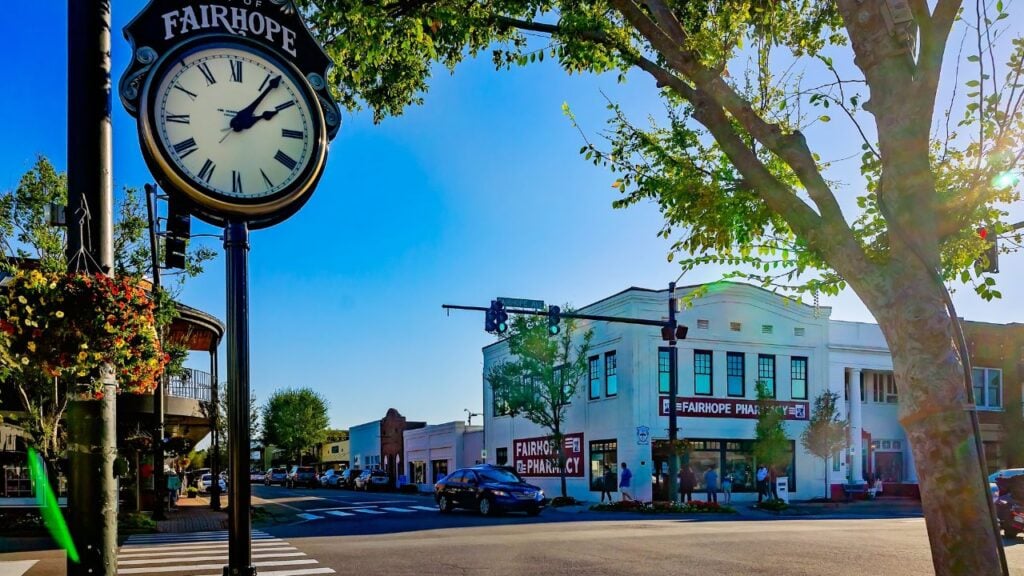
Not every small town in Alabama stays small.
Some still run on one stoplight and a courthouse square that empties out by six.
Others grew a whole tourism industry, with traffic backing up every weekend from spring through fall.
