
8 Kroger Sale Signs That Can Cost Ohioans More Than They Save

Think a Kroger shelf tag in Ohio tells you exactly what you’ll pay at checkout?
Not always.
Some of Kroger’s signs need a clipped coupon, a scanned Plus Card, or a minimum purchase before that price is the one you pay.
Kroger’s free rewards program still beats what many other chains offer. No grocery store writes a perfectly clear shelf tag every time though.
These are the Kroger sale signs that can cost Ohioans more than they save.
1. Electronic Shelf Tag
Kroger’s electronic shelf tag has replaced the paper sign at a growing number of Ohio stores.
The fine print shrank right along with it.
Shoppers in Cincinnati say sale terms and quantity conditions print noticeably smaller on the new digital screens than they ever did on paper.
That’s easy to miss.
Kroger built the new screens to look almost identical to the paper tags they replace, already running in 20 stores across its Columbus division.
“We don’t want the change to be too noticeable to our customers,” a Kroger spokesperson told WOSU, a Columbus public radio station.
U.S. Sen. Elizabeth Warren has pressed Kroger over whether those same screens let the chain change a price without warning, leaving no paper trail for a shopper to check against what they saw an hour earlier.
A sign built to look unchanged is exactly the kind a rushed shopper stops reading closely.
2. Kroger Plus Card Price Split
Kroger’s biggest sale prices almost always come with a catch: A free Kroger Plus Card has to unlock them.
The bold number on the shelf tag is the member price.
A smaller “regular” price sits right beside or beneath it for anyone checking out without the card or a registered phone number.
Skip that step, and Kroger’s register charges the higher number, not the lower price that caught your eye.
Same shelf, different price.
Signing up costs nothing and takes a couple of minutes on Kroger’s app or at the customer service desk.
Entering a phone number at checkout works just as well as carrying the physical card.
A shopper who skips both at a self-checkout kiosk pays the shelf tag’s fine print, not its headline.
3. Digital Coupon Icon
Kroger tucks a second layer of savings into many of its shelf tags: A digital coupon has to be clipped first.
The lower price only unlocks once a shopper clips that exact coupon inside the Kroger app before reaching the register.
Miss that step, and the discount simply doesn’t apply, even with a scanned Plus Card.
One Kroger shopper told Taylor Nimmo, a reporter with Cincinnati TV station WCPO, on Facebook.
“Kroger digital coupons are too hard for seniors to use,” the shopper wrote.
Kroger does offer a workaround.
A shopper without a smartphone can ask for the same discount at the customer service desk, and Kroger now prints a paper copy of its weekly digital deals for anyone who’d rather skip the app entirely.
That fix only helps a shopper who knows to ask for it.
4. “Buy 5, Save $1 Each” Tag
Kroger’s Mega Sale tags carry the boldest price in the aisle, and also the biggest catch.
A tag reading “Buy 5, Save $1 Each” prints its lowest number in giant red type.
The actual, single-item price sits in type a third that size, tucked just below it.
Consumer reporters at WCPO, a Cincinnati TV station, photographed one of these tags in the wild: The giant number read $1.99, and the fine print below it read $2.99 unless five items landed in the cart.
Grab just two or three, and Kroger’s register rings every item at the higher price.
No warning beeps at checkout.
The sign does say so, technically, and that’s what keeps it legal.
It’s also the easiest line on the whole shelf to miss.
The Math Behind Kroger’s Mega Sale Tag
Kroger’s Mega Sale tags let a shopper mix five different items instead of five of the same one.
Grab five items each tagged “$1.99 with 5,” and every item rings up at $1.99, a $5 total savings against the $2.99 regular price.
Buy four of those same items, though, and Kroger’s register charges the full $2.99 on all four, not just the item missing from the cart.
5. Fuel Points Bonus Tag
Kroger’s fuel points bonus tag baits a shopper into buying items they don’t need for a reward that isn’t cash off at the register.
A bright tag reading “Buy 2, Earn 200 Fuel Points” sits beside the everyday shelf price, with no dollar discount printed on it anywhere.
Those points aren’t permanent.
Kroger’s own fuel rewards program expires points at the end of the calendar month after the one where a shopper earned them.
A shopper who buys two items in June to chase 200 points, then never redeems them before July 31, watches those points vanish.
No refund, no rain check, no value left behind.
The two items still cost their full, non-sale price, bought for a reward that expired before it ever paid off.
6. Sale Tag That Missed Wednesday
Kroger swaps its paper sale tags on a weekly cycle, and Wednesday is generally the day new prices go up.
A joint investigation by Consumer Reports, The Guardian, and the Food and Environment Reporting Network found that cycle breaking down at Kroger-owned stores nationwide.
Investigators found expired sale tags on more than 150 different items, some sitting 90 days out of date.
The shelf still showed last week’s price, or last season’s.
The register didn’t agree.
Shoppers in the investigation’s sample paid $1.70 more per item than the tag promised, an 18.4% overcharge on average.
Kroger disputes the scope of the findings and says its own audits review millions of items every week.
One internal review the investigation cited still found close to 6% of checked items wrong, well above the company’s own 1% error target.
Ohio’s own attorney general’s office has fielded nearly 60 complaints about Kroger price tag and overcharge issues since 2021.
Psst! How much do you know about Kroger’s Cincinnati roots? Take our quiz and see how many you can get right.
Quiz
Kroger History IQ
Test yourself on Kroger’s Cincinnati roots, its biggest mergers, and Ohio grocery history. We bet you can’t get them all right. Prove us wrong?
Barney Kroger sank his entire life savings into his first grocery store in 1883. How much was that?
7. Glitching Digital Deal Tag
Kroger's digital deal tags promise a lower price the moment a shopper clips the coupon in the app, and Cincinnati-area shoppers say that promise doesn't always hold at the register.
A longtime Kroger shopper named Martha Smith told Cincinnati TV station WCPO the discount fails to apply "80% of the time," even on coupons she clipped correctly before shopping.
"If you clip them ... you should get them, but you don't always get that price," Smith said.
Not a rare glitch, either.
Kroger's customer service desk can fix the mismatch, but only for a shopper who catches the error on the receipt and asks.
Miss that step, and the price the sign promised never reaches the register at all.
8. Manager's Special Sticker
Kroger marks down perishables nearing their sell-by date with a "Manager's Special" or "Reduced for Quick Sale" sticker, usually in the meat case, the dairy aisle, or the bakery.
Employees stick these on individual packages, not entire shelves.
That distinction matters.
A shopper who spots one marked-down package of chicken thighs and grabs three more unstickered packages beside it pays full shelf price on those extra three.
The discount only applies to the stickered package, not the whole bin.
Kroger associates typically mark these packages down early in the morning, before the store gets busy.
Checking each package for its own sticker, rather than trusting that a whole case is priced the same, is the only way to know which one carries Kroger's lower number.
9 Grocery Aisles That Look Completely Different in Ohio Than They Did 20 Years Ago
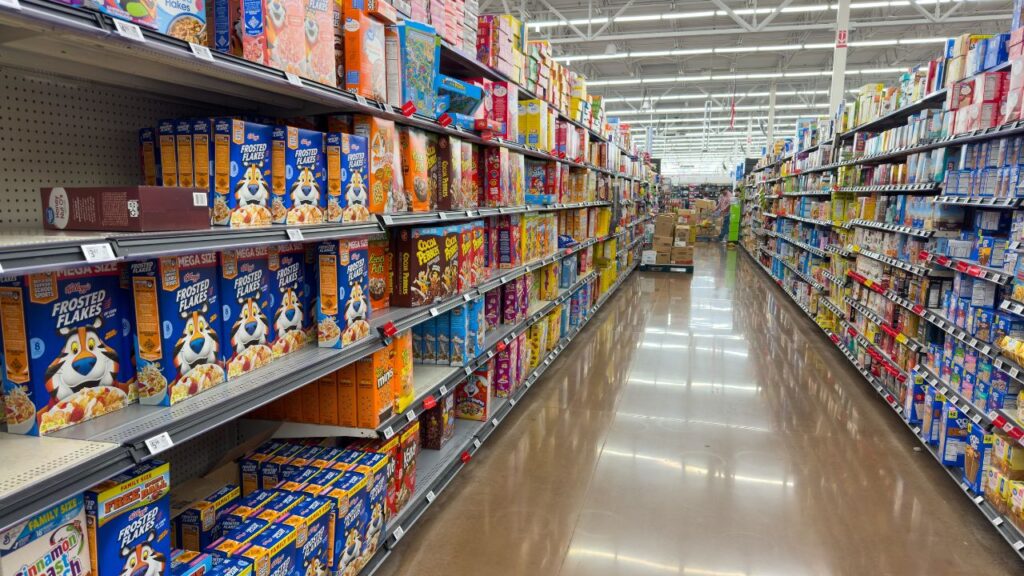
A shopper pushes a cart past a dark, empty window inside a southwest Ohio Kroger, the glass bare and the counter long gone.
That spot used to hold a full-service bank branch tucked inside the store like a second business, and now it's just another end cap.
9 Grocery Aisles That Look Completely Different in Ohio Than They Did 20 Years Ago
8 Lease Mistakes Costing Ohio Renters Hundreds of Dollars

Ohio hands renters more money-saving rights than some leases bother to spell out, and many tenants never cash in a single one.
The deadlines and the fine print only pay off for renters who know they exist before they need them.
