
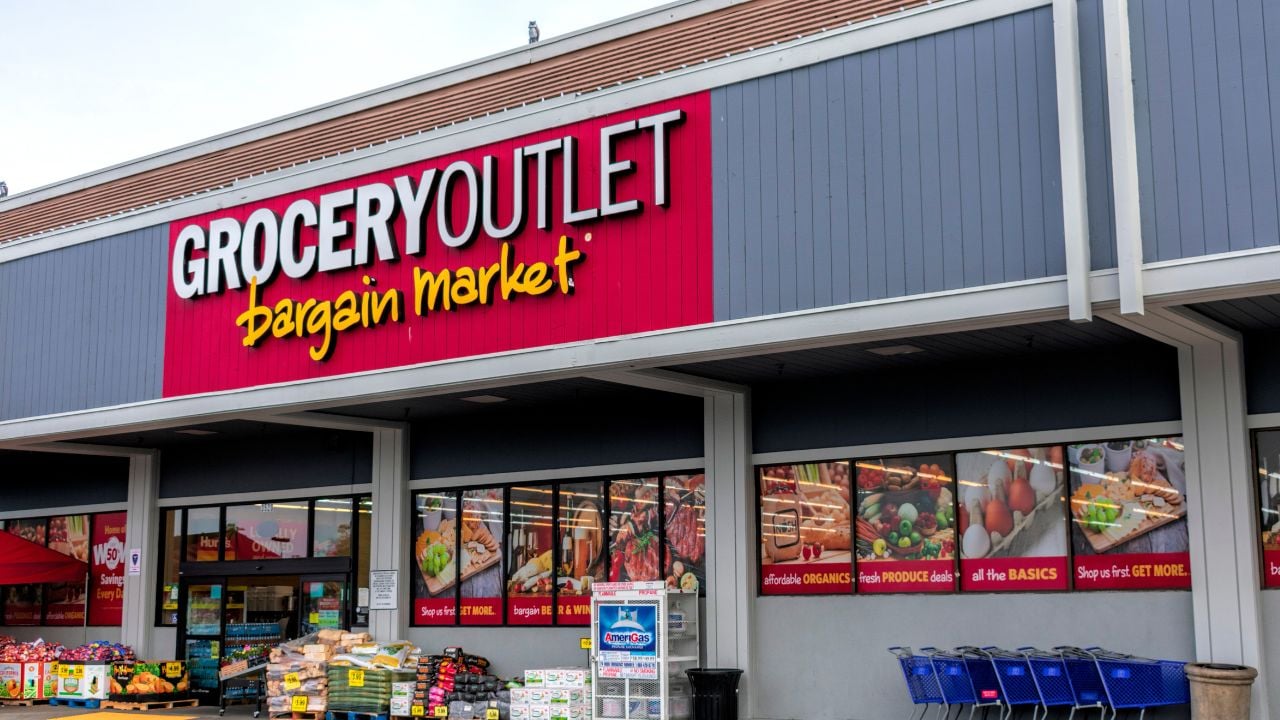
8 Grocery Outlet Mistakes That Cost California Shoppers the Best Deals

California has more than half of the Grocery Outlet stores in the nation, close to 280 locations from San Diego to Redding.
That’s a lot of aisles.
Prices that run 40% to 70% below regular grocery stores keep shoppers coming back.
Nevertheless, it’s easy to make mistakes. These are the errors that cost shoppers Grocery Outlet’s best deals.
1. Skipping the WOW! Crowd Sign-Up
Grocery Outlet’s steadiest deal lives inside an app many shoppers never open.
The WOW! Crowd costs nothing to join, in the app or by typing a phone number in at checkout.
New members get a $5 off $25 coupon the moment they sign up.
Free money.
Members also unlock daily WOW Alerts, early access to the weekly ad, and an automatic entry into Grocery Outlet’s monthly sweepstakes with every purchase.
Skip the sign-up, and none of that exists for you.
A shopper who pays without scanning anything just walked past savings sitting at the register.
2. Not Learning Your Store’s Restock Day
Grocery Outlet tells its own shoppers to find out when their store gets new product and to shop those days.
That’s not idle advice.
Much of what lands on the shelf is a one-time deal, gone once that batch sells through.
Show up on a random Tuesday, and the aisle might hold nothing but picked-over shelf-stable goods.
Show up the morning after a truck arrives, and the same store looks completely different.
Every California Grocery Outlet keeps its own delivery schedule, so the right day at a store in Fresno isn’t necessarily the right day for a store in Long Beach.
3. Assuming Every Store Has the Same Deal
Grocery Outlet licenses nearly all of its California stores to independent owners instead of running its own stores.
Those owners choose many of the items that land on their own shelves.
A viral markdown spotted at one Sacramento store, like a Rao’s frozen pizza priced far under what Target charges, might never turn up at a store fifteen minutes away.
Different owner, different buy.
Waiting to get to “your usual store” because a deal is trending online is how a shopper misses it completely.
Chase the store that has it, or don’t chase it at all.
4. Walking Past the NOSH Section
At Grocery Outlet, a green sign marks the aisle for natural, organic, specialty, and healthy foods (NOSH), one of the store’s most overlooked sections.
The discount doesn’t stop at the NOSH sign.
It’s priced off overstock and closeouts, not full retail, same as everywhere else in the store.
Not a premium aisle.
Shoppers who assume “organic” means “expensive” walk past organic produce, specialty snacks, and pantry staples priced like everything else on the floor.
That assumption costs them the one section built for a budget-minded shopper who still wants better ingredients.
The lineup changes by the week and by the store.
A thirty-second lap through NOSH can save money on food a shopper would otherwise pay full price for somewhere else.
5. Grabbing Just One When They Find a Bargain
Grocery Outlet shoppers who grab just one jar, one box, or one six-pack of a bargain lose it before they’re back for more.
It won’t wait.
Grocery Outlet says as much itself: When you find something you like, stock up because many of the bargains are a one-time deal.
That exact item, at that exact price, is usually a single truckload the store bought once and won’t buy again.
Buy the quantity that makes sense for your household the day you see it. There’s rarely a second chance at the same price.
Why a Grocery Outlet Bargain Doesn’t Come Back
Grocery Outlet buys its closeout deals in one-off lots, typically from a manufacturer or distributor clearing out product.
That’s different from a regular grocery store, which reorders the same barcode from the same supplier every week.
Once that one lot of a discontinued flavor or an oversized production run sells through, Grocery Outlet has nothing left to reorder, so the same item at the same price typically won’t return to that store, or any other.
6. Skipping the Wine and Liquor Aisle
Grocery Outlet’s wine and liquor selection outperforms the sad end-cap some shoppers expect from a discount grocer.
It’s better than that.
Grocery Outlet periodically drops the whole section by 20% during in-store wine sales.
Shoppers who write off the aisle before checking never see that stacked discount land on top of prices already below retail.
Stock up during one of those sales, and a mixed case can cost noticeably less than six random bottles bought at full price somewhere else.
Skip the aisle. The sale disappears along with it.
7. Ignoring Your Local Store’s Own Social Page
Grocery Outlet keeps one official Instagram account for the whole company, but that’s not where the good stuff shows up.
Every independently owned store keeps its own page, run by the people who stock the shelves in your neighborhood.
Follow the wrong account, and you miss it.
The local page knows first.
A store in Petaluma might post its wine-sale date a week early.
A store in Clovis might flag a produce truck arriving Thursday morning.
None of that reaches the main corporate feed, and shoppers who only follow the big blue checkmark miss deals happening a few miles from home.
Psst! How much do you know about Grocery Outlet’s own history? Take our quiz and see how many you can get right.
Quiz
Grocery Outlet History IQ
Answer these questions on Grocery Outlet’s history and quirks. We bet you can’t get them all right. Prove us wrong?
Grocery Outlet often prints a comparison “Elsewhere” price right next to its own on the shelf tag. What does that number usually reflect?
8. Shopping With a Rigid List
Grocery Outlet's own advice to shoppers is blunt: Stay flexible, and keep an eye out for what you didn't come for.
A strict list works at a regular grocery store, where the same fifteen brands sit on the same shelf every week.
It works against you here.
Grocery Outlet's whole model runs on opportunistic buys that show up once and vanish, so a shopper locked onto a list walks straight past the one deal that justified the trip.
Bring the list.
Just don't let it be the only thing you're willing to buy.
California Still Anchors the Chain
Grocery Outlet closed nine underperforming California stores this spring, part of a wider round of 36 closures nationwide, then turned around and opened new ones within months.
Ontario Ranch got a new location in July.
Each of those stores answers to a different independent owner.
Every store starts fresh.
Grocery Outlet was born in San Francisco in 1946, and California still carries the company today.
The Los Angeles Times reported that around 280 stores sit inside state lines, more than half of every Grocery Outlet location in the country.
A shopper moving from a Bay Area store to one in the Inland Empire is just meeting a new owner with a new set of closeout deals.
The WOW! Crowd account carries over, but the shelves don't.
Ramona, San Francisco, and Clovis opened within weeks of each other this summer.
Petaluma is set to open by the end of August, closing out this round of California openings.
9 Trader Joe's Favorites California Shoppers Race the Clock to Buy
A $2.99 canvas tote once pulled a line out the door at a California Trader Joe's, and stores capped shoppers at four totes each just to keep things moving.
That's the kind of item California shoppers learn to grab the second it hits the shelf.
9 Trader Joe's Favorites California Shoppers Race the Clock to Buy
8 Things California Retirees Regret Not Doing Before Their Final Paycheck

California's top income tax rate runs to 13.3%, the highest in the country, and it doesn't stop at your last paycheck.
These are the moves California retirees wish they'd made before they clocked out for good.
8 Things California Retirees Regret Not Doing Before Their Final Paycheck
