
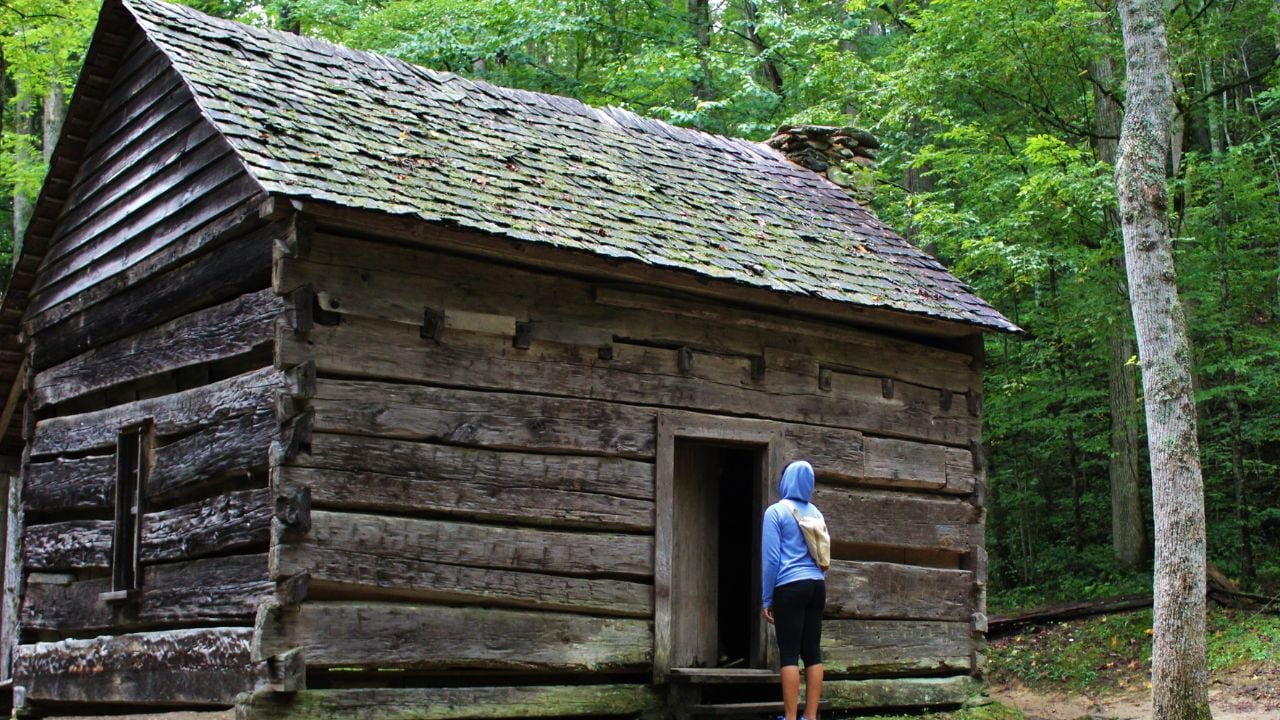
7 Tennessee Cabin Booking Mistakes That Ruin an October Trip

Reserving a Tennessee cabin for October is the easy part.
Getting your trip right is the harder part.
A signed confirmation says nothing about the gravel driveway behind it, the kind more than one rental company requires four-wheel drive to reach.
These are the Tennessee cabin booking mistakes that ruin an October trip.
1. Ignoring the Elevation Gap
Tennessee cabin trips planned around a single “peak week” run into trouble the moment elevation enters the picture.
Great Smoky Mountains National Park says its own elevation changes stretch peak color out over several weeks, moving the display from the ridgelines down to the valley floor.
Newfound Gap sits above 5,000 feet, and color up there can turn by mid-September and peak within the first two weeks of October.
Gatlinburg’s valley floor sits closer to 1,300 feet.
It often doesn’t peak until late October, sometimes into the first days of November.
Weeks can separate the two.
A cabin booked for the second week of October because a friend’s photos from Newfound Gap looked incredible can sit in a valley that’s still mostly green.
The cabin’s own elevation decides the color, no matter what one blanket “peak week” on the calendar promises.
2. Skipping the Cancellation Waiver
Pigeon Forge cabin companies build their contracts around one number: The first night’s rent is the deposit, and it’s non-refundable by default.
Cabins USA spells out the terms on its own site: Cancel more than 30 days before arrival and the deposit becomes a one-year credit, not a refund.
Cancel inside 14 days, or simply don’t show up, and the deposit is forfeited, and the company can charge the card on file for the whole stay.
October adds its own weather risk on top of that math.
Hurricane Helene hit the region in late September 2024, and the park closed entire valleys, including Cataloochee, for weeks while leaves were turning color elsewhere in the park.
Nobody plans for that.
Paying for the optional cancellation waiver at booking time flips those terms, letting a renter cancel up to the morning of arrival and get the deposit back, minus the waiver fee.
Skipping it to save fifty dollars is the mistake that turns a canceled October trip into a forfeited deposit.
What a “Held” Cabin Deposit Buys
A Tennessee cabin deposit held as a one-year credit doesn’t lock in the price of the canceled trip.
Rates move by the day, so that credit might barely dent a pricier week the next fall, or cover more than expected during a slower month.
The credit expires within the year, and it typically only applies to a future booking with the same company, so it’s worth nothing if a renter switches to a different outfit for the next trip.
3. Missing the Minimum-Night Rule
Smoky Mountain cabin companies raise their minimum-night rules the moment October’s best weekends fill in.
Many operators run on a standard two-night minimum for much of the year.
Cabins USA names the pattern outright in its own contract: Some seasons carry minimum-night requirements based on availability, with exceptions made only when a single open night falls between two other reservations.
A quick Friday-only leaf-peeping stop can simply not be for sale that weekend.
The math doesn’t work.
Check the minimum before falling for a listing’s photos, not after a deposit is already down.
4. Booking Without Checking the Driveway
Tennessee mountain cabins often sit at the end of steep, one-lane, gravel driveways, and Cabins USA is blunt about it in writing.
The company warns that some units require four-wheel drive or tire chains once winter storms roll through, and separately warns that mountain roads can be difficult in any season, with road conditions never guaranteed.
October adds its own version of that same risk: Heavier rain and slick, leaf-covered gravel on driveways that are already steep no matter the month.
No changes, no refunds.
A renter who books sight-unseen off pretty photos, in a low sedan, can find that out the hard way, with no refund coming for the trouble.
One phone call settles it: How steep the driveway is, and whether the car in the garage can climb it.
5. Picking Location Over Traffic
A Tennessee cabin listed as “10 minutes from the Parkway” can be true in June and false in October.
Great Smoky Mountains National Park says traffic on Cades Cove Loop Road runs heavy through the fall tourist season, and parking demand on the Roaring Fork Motor Nature Trail often exceeds what’s available, among the more congested stretches in the park.
That congestion covers the park roads.
The towns around them back up just as hard.
A short drive between Gatlinburg and Pigeon Forge can crawl for a lot longer once the Parkway’s stoplights back up with leaf-season traffic.
Maps don’t show traffic.
A cabin close to wherever the trip’s plans are centered saves more time than a lower nightly rate three exits away.
6. Waiting Too Long to Book
Tennessee cabin rentals for October fill on a calendar that starts long before Labor Day.
The best-located, best-reviewed cabins for the year’s most requested weekends are usually gone by the time many travelers start looking, often claimed by guests who rebook the same week year after year.
Early birds win the calendar.
Waiting until deep September to start calling around means picking from whatever’s left: A longer drive to the Parkway, a smaller cabin, or a higher nightly rate for a downgrade.
That’s exactly why the search should start in early September, not the week before the trip.
7. Stopping at the Deposit
Cabins USA doesn’t count a Tennessee cabin reservation as finished the moment the deposit clears.
The remaining balance auto-charges to the card on file five days before arrival, and the reservation documents still need a separate electronic signature before that.
Skip either step and the company won’t send the address, directions, or door code, no matter how far ahead the deposit went through.
A renter who reads “reservation confirmed” as the end of the process can let the signature sit for weeks, or miss a declined card until the office calls looking for a payment.
Nobody wants that call.
Miss the fallback deadline too, and it gets worse: Paperwork or balance still outstanding by noon on arrival day means calling the office from the road to arrange another way in.
Cabins USA holds the check-in packet until both boxes are checked, and the deposit alone doesn’t check either box.
Psst! How much do you know about Smoky Mountain cabin country? Take our quiz and see how many you can get right.
Quiz
Smoky Mountain Cabin Country IQ
Answer these questions on Smoky Mountain history and cabin country trivia. We bet you can’t get them all right. Prove us wrong?
Great Smoky Mountains National Park is the only major national park with no entrance fee. What guarantees that?
The Parking Tag Nobody Mentions
A Tennessee cabin booking covers the roof over a renter's head, not entry into Great Smoky Mountains National Park.
Every vehicle parked inside the park for more than 15 minutes needs a parking tag: $5 for a day, $15 for a week, $40 for the year.
The tag isn't refundable, transferable, or tied to a single parking spot, and buying a tag doesn't guarantee a space will be open once a cabin's guests reach a trailhead.
Not part of the rent.
Park visitation data shows October pulling in more recreation visits than any other month, so the busiest month of the year is also when the machines at trailheads and visitor centers see their heaviest lines.
Buy it online before leaving home, or budget the stop at a machine into day one, instead of finding out about it at a trailhead with the parking lot already full.
9 Tennessee Foods and Drinks That Confuse Anyone Who Didn't Grow Up With Them
Tennessee borders eight other states, tied for more neighbors than any state in the country, and the food and drink change at nearly every one of those lines.
A dish that's second nature in Memphis can draw a blank stare two hours up the road in Nashville.
9 Tennessee Foods and Drinks That Confuse Anyone Who Didn't Grow Up With Them
7 Kroger Mistakes Tennessee Shoppers Make Every Week
Consumer Reports checked sale tags at dozens of Kroger-owned stores and found shoppers paid well over the advertised price on items that were supposed to be marked down.
Kroger's own Make It Right policy lets an associate fix a wrong price on the spot, and Tennessee shoppers rarely think to ask.
