

8 Things Pennsylvania Does Better Than New York, According to People Who Have Lived in Both

A typical home in Pennsylvania costs about $281,000.
Cross into New York, and that same kind of house costs around $527,000, a gap of nearly a quarter million dollars.
Housing is just where the differences start.
Ask someone who’s called both states home, and many will give Pennsylvania their vote as the best place to live.
Note: This is general information, not tax advice. Tax rates and exemptions are subject to change.
1. State Parks Never Charge a Dime
Pennsylvania runs 125 state parks, and it charges no entrance fee at a single one.
There’s no day pass, no parking meter, and no gate to pull up to.
Transplants who’ve moved from New York say the missing fee line is the first thing they notice.
Many New York state parks charge $6 to $10 for day-use parking, and the state’s Empire Pass now runs $80 a year for unlimited entry.
Just show up.
A Pennsylvania family can hit three different state parks in one weekend and never open a wallet at the gate.
2. Retirement Income Stays Yours
Pennsylvania exempts nearly all retirement income once a resident reaches the retirement age tied to their plan, covering pensions, 401(k) withdrawals, and individual retirement account (IRA) distributions alike.
Every retiree who’s hit that mark pays the state nothing on that money.
That’s zero.
So how much of that money does New York protect?
It excludes the first $20,000 of private pension and annuity income per person each year, then taxes the rest at New York’s regular income tax rates.
Retirees who’ve filed taxes in both states say this is the gap they notice first, usually the spring after the move.
The Math Behind Pennsylvania’s Retirement Tax Break
Pennsylvania charges a retiree nothing in state income tax on a $50,000 withdrawal from a 401(k) or IRA, as long as they’ve reached their plan’s retirement age.
New York only exempts the first $20,000 of that same withdrawal, leaving $30,000 exposed to the state’s regular income tax brackets, which start around 4% and rise from there.
The gap only grows on a bigger withdrawal, since Pennsylvania’s exemption carries no dollar ceiling at all.
3. Your Paycheck Stretches Further
Pennsylvania taxes every paycheck at a single flat rate, 3.07%, no matter how much a resident earns.
A minimum-wage worker and a surgeon pay the exact same rate.
Nobody moves up a bracket.
New York asks for more as income rises.
Its income tax brackets run from 4% up to 10.9% at the top, and anyone living in New York City owes a separate city tax on top of that.
A New Yorker earning six figures in Manhattan can lose a noticeably bigger share of each paycheck to state and local income tax than someone earning the same amount in Pittsburgh.
People who’ve earned a paycheck in both states say they noticed the gap the first time they compared stubs.
4. Housing Costs Way Less
Pennsylvania’s statewide median home value sits at $281,369, according to Zillow’s home value index.
New York’s runs to $527,312, a gap of nearly $246,000 for what’s often a similar house.
That’s almost double.
The gap holds outside the big cities too, since even New York’s smaller towns and suburbs tend to carry higher price tags than Pennsylvania’s equivalent ones.
A family that swaps a New York mortgage for a Pennsylvania one can often bank the difference for retirement, tuition, or a much bigger down payment on their next home.
Families who’ve made that move say the housing math is usually what convinced them to stay.
5. Fireworks Are Legal to Buy
Pennsylvania legalized consumer aerial fireworks for residents 18 and older under Act 43 back in 2017, letting shoppers buy firecrackers, Roman candles, and bottle rockets at licensed stands.
Light them at least 150 feet from an occupied building, and it’s a normal Fourth of July.
New York shuts the same purchase down.
State law bans aerial and exploding consumer fireworks outright, and even a ground-based sparkling device stays illegal in New York City and eight other counties that have opted out.
It’s not legal everywhere, either.
A Pennsylvania backyard can legally light up like a small show every summer, while carrying that same box of fireworks into New York can mean a criminal charge.
People who’ve made that drive across the border say it’s not a risk worth taking.
Psst! How much do you know about the Pennsylvania-New York rivalry? Flip these cards and see how many you already had right.
6. No Toll Just to Drive Downtown
Pennsylvania never charges a driver extra just to reach a downtown, no matter the time of day.
New York does, and drivers feel it.
The state’s congestion pricing charges drivers $9 during peak hours just to enter Manhattan below 60th Street, a toll set to rise to $12 in 2028 and $15 in 2031.
Every single workday.
A Philadelphia commuter never sees a toll like that just for driving into Center City, while a New York commuter budgets for it as a fixed cost.
Commuters who’ve driven in both cities say the Philadelphia side of that math is hard to beat.
7. Your Wardrobe Isn’t Taxed
Pennsylvania skips sales tax on almost all clothing, no matter the price tag.
A $300 coat and a $20 T-shirt both ring up tax-free.
New York exempts clothing priced under $110, but the moment an item hits that number, the entire price becomes taxable, not just the amount over the line.
One extra dollar changes everything.
A Pennsylvania shopper buying a $110 winter coat pays no sales tax at all, while New York taxes that same coat on its entire price.
Shoppers who’ve paid both states’ registers say that one extra dollar is the detail they remember.
8. There’s More Room to Spread Out
Pennsylvania holds about 291 people per square mile statewide, well below New York’s figure.
New York packs in roughly 429 people per square mile, a figure driven hard by New York City and its suburbs.
That’s the trade-off.
That lower density is part of why Pennsylvania’s homes cost less to begin with, the same gap covered above.
Farmland, small towns, and stretches of state forest fill much of Pennsylvania’s map, while a New York transplant often trades a yard for a fire escape.
People who’ve made that move point to the same math: Less crowding in Pennsylvania usually means more space for less money.
Pennsylvania’s Pretzels Still Have No New York Rival
Pennsylvania bakes about 80% of the pretzels made in the United States, much of it turned out by roughly 45 companies clustered around Reading, Lancaster, and York in the region known as the Pretzel Belt.
York County has earned the nickname “Snack Food Capital of the World” for the sheer concentration of chip, pretzel, and popcorn makers packed into it.
Nothing else compares.
No cluster of pretzel bakeries in New York comes anywhere near that scale, and no statewide production figure exists for New York because there’s no rival industry there to measure.
Soft pretzels show up everywhere in Pennsylvania, twisted fresh at stands, folded into lunchboxes, and stacked at gas station registers the way New Yorkers stack bagels.
Pennsylvania Dutch country bakes them dense and chewy, closer to bread than a ballpark snack, and transplants from New York say it’s a habit that sticks.
Why So Many Pennsylvania Towns Share Names With European Cities
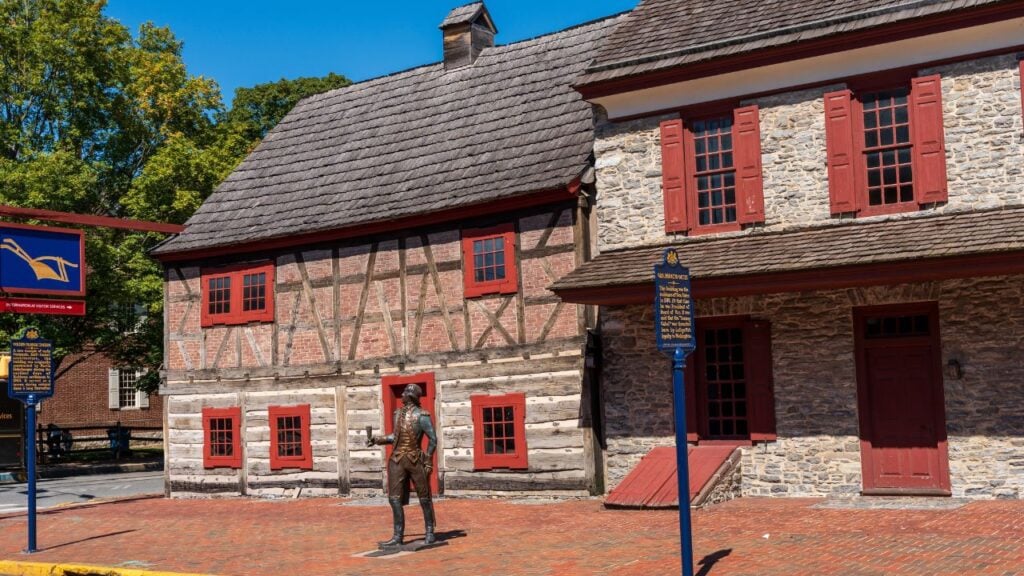
An English king once settled a personal debt by handing over an entire American colony instead of paying cash.
That colony became Pennsylvania, and the deal still explains why so many of its towns carry names borrowed from across the Atlantic.
Why So Many Pennsylvania Towns Share Names With European Cities
9 Pennsylvania Rules About What You Can Build on Your Own Land

Owning land in Pennsylvania doesn’t automatically mean building whatever comes to mind.
More than 2,500 townships, boroughs, and cities each write their own limits on what a homeowner can put up in the yard.
9 Pennsylvania Rules About What You Can Build on Your Own Land
