
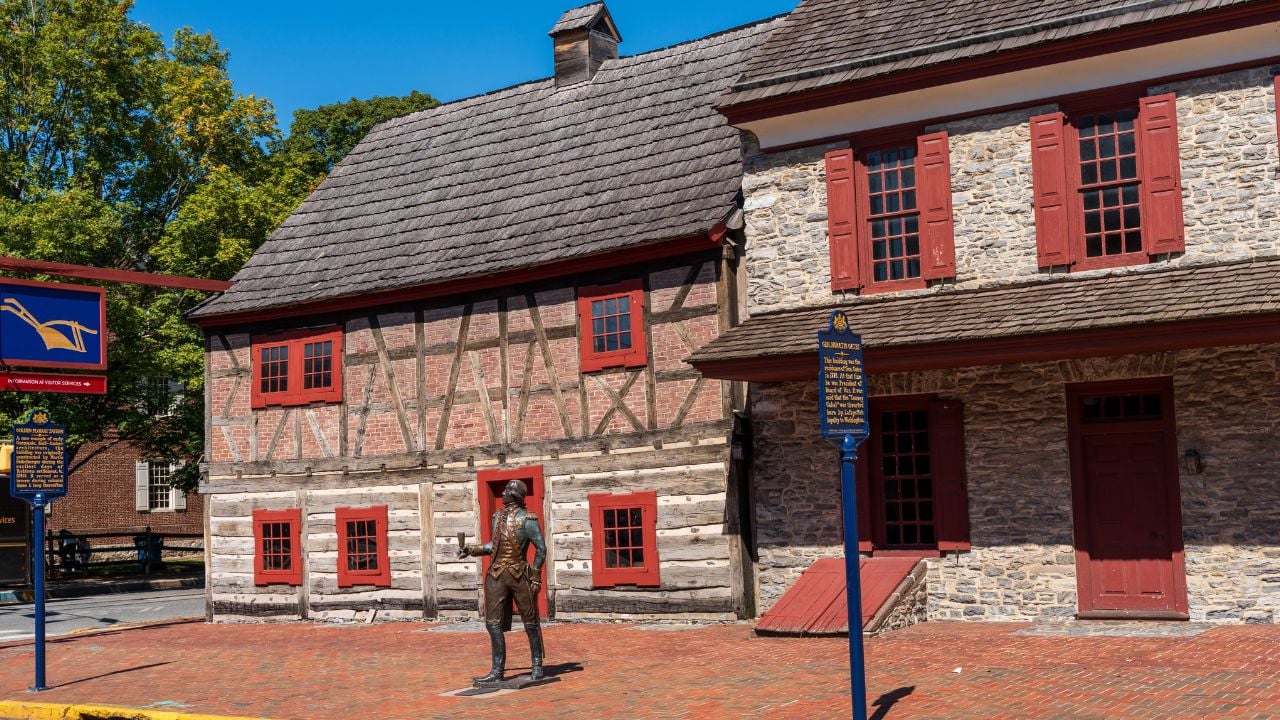
Why So Many Pennsylvania Towns Share Names With European Cities

An English king once settled a personal debt by handing over an entire American colony instead of paying cash.
That colony was Pennsylvania.
King Charles II owed the debt to William Penn’s father, and the payoff changed who got to put a name on a map.
Pennsylvania’s European place names trace back to one overlooked detail: Who got to hold the pen.
A Colony Anyone Could Name
Many of the original thirteen colonies took their names from the English crown that chartered them, honoring a king, a queen, or a lord back in London.
Pennsylvania didn’t work that way.
King Charles II handed William Penn the entire colony in 1681 as a private land grant, repayment for a debt owed to Penn’s father.
Penn ran it as his own property, not a royal outpost.
That single fact changed who got to name a town.
Penn spent the 1670s and 1680s touring the Netherlands and the German Rhineland himself, and he published nine promotional tracts advertising his colony.
Some of those tracts were translated into Dutch and German to pull in settlers from northern Europe.
English Quakers, German and Swiss Anabaptists, Welsh Quakers, and Scots-Irish Presbyterians all showed up with their own land grants, and no royal official told them what to name their new home.
So they used their own names.
Psst! How much do you know about where America’s other city and state names come from? Take our quiz and see how many you can get right.
Quiz
America’s Place-Name IQ
Answer nine questions on where America’s states and cities got their names. We bet you can’t get them all right. Prove us wrong?
Chicago’s name most likely comes from a Native word for which plant?
Lancaster
Lancaster wasn't always Lancaster.
The original site on Conestoga Creek went by Gibson's Pasture, or Hickory Town, before Lancaster County took shape.
John Wright, an early landowner who'd grown up in Lancashire, England, is credited with pushing for the new name when the site became the county seat in 1729.
He won.
Wright wasn't a royal official or a member of the Penn family.
He was a Quaker settler who missed his own home enough to put its name on a map an ocean away.
Locals still call Lancaster the Red Rose City today, a nickname pulled straight from that English rivalry.
York
York sits just across the Susquehanna River from Lancaster, and the two names aren't a coincidence.
Surveyors working for the Penn family, Baltzer Spengler and Ulrich Whisler, laid out the town before 1741 on a manor that belonged to Springett Penn, William Penn's own grandson.
They named it York.
Historians still debate whether that name nodded to the English city and shire or to the Duke of York, a longtime friend of the Penn family, but either way it wasn't a royal decree handed down from London.
Lancaster and York are also the same two English cities whose royal houses fought the decades-long Wars of the Roses, Lancaster's red rose against York's white one.
Pairing them on a Pennsylvania map wasn't an accident.
It was the Penn family's own surveyors leaning on English history they knew by heart, the same personal habit that put Wright's hometown on the map a few miles away.
York still carries the White Rose City nickname today, matched against Lancaster's red one on the other side of the river.
Reading
Reading is the clearest case of all.
Thomas and Richard Penn, William Penn's own sons, personally chose the site and the name when they had the town surveyed in 1748.
They picked Reading, the English town in Berkshire that the Penn family called home.
Simple as that.
The town became the seat of Berks County in 1752.
The Penns' Own Hometown
Reading, Berkshire, isn't far from London, and it's the English town the Penn family called their own.
When Thomas and Richard Penn named their new Pennsylvania town after it in 1748, they weren't honoring a king or a colony sponsor.
They were doing exactly what John Wright did over in Lancaster County: Naming a new home for an old one.
Even the family that owned the entire colony reached for its own hometown when it finally got to name a town outright.
Germantown
The naming pattern wasn't only an English habit.
In 1683, thirteen families from Krefeld, in the German Rhineland, sailed to Pennsylvania aboard the ship Concord, led by Francis Daniel Pastorius, a lawyer recruited by a group of Frankfurt merchants known as the Frankfort Land Company.
They named their new settlement Germantown.
No frills.
There's no English city in it, no royal family, just a plain description of who they were and where they'd come from.
Germantown became the first permanent German settlement in North America, and it proved the mechanism worked outside the English gentry too.
Anyone Penn let onto his land got to name their own piece of it.
After Independence, the Names Changed
The pattern didn't last forever.
Pennsylvania kept naming towns and counties for European hometowns as long as the Penn family owned the colony and kept recruiting settlers from across the ocean.
That ended with the American Revolution.
Washington County formed in 1781, named for the general instead of a shire in England.
Mifflin County followed in 1789, named for Pennsylvania's first governor, Thomas Mifflin.
Greene County came in 1796, named for Revolutionary general Nathanael Greene.
Benjamin Franklin's own name did best of all, appearing on more than a dozen townships, plus a county of its own.
Once Pennsylvania stopped being one family's real estate and started being a state, the naming habit changed with it.
Not every new county dropped Europe completely.
Fayette County, formed in 1783, took its name from the Marquis de Lafayette, a French nobleman who fought alongside Washington, proof that Pennsylvania still had room for one more name from across the ocean, just not a hometown this time.
12 Things Ex-Pennsylvanians Say They Miss Most After Moving Away
A former Pittsburgher orders a scoop of ice cream in Charlotte and asks for jimmies on top.
The teenager at the counter just stares back because nobody in North Carolina calls sprinkles that.
12 Things Ex-Pennsylvanians Say They Miss Most After Moving Away
9 Reasons People Are Leaving Pennsylvania in 2026
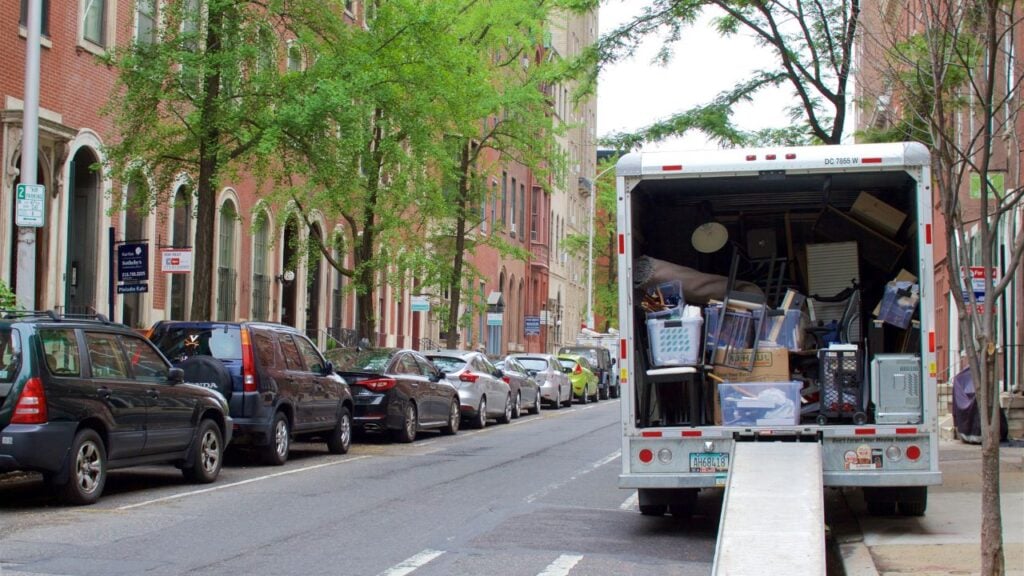
A moving truck idles outside a rowhouse in Scranton while a family tapes up the last box, and nobody moves in to take their place.
That's the pattern showing up in Pennsylvania's population count, year after year.
