
9 Reasons People Are Leaving Pennsylvania in 2026

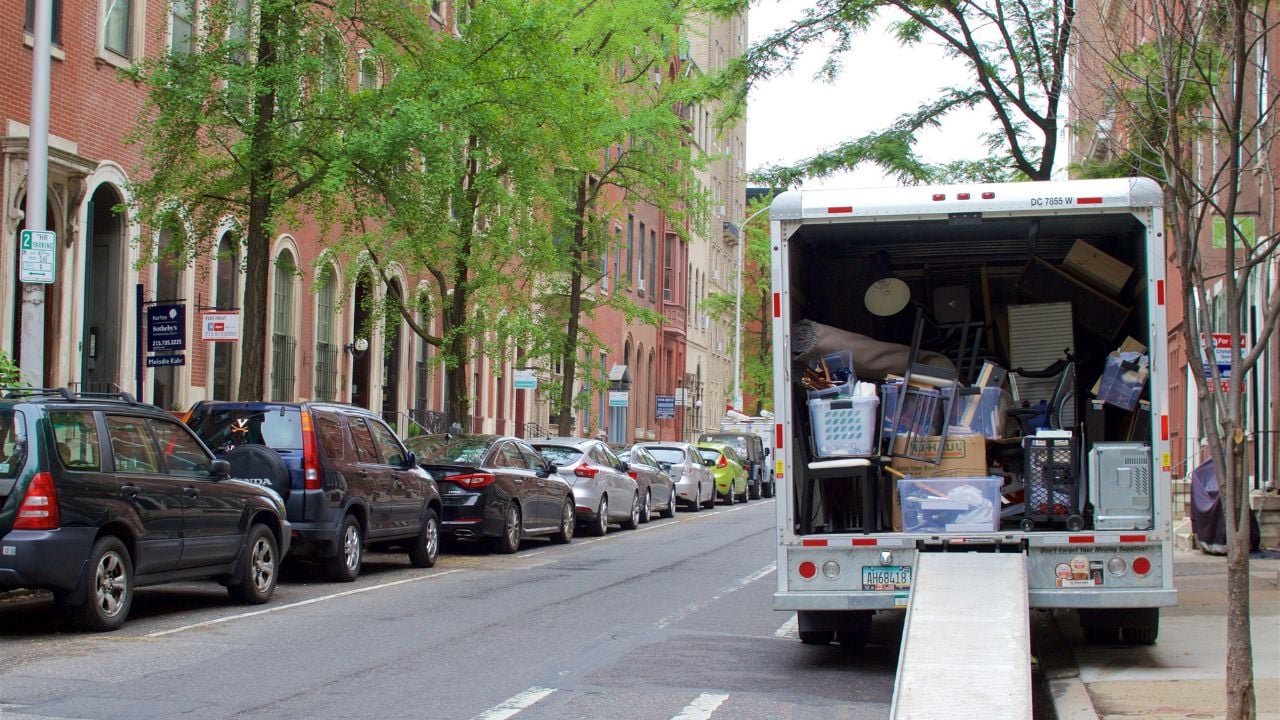
A moving truck idles outside a rowhouse in Scranton while a family tapes up the last box.
Nobody moves in to take their place.
That’s the pattern showing up in Pennsylvania’s population count, year after year.
These are the reasons Pennsylvanians give for moving out of state.
Note: This is general information, not financial or tax advice. Tax rules and dollar amounts are subject to change.
1. Highest Property Tax Bills
Pennsylvania’s tax system ranks 36th in the nation on the Tax Foundation’s State Tax Competitiveness Index, a score pulled down by property tax.
The effective property tax rate on an owner-occupied home in Pennsylvania runs about 1.26%, well above the national average, according to the same Tax Foundation data.
That’s no small bill.
On a $300,000 home, that rate adds up to roughly $3,780 a year.
Home values have risen across much of the state, so many tax bills have risen right along with them.
Property taxes fund more of Pennsylvania’s local government than any other tax, and homeowners pay that bill every year, retired or not.
2. Local Tax Maze
Pennsylvania doesn’t stop at one income tax.
On top of the state’s flat 3.07% rate, more than 2,500 municipalities and school districts set their own local Earned Income Tax, and the rate changes the moment you cross a township line.
Move for a new job, and the paperwork moves with you.
Work in one municipality and live in another, and both can take a bite, though the home township usually credits what you already paid.
Most Pennsylvania municipalities also charge a flat Local Services Tax on anyone who works there, capped at $52 a year.
Small money, big hassle.
New residents spend their first tax season hunting down a political subdivision (PSD) code just to file correctly, a step most other states never require at all.
3. Taxed Even After You’re Gone
Pennsylvania is one of the few states left that still taxes what you leave behind.
The state’s inheritance tax charges kids and other direct descendants 4.5% on whatever they inherit, siblings 12%, and everyone else 15%.
Even your own kids don’t get a free pass.
Spouses are exempt, and the state gives a discount for paying within three months, but the bill still comes due within nine months of a death, no matter how simple the estate.
Families in most other states never see a form like it.
For a Pennsylvania household planning to leave a paid-off house to the kids, that tax bill lands at the worst possible time, right in the middle of a funeral and a family already stretched thin.
4. Gas Taxes That Sting
Filling up in Pennsylvania costs more than it does almost anywhere else in the country.
The state charges 58.7 cents a gallon in gas tax, per the Tax Foundation, among the highest rates in the nation, trailing only a handful of states like California, Illinois, and Washington.
Diesel costs even more.
Truckers and delivery drivers pass that cost along, so it shows up again at the grocery store and the hardware store, folded into the price of everything that rides on a Pennsylvania highway.
A driver who fills a 15-gallon tank twice a month pays nearly $18 a month in state gas tax alone, before a single gallon’s actual price.
Commuters in the Philadelphia and Pittsburgh suburbs feel it hardest, since a long highway commute is simply part of the job there.
5. Philadelphia’s Wage Tax Bite
Philadelphia residents carry a tax bill most Pennsylvanians never have to think about.
The city’s Wage Tax takes 3.735% of a resident’s paycheck, on top of the state’s 3.07% flat income tax.
Add those together, and roughly 6.8% of every paycheck is gone before federal taxes ever enter the picture.
That’s before rent.
Even commuters who live outside city limits but work inside Philadelphia still owe the tax, at a slightly lower 3.425% non-resident rate.
Many workers relocate a short drive into the suburbs just to stop paying it, and the city loses a taxpayer either way.
Psst! How much do you know about Pennsylvania? Take our quiz and see if you can ace it.
Quiz
Pennsylvania History IQ
Answer these questions on Pennsylvania firsts, legends, and colonial history. We bet you can’t get them all right. Prove us wrong?
When the British occupied Philadelphia in 1777, Patriots snuck the Liberty Bell out of the city to keep it from being melted into cannons. Where did they hide it?
6. Home Prices Outrunning Paychecks
Buying a house in Pennsylvania costs more this year than it ever has.
The statewide median home price hit $340,000 in June, up 6% from a year earlier, according to the Pennsylvania Association of Realtors.
Renters aren't catching a break either.
Rents in Philadelphia have risen 26% since 2020, and much of the state's housing stock is now more than 50 years old and increasingly costly to maintain.
Wages haven't kept pace.
A first-time buyer in Pittsburgh or the Philadelphia suburbs competes against move-up buyers with a decade of home equity behind them, and a starter home simply isn't starter-priced anymore.
7. Rapidly Aging State
Pennsylvania is getting older faster than most of the country.
The state's median age sits at 40.8, among the ten oldest in the nation, according to Census data reported by Axios.
The younger generation is thinning out.
For every 10 residents under 25 that Pennsylvania has lost since 2020, the state gained 77 residents 65 or older, a pace that's reshaping who fills classrooms, job openings, and small-town main streets.
Fewer young workers means fewer people to fill the jobs employers are trying to staff, and fewer young families to keep a school district's enrollment steady.
Whole towns built around a younger workforce are graying out from the middle, one retirement at a time.
8. Fewer People Choosing to Stay
Pennsylvania's population barely budges compared to the rest of the country.
Between 2015 and 2025, the state's population grew just 1.2%, versus 6.2% nationally, ranking Pennsylvania 41st among all 50 states, per the U.S. Census Bureau.
That's a full decade of falling behind.
Deaths outnumbered births in Pennsylvania by about 10,700 last year, and domestic movers, people relocating from one U.S. state to another, left faster than they arrived.
Immigration from other countries is the only thing keeping the state's population from shrinking outright.
Meanwhile, Idaho, Utah, Florida, and Texas keep posting double-digit growth, pulling both jobs and younger residents their direction.
9. Winters That Bury Erie
Not every corner of Pennsylvania fights the same weather, but Erie takes the worst of it every year.
Erie sits inside Lake Erie's snowbelt, and weather records list it as the country's second-snowiest city, averaging about 104 inches of snow a season.
That's not a typo.
A single storm over Christmas 2017 buried the city under more than 65 inches of lake-effect snow in just over 60 hours, smashing Pennsylvania's previous two-day snowstorm record.
Plows couldn't keep up.
Roads shut down, roofs groaned under the weight, and some residents couldn't get their front door open until a neighbor came through with a shovel.
Erie's snowiest single day on record dropped 22.6 inches in 24 hours, more than some cities see across an entire winter.
Plow crews there call a two-foot dump a normal Tuesday in January, and school closures stack up faster than the snow ever melts.
10 Things Pennsylvania Drivers Do That Confuse Everyone Else on the Road

Pittsburgh drivers have a move at certain intersections that out-of-state plates never see coming, and nobody in the car behind them even blinks.
It's not the only Pennsylvania driving habit that leaves a visitor staring at their rearview mirror.
10 Things Pennsylvania Drivers Do That Confuse Everyone Else on the Road
9 Pennsylvania Foods Outsiders Are Afraid to Try (but Locals Swear By)
Pennsylvania Dutch cooks have stuffed a cleaned pig's stomach with potatoes and sausage since before the Revolutionary War, and the dish never left the regular rotation.
Outsiders flinch at the name, and locals just ask for seconds.
9 Pennsylvania Foods Outsiders Are Afraid to Try (but Locals Swear By)
