
9 Pennsylvania Foods Outsiders Are Afraid to Try (but Locals Swear By)

Pennsylvania Dutch cooks have stuffed a cleaned pig’s stomach with potatoes and sausage since before the American Revolution.
Outsiders still flinch at the name alone.
These are the Pennsylvania foods outsiders hesitate to try, the same dishes locals never stopped ordering.
1. Chipped Chopped Ham
Order a “ham barbecue” west of the Alleghenies, and it means Pittsburgh’s chipped chopped ham, not anything off a smoker.
Isaly’s ground ham chunks and trimmings into a loaf, then shaved it paper thin against a meat slicer blade instead of cutting it the usual way.
That’s where “chipped” comes from.
Soldiers home from World War II compared the meat to Spam, and the comparison helped turn it into cheap, familiar lunch meat across western Pennsylvania.
The shaving method still goes by Pittsburgh style today.
Mix the shaved ham with barbecue sauce and pile it on a roll, and Pittsburghers call it chipped ham barbecue, a sandwich you’ll find at kitchen tables and lunch counters from McKeesport to Beaver County.
Read “barbecue” on the menu and you picture a smoker.
This meat never touches one.
2. Scrapple
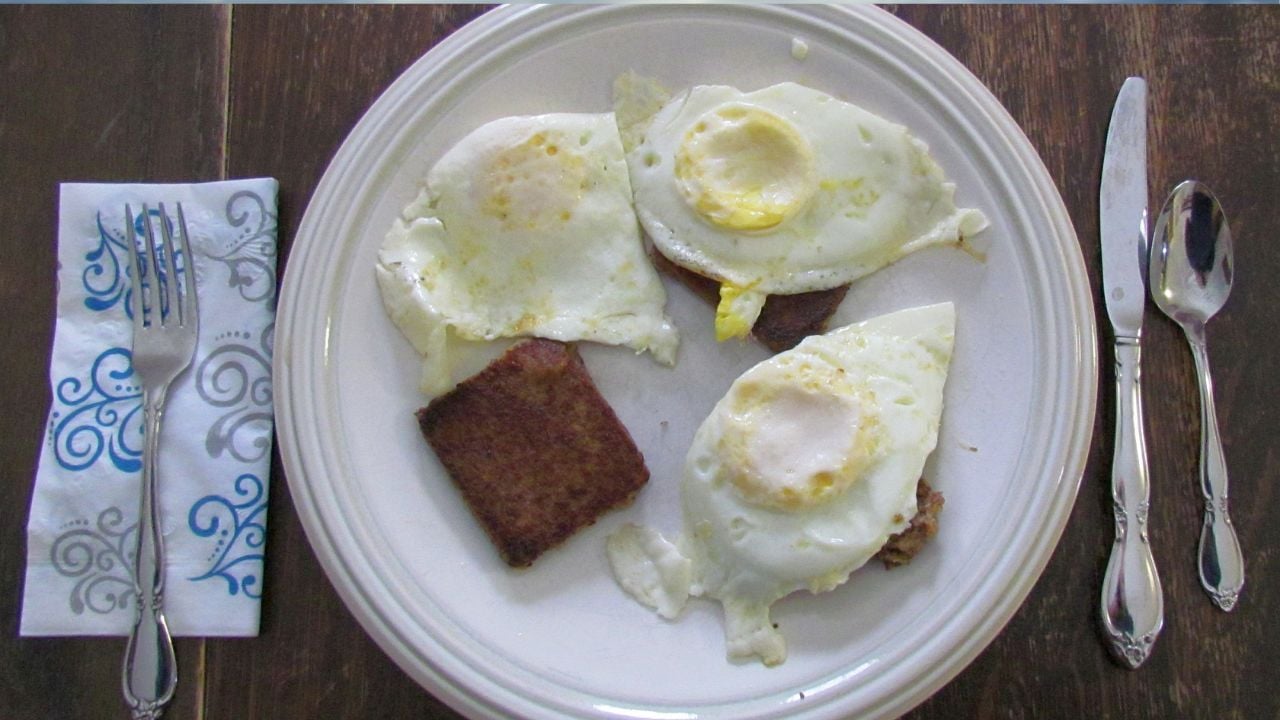
Pennsylvania Dutch cooks in Chester County and around Philadelphia built scrapple out of whatever was left after a hog butchering, and outsiders still can’t get past that origin story.
German colonists adapted an old dish called panhas into what became Pannhaas, the Pennsylvania Dutch name still stamped on some labels today.
The recipe boils pork scraps and trimmings into a broth, then mixes in cornmeal, buckwheat flour, sage, and thyme until it sets into a loaf.
Slice it thin, fry it hard, and Pennsylvanians pour maple syrup or ketchup right over the top.
That’s breakfast.
Habbersett, a Delaware County company that started making scrapple in 1863, once controlled about half of Philadelphia’s scrapple market on its own.
Ask a visitor what’s in the loaf on their plate, and watch them slow down mid-bite.
Ask a Pennsylvanian, and they’ll ask for seconds.
3. Hog Maw
Hog maw is exactly what it sounds like: A pig’s stomach, cleaned out and stuffed full.
Pennsylvania Dutch families call it Seimaage, adapted from an old Palatinate German dish called Saumagen.
Cooks pack the stomach with cubed potatoes and loose pork sausage, sometimes cabbage or onion, then boil or bake it until it holds together.
Slice it, and it looks like meatloaf.
There’s not an organ in sight.
Many Pennsylvania Dutch families still serve hog maw on New Year’s Day, and some hold onto an old belief that skipping it brings a rough year ahead.
Horseradish or stewed tomatoes go on top.
The word “stomach” is what makes outsiders hesitate, and Pennsylvania Dutch cooks stopped worrying about that generations ago.
4. Snapper Soup
Order snapper soup in Philadelphia and the main ingredient is a snapping turtle, not a fish.
The name alone fools newcomers who show up expecting red snapper fillets.
What lands instead is a dark, thick soup of turtle meat, carrots, celery, and chopped hard-boiled egg.
Philadelphia has served turtle soup since the 1700s, back when cooks worked from green sea turtles that came in through the port.
By the mid-1800s those sea turtles ran scarce, so Philadelphia cooks turned to the snapping turtles in their own creeks and marshes.
The old Bookbinder’s seafood house made the soup a city signature and sold it by the can for years.
A splash of dry sherry goes in at the table, poured right before the first spoonful.
Turtle scares off the squeamish.
Philadelphians order it by the bowl.
5. Lebanon Bologna
Lebanon County gave Pennsylvania a bologna that tastes nothing like the pink stuff from the deli case.
Pennsylvania Dutch families were curing it before the 1780s, and it was a common item on local tables by the early 1800s.
The process cures ground beef, ages it about ten days, then smokes it low and slow, under 120 degrees, for up to four days.
That slow smoke triggers fermentation, and fermentation is what gives Lebanon bologna its tangy, almost sour bite.
It’s closer to a hard salami than a sandwich meat.
Seltzer’s Smokehouse Meats in Palmyra has kept the tradition running across four generations and roughly 120 years.
The tang catches first-timers off guard every time.
That’s the whole point.
Psst! How much do you know about Pennsylvania’s food and Pennsylvania Dutch history? Take our quiz and see if you can ace it.
Quiz
Pennsylvania Food and History IQ
Answer these questions on Pennsylvania Dutch history and famous Pennsylvania food brands. We bet you can’t get them all right. Prove us wrong?
Why are the “Pennsylvania Dutch” called “Dutch” even though their ancestors came from Germany?
6. French Fries Inside the Sandwich
Pittsburgh stacks french fries and coleslaw directly onto a sandwich, and out-of-towners still ask if it's a mistake on the menu.
Joe Primanti opened his stand in the Strip District in 1933 with his brothers Dick and Stanley, aiming at truck drivers who needed a meal they could eat with one hand on the job.
Grilled meat, melted cheese, oil-and-vinegar coleslaw, tomato, and a full portion of french fries all go between two thick slices of Italian bread.
It's the whole meal.
The James Beard Foundation named Primanti Bros. an "America's Classic" in 2007, and the chain has grown past 40 locations, including stands inside PNC Park and Acrisure Stadium.
Newcomers pick the french fries out first, certain they landed there by accident.
Pittsburghers leave them right where they landed.
7. Red Beet Eggs
Few things on a Pennsylvania Dutch buffet table draw a second look faster than a bowl of eggs dyed shocking pink.
German immigrants who settled Pennsylvania in the 1600s and 1700s pickled eggs the way they pickled everything else, as a way to stretch food through the winter.
Hard-boiled eggs sit layered with canned beets in a vinegar, sugar, and salt brine for at least a day.
The beet juice does the rest.
That deep magenta color makes newcomers assume food coloring, or something gone wrong in the fridge.
It's just beets.
Potlucks and diners across Pennsylvania Dutch country still set out a bowl of red beet eggs next to the regular deviled eggs, and the pink eggs usually go first.
Locals don't blink at the color.
They reach for a second egg.
8. New Year's Pork and Sauerkraut
Pennsylvania Dutch country skips black-eyed peas and reaches for pork and sauerkraut to start the new year off right.
The tradition traces back to the 1800s, built on Pennsylvania German farm logic: Sauerkraut kept through the winter, and pork was the meat families already had on hand.
The luck comes from the pig itself, since a pig roots forward when it forages, so eating pork on January 1 is supposed to point the whole year forward too.
A regional poll found that over half of respondents in Pennsylvania Dutch country still eat the meal every New Year's Day.
Lancaster County families plan trips home around it, and churches and fire companies host community dinners for anyone who wants a plate.
A resolution holiday built on sour cabbage throws first-timers sideways.
It was never chasing sweet.
9. Shoofly Pie
Shoofly pie sounds like dessert, and Pennsylvania Dutch country eats it for breakfast instead.
Amish and Mennonite bakers in Lancaster County built the pie in the late 1800s out of flour, sugar, and molasses, the staples every farm pantry already had.
By one popular account, the name comes from flies drawn to the molasses as the pie cooled.
The likelier source is Shoo-Fly brand molasses, named after a boxing mule that toured circuses in the 1880s.
Lancaster County splits into two camps over how the pie sets: Wet bottom, gooey like a pecan pie under a thick crumb top, and dry bottom, cake-like with ribbons of molasses running through it.
Most bakeries pick a side and stay there.
Pair a slice with a cup of coffee at 7 a.m., and Pennsylvania Dutch country calls that a normal Tuesday.
Outsiders call it dessert for breakfast.
Pennsylvania Dutch country just calls it breakfast.
Order a slice at a Lancaster County diner, and nobody there blinks that it showed up before 8 a.m.
Ask for wet bottom by name if the menu doesn't specify, since that's the version most locals in Pennsylvania Dutch country grew up on.
12 Things Pennsylvania Gave America That the Other 49 States Forget
Cheesesteaks and the Liberty Bell only scratch the surface of what Pennsylvania handed the rest of the country.
The real list runs through a burger counter in Fayette County, a bulletin board at Carnegie Mellon, and a lab in Oakland that ended a childhood terror.
12 Things Pennsylvania Gave America That the Other 49 States Forget
9 Pennsylvania Sayings That Leave Out-of-Towners Confused

Somewhere between the Liberty Bell and the Terrible Towel, Pennsylvania's English splits into its own language, and most visitors never catch the switch.
A Pittsburgh native can lose an out-of-towner in a single sentence without ever leaving English behind.
