

8 Florida Dumpster Diving Rules That Surprise Longtime Residents

A dumpster diver who never leaves one Florida county can still answer to a state trespass law, a homeowners association, a county ordinance, and at least two separate city codes, all for the same garbage can.
Florida’s dumpster diving rules are stacked, not singular.
Some protect a business. Others protect a neighbor, a recycling center, or nothing more than the letter of a local code.
These are the Florida dumpster diving rules that surprise even longtime residents, drawn from the state’s statutes and the city and county codes layered on top of them.
Note: This is general information, not legal advice. Trespass and local ordinance rules vary by city and county and are subject to change.
1. Fencing Alone Counts as a “No Trespassing” Sign
Florida’s trespass law doesn’t require a single printed sign to make a dumpster area off-limits.
A fence does the same job.
Under Florida Statute 810.011, any fence at least three feet tall automatically makes that land “enclosed and posted,” the same legal status a printed sign would create.
That chain-link corral behind a shopping plaza already meets the legal bar without a sign bolted to it.
Florida’s statute treats the fence line itself as the warning.
2. Spoken Warnings Work Just Like a Posted Sign
Florida gives a business three separate ways to put its dumpster off-limits, and a printed sign is only one of them.
Fencing is another.
An employee telling a diver to leave, out loud, is the third, and Florida’s trespass statute treats that spoken warning as legally identical to a fence line or a sign.
There’s no paperwork behind it: One spoken sentence starts the same legal clock a posted sign would.
3. Ignoring That Warning Is Already a First-Degree Misdemeanor
Florida doesn’t wait for a second offense to take dumpster-diving trespass seriously.
Florida Statute 810.09 sets the charge at a first-degree misdemeanor the moment someone defies a legitimate order to leave, or otherwise crosses onto fenced, posted, or verbally off-limits ground.
That’s up to a year in jail and a $1,000 fine.
One warning is all it takes.
Ignore it, and a diver is already carrying both numbers.
What “First-Degree Misdemeanor” Means in Florida
Florida’s dumpster-diving trespass charge isn’t a fine mailed to a home address.
A first-degree misdemeanor is a criminal charge, the same tier Florida uses for petit theft of $100 or more, and it typically means an arrest and a court date rather than a ticket left on a windshield.
A conviction becomes part of a permanent record, the kind landlords and employers can pull up in an ordinary background check.
4. Your HOA Can Order You off Without Police
Florida’s trespass law hands a community association the same legal authority as the property owner it represents.
Homeowners associations (HOAs) count.
Florida Statute 810.09 names an HOA or condo association as an authorized agent who can personally order a diver off a private dumpster pad, and that order carries the exact same legal weight as one from a store owner or a badge.
A resident volunteer on an HOA board can trigger the same misdemeanor exposure as a uniformed officer, simply by asking someone to leave and being ignored.
5. Open Gates Aren’t an Invitation
A Florida diver who spots a commercial dumpster gate hanging open can’t treat that as an invitation.
Cutler Bay, a Miami-Dade town, requires every waste storage enclosure to have a locking gate that stays closed and locked at all times, except while someone’s actively tossing trash or a hauling crew is emptying it.
An open gate at 9 p.m. almost always means the business broke its own ordinance, not that the dumpster turned fair game.
Hollywood runs a different version of the same rule: Its dumpster enclosures only have to stay closed, not locked, so an unlocked-but-closed gate there doesn’t carry the violation Cutler Bay’s does.
North Miami’s own dumpster-enclosure permit instructions call for a working lock on the gate too, though that requirement comes from the city’s own guidance document rather than a codified ordinance section this piece could confirm word for word.
Either way, a gate a business left open is the business’s mistake, not a diver’s green light.
6. Miami-Dade Bans Scavenging at Its Own Recycling Centers
Miami-Dade doesn’t rely only on Florida’s general trespass law to keep dumpster diving out of its recycling centers.
The county wrote its own rule.
Miami-Dade’s Code of Ordinances makes salvaging or scavenging at any county solid waste facility, including its neighborhood trash and recycling centers, a violation of its own.
No fence, no sign, and no spoken warning has to come first.
County code enforcement can cite a diver at one of those centers on the ordinance alone.
7. Curbside Trash Cans Are Looser Ground Than a Dumpster
Florida’s dumpster diving rules treat a resident’s own trash can very differently than a business’s dumpster.
The law calls the ground right around a house its “unenclosed curtilage,” and Florida’s trespass statute only reaches someone digging through an unfenced curbside can there if that person also intends to commit some other offense once they’re on it.
Curiosity alone isn’t enough.
Somebody who just wants to see what a neighbor threw out usually doesn’t clear that bar.
A fenced, posted, or verbally warned-off business dumpster carries none of that built-in wiggle room.
8. Jacksonville’s Curbside Trash Isn’t Legally “Out” Until 5 P.M.
Jacksonville’s dumpster diving rules set a clock on when trash becomes fair game.
The city’s Ordinance Section 382.415 bars residents from setting trash and recyclables at the curb any earlier than 5 p.m. the day before a scheduled pickup, and requires empty containers off the curb by 6 a.m. the following morning.
That deadline is enforced.
A can sitting out at 2 p.m. the day before pickup is still, legally, sitting on somebody’s property.
Psst! How much do you know about Florida’s dumpster diving rules? Flip each card and see how many you get right.
Miss that window in Jacksonville, and the rule cuts the other way, too.
Once a collection truck has already passed a curb after 6 a.m., the city’s code makes the resident responsible for pulling that trash or recycling back off the curb until the next scheduled pickup date. A bin still sitting out mid-afternoon stays that resident’s own property to manage, not fair game for anyone passing by.
9 Boating Mistakes That Cost Florida Residents Hundreds in Fines

Florida has more than a million registered boats on the water, and Fish and Wildlife Conservation Commission officers patrol every inch of it.
A citation can come from a lot more than a drinking stop, and many boaters never see it coming until the officer is already alongside.
9 Boating Mistakes That Cost Florida Residents Hundreds in Fines
10 Florida Wildlife Rules People Break Just by “Being Friendly”
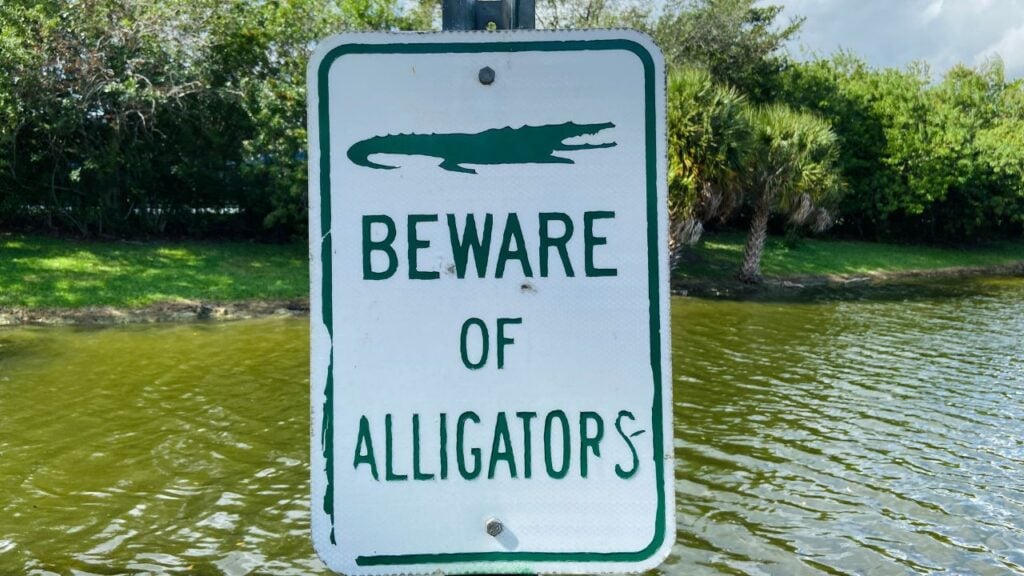
A tourist who stomped on a sea turtle nest in Miami Beach walked away with a felony charge and a $5,000 bond.
Many people who run into trouble with Florida’s wildlife rules are trying to help an animal or snap a good photo, not hurt it.
10 Florida Wildlife Rules People Break Just by “Being Friendly”
