
9 New York Towns Worth a September Day Trip Before the Foliage Crowds Arrive

Think New York’s small towns are already jammed with leaf-peeping tour buses in September?
Newcomers would say so.
But the Hudson Valley doesn’t hit peak color until the third week of October, and Long Island waits until mid-November, so a Labor Day weekend day trip beats the rush by weeks.
These are the New York towns worth a day trip before the biggest foliage crowds arrive.
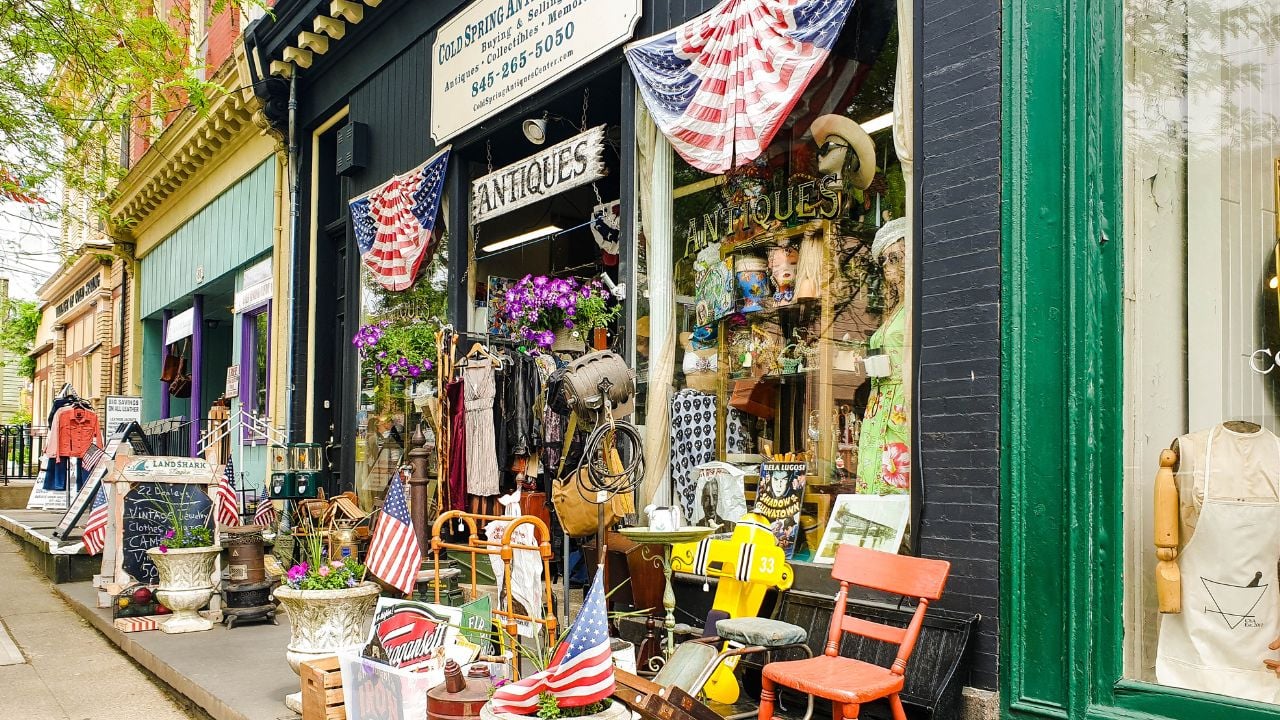
1. Cold Spring
Cold Spring sits just 50 minutes north of New York City, an easy Saturday-morning drive up Route 9.
Main Street runs a straight shot of antique shops and brick storefronts, each window worth a second look.
Worth the stop.
Hudson Highlands State Park backs right up against downtown, with trailheads a five-minute walk from the shops, so a morning of browsing turns into an afternoon hike without moving your car.
Cold Spring’s stretch of the Hudson Valley doesn’t turn until late October, weeks after a September visit.
2. Beacon
Two very different draws pull visitors off the train platform in Beacon, about 90 minutes from New York City by car or Metro-North.
Dia:Beacon fills a former Nabisco box-printing factory with room after room of contemporary art, open Friday through Monday from 10 a.m. to 5 p.m. this time of year.
One room, one hour.
Down at the river, boats to Bannerman Castle still run out of Beacon’s dock into November, cruising past the crumbling arsenal on its own island in the Hudson.
Beacon’s Main Street rounds out the day with galleries and lunch spots that stay open without a wait.
Beacon’s own color doesn’t peak until late October or early November, so a Labor Day-week visit still gets those lunch spots and gallery hours before the fall crowds that arrive once the hillsides turn.
3. New Paltz
New Paltz sits about an hour and forty-five minutes from New York City up the Thruway, with the Shawangunk Ridge rising right behind town.
Mohonk Preserve protects more than 8,000 acres of that ridge, with dozens of miles of carriage roads and trails open to hikers and climbers.
Room to roam.
Huguenot Street’s stone houses date back to the 1700s, seven of them still standing on what its own historians call the oldest street in America with its original houses intact.
It sits a few blocks from a Main Street lined with funky shops and Water Street Market’s outdoor stalls.
A September hike up the ridge means empty overlooks, not the shoulder-to-shoulder lines that show up once the leaves turn.
4. Sag Harbor
The quieter side of the East End belongs to Sag Harbor, about two hours and fifteen minutes from New York City without Hamptons traffic.
The Old Whalers’ Church still marks the harbor with the steeple that once welcomed whaling ships home.
Still standing.
The Sag Harbor Whaling and Historical Museum next door houses its collection inside a Greek Revival mansion built in 1845, open six days a week through early October, Tuesday through Sunday from 10 a.m. to 4 p.m., closed only Mondays.
The Bay Street Theater rounds out a walkable Main Street, and Labor Day weekend marks the unofficial end of the summer crush the rest of the Hamptons still deals with.
Long Island’s fall color doesn’t peak until mid-November, so a September trip to Sag Harbor beats both the summer Hamptons crush and the foliage traffic still two months off.
5. Hudson
Antique dealers and galleries line nearly a mile of Warren Street in Hudson, a two-and-a-half-hour drive north of New York City across the river from the Catskills.
Every window adds five minutes.
Olana overlooks it all from a hilltop across the river, the home and studio the painter Frederic Church designed for himself, now run as a state historic site.
Hudson’s own color doesn’t peak until late October, so a September walk down Warren Street skips the rush by weeks.
Psst! Nine towns, one table. Sort by drive time or foliage timing to find the trip that fits your weekend.
6. Saratoga Springs
A closing bell rings early this year at Saratoga Springs, about three and a half hours from New York City or a half-hour hop from Albany.
The Saratoga Race Course closes out its summer meet the week of Labor Day, with the 2026 season running through Sept. 7.
Last call.
A visit over Labor Day weekend lands right in that closing week, one of the last chances to watch a live race before the meet ends for the year, not to return until next July.
The mineral springs that gave the city its name still bubble up in Congress Park and along the city’s public spring trail, free to taste between the racing and the shopping on Broadway.
Saratoga Springs’ own color peaks late September into mid-October, among the earliest in the state, so a Labor Day-week visit still gets ahead of the foliage traffic that follows a few weeks later.
7. Cooperstown
Cooperstown sits about four hours from New York City, at the southern tip of Otsego Lake.
The National Baseball Hall of Fame anchors the town, with exhibits covering the sport’s full history under one roof on Main Street.
A full day, easily.
Glimmerglass Queen boat cruises run out onto the lake through Oct. 12, and Brewery Ommegang and the Fenimore Art Museum fill out an afternoon without a line to wait in.
Cooperstown draws its heaviest crowds in summer for youth baseball tournaments, so a September visit skips both that rush and the leaf-peeping traffic still weeks away.
8. Skaneateles
Skaneateles sits about four hours from New York City, though it’s a half-hour drive from Syracuse for anyone starting closer.
The lake gives the town its name and its business, with Mid-Lakes Navigation running sightseeing and lunch cruises off the downtown dock all September.
It’s clear to the bottom.
Clift Park’s swimming area and boat launch sit a block from the shops on Genesee Street, and the water stays warm enough for a September swim many years.
Finger Lakes color doesn’t typically peak until mid-October, so an early-September visit beats the wine-tasting crowds that show up once the hillsides change.
9. Lake Placid
Lake Placid hosted the Winter Olympics twice, in 1932 and 1980, a five-hour drive from New York City or two and a half hours from Albany up the Adirondack Northway.
Only two other cities can.
The Olympic Jumping Complex still runs its glass elevator and zipline through the fall, with sweeping views of the surrounding peaks.
The Olympic Center’s rink, where the 1980 “Miracle on Ice” happened, and Mount Van Hoevenberg’s bobsled runs round out a full slate of legacy sites open to visitors.
Lake Placid’s High Peaks catch their first hint of color in early September, but peak color and the leaf-peeping traffic that comes with it don’t arrive until late September into mid-October, so a Labor Day-week trip still beats the rush by weeks.
When New York’s Leaves Turn
New York doesn’t turn all at once. The Adirondack high peaks change first, and Long Island’s trees change last, well over two months later.
Well over two months apart.
New York State keeps its own weekly foliage report running every autumn, tracking color county by county across every region of the state.
It’s free to check before picking a weekend, and it updates as soon as a new county starts to turn.
New York’s Foliage Calendar, Region by Region
New York’s own tourism office breaks the color down by region every fall, and the gap between the first county and the last runs well over two months.
The Adirondack high peaks turn first, with color beginning in early September.
Peak color there runs from late September into mid-October, and lower elevations follow through the rest of the month.
The Hudson Valley waits until the third week of October, and Long Island and New York City don’t peak until mid-November, well over two months after the high peaks’ first color.
8 Reasons People Are Leaving New York in 2026

More than 400,000 people packed up and left New York in a single year, roughly a city the size of Tampa walking out the door.
Taxes lead the list, but they’re far from the only reason New Yorkers are heading for the state line.
8 Reasons People Are Leaving New York in 2026
8 Scams New Yorkers Are Falling for in 2026, and How to Spot Them

One of the most common scams in New York arrives as a knock on the door with a tablet and the promise of a free roof.
The pitch sounds boring on purpose, whether it starts on a porch in Broome County or with a caller who already knows your power company’s name.
8 Scams New Yorkers Are Falling for in 2026, and How to Spot Them
