
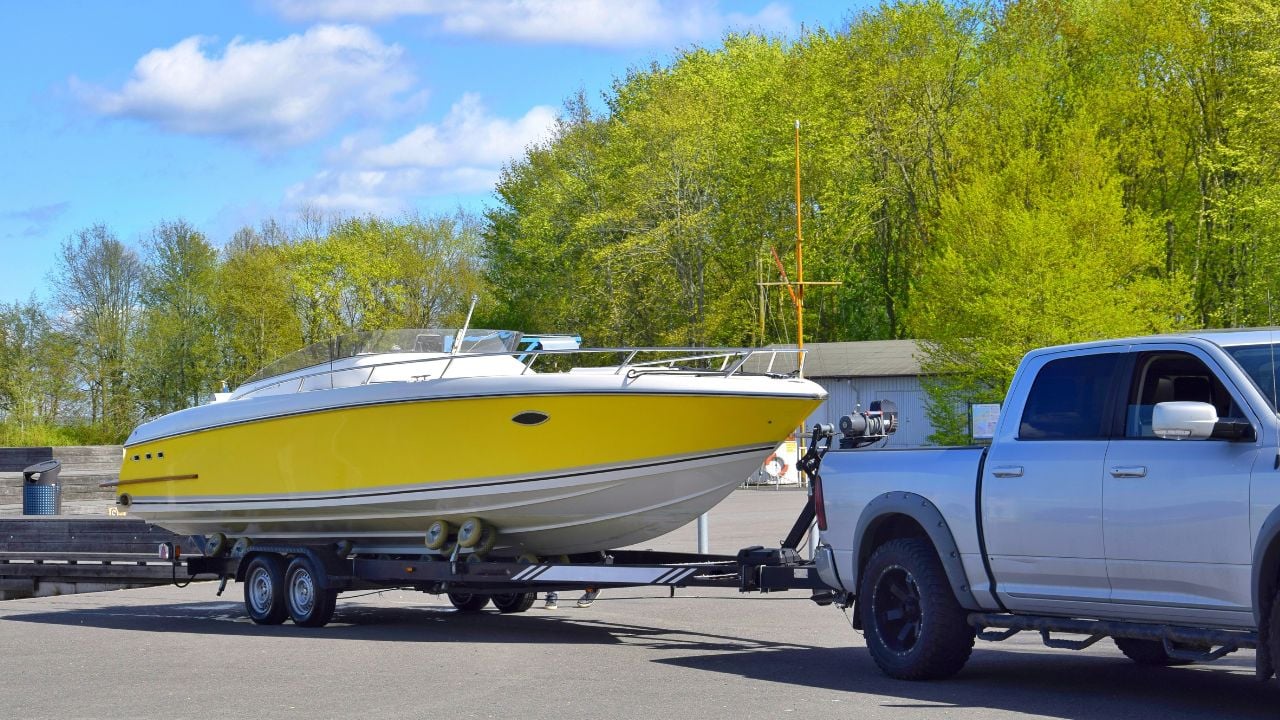
8 South Carolina Boat and Trailer Rules Some People Break

South Carolina had already logged eight boating deaths by the time Memorial Day weekend opened the 2026 season.
In many cases, such tragedies can be prevented by following South Carolina’s boat and trailer rules.
Note: This is general information, not legal advice. Boating and trailer rules are subject to change, so confirm the current requirements with the South Carolina Department of Natural Resources and the South Carolina Department of Motor Vehicles.
1. Idle-Speed Buffer Zones
South Carolina requires boats to slow to idle speed within 50 feet of a dock, a moored boat, or a person in the water, and within 100 yards of the Atlantic Ocean coastline.
On Lake Keowee, Lake Hartwell, Lake Marion, and several other big lakes, that buffer stretches to 100 feet around docks and piers.
Wake boats make that hard.
They rarely slow down until they’re right on top of a dock, and by then the wake’s already rolling through it.
Breaking the rule is a misdemeanor, with fines running as high as $600.
South Carolina Department of Natural Resources (SCDNR) officers patrol the busiest lakes hardest on the weekends the wake gets worst.
2. Trailer Registration Weight
South Carolina doesn’t tag every boat trailer, but weight decides which trailers need a tag.
Once a trailer’s empty weight reaches 2,500 pounds, the South Carolina Department of Motor Vehicles (SCDMV) requires registration to use it on South Carolina roads or take it out of state.
No tag, no tow.
A lot of tandem-axle trailers built for a 22-foot center console cross that line without the owner ever weighing it.
Under 2,500 pounds, the trailer only needs a plate if it’s ever leaving South Carolina, whether that’s a lake trip across the state line or a winter haul to Florida.
Owners get caught the same way nearly every weekend: A fully registered boat riding on a trailer nobody ever titled.
3. Kids’ Life Jackets
South Carolina law requires every child under 12 aboard a boat under 16 feet to wear a Coast Guard-approved life jacket the entire time the boat is underway.
It’s not just carrying a life jacket.
It has to stay buckled.
Parents on pontoons and jon boats break this rule constantly once the boat clears the no-wake zone and settles into open water.
The jacket comes off.
The kid climbs up on the bow.
Every rider on a personal watercraft has to wear a life jacket too, no matter their age.
4. Trailer Tail Lamps
Every trailer on a South Carolina road, boat trailers included, needs a working tail lamp visible from 500 feet behind it.
That’s state law, not a suggestion.
Boat trailers sit for months between trips, and the wiring corrodes faster than a truck’s ever does sitting in the same driveway.
It’s usually the ground wire.
Salt air along the coast eats connectors even faster, so a trailer that worked fine in April can go dark by July.
Nobody checks it until an officer flags them down on the way to the ramp.
Psst! How much do you know about South Carolina boating and lake history? Take our quiz and see how many you can get right.
Quiz
SC Boat & Trailer IQ
Answer these questions on South Carolina boating and lake history. We bet you can’t get them all right. Prove us wrong?
What does South Carolina require on a boat towing a water skier, besides the driver?
5. Painted Registration Numbers
South Carolina regulation spells out exactly how a boat's registration numbers have to look: Plain block letters at least 3 inches tall, painted or permanently attached to both sides of the bow.
Handwritten numbers rarely meet that.
The letters and numbers also need a gap between the groups equal to the width of a letter, so "DC 5678 EF" reads clean instead of running together.
A lot of home-painted numbers on older jon boats and bass boats fall short on height, spacing, or both.
Contrast matters too.
White numbers on a white hull technically satisfy nothing.
6. Boater Safety Certificates
South Carolina has required a boating safety certificate since anyone born after July 1, 2007 needs a certificate to run a motorboat over 10 horsepower or operate a personal watercraft alone.
It's not an age cutoff.
It's a birthdate.
Families read it as a general age cutoff and get it backwards, letting a 19-year-old drive the family boat with no certificate simply because they look old enough.
What South Carolina's Birthdate Rule Checks
South Carolina's boating safety certificate law never asks how old an operator looks or acts.
It asks whether they were born on or before July 1, 2007, or after it.
Someone born in 2005 can legally run a 150-horsepower center console today with no certificate at all, while a younger sibling born in 2008 needs a certificate even at 25.
The rule was written to phase in over time, not to track anyone's current age.
7. Trailer Brakes
South Carolina requires brakes on all wheels of any trailer whose gross weight passes 3,000 pounds, boat trailer or otherwise.
That's the trailer plus the boat plus the fuel and gear riding on it, not just the empty frame.
Add up a 24-foot center console, a full tank of gas, and a cooler of ice.
Many "brakeless" trailers cross that line without the owner doing the math.
None of them have brakes.
A half-ton truck stopping a loaded trailer with no brakes of its own needs a lot more room than many drivers plan for.
That gap shows up hardest on a wet boat ramp.
8. BUI Standard
South Carolina pulled 18 impaired boaters off the water in a single three-day stretch over the Fourth of July weekend in 2026, part of a statewide sweep that also handed out 384 citations.
SCDNR runs that same push, called Operation Dry Water, every summer boating season.
South Carolina doesn't charge boating under the influence (BUI) off a fixed blood-alcohol number the way a DUI works on the road.
The boating law charges impairment once a person's ability to operate is "materially and appreciably impaired."
No number's required.
An officer can still charge a boater who'd pass a roadside breath test if drinking, drugs, or both show up as impairment on the water.
First offense brings a $200 fine, up to 30 days, and a six-month suspension of the right to operate.
Penalties jump hard on a second or third offense.
Many boaters plan around a number this law never uses.
The 18 pulled off the water this July found that out already impaired, breath test or not.
How SCDNR Enforces These Rules
SCDNR leans hardest on enforcement during the exact weekends this list matters most.
Every year around Labor Day weekend, officers run free courtesy inspections at boat landings across the state, checking required safety gear and registration paperwork before anyone launches.
Nobody gets a ticket during the inspection.
Owners get a chance to fix the problem first, then relaunch.
People die out there.
South Carolina had already logged eight boating deaths by the time Memorial Day weekend opened the 2026 season.
SCDNR runs those Labor Day checks at two dozen boat landings across the state, all inside the same two-hour window, 9 to 11 a.m.
A missing life jacket or an expired registration sticker turns up in inspection after inspection, more often than anything else on the checklist.
9 South Carolina Speed Trap Towns Drivers Learn About the Hard Way
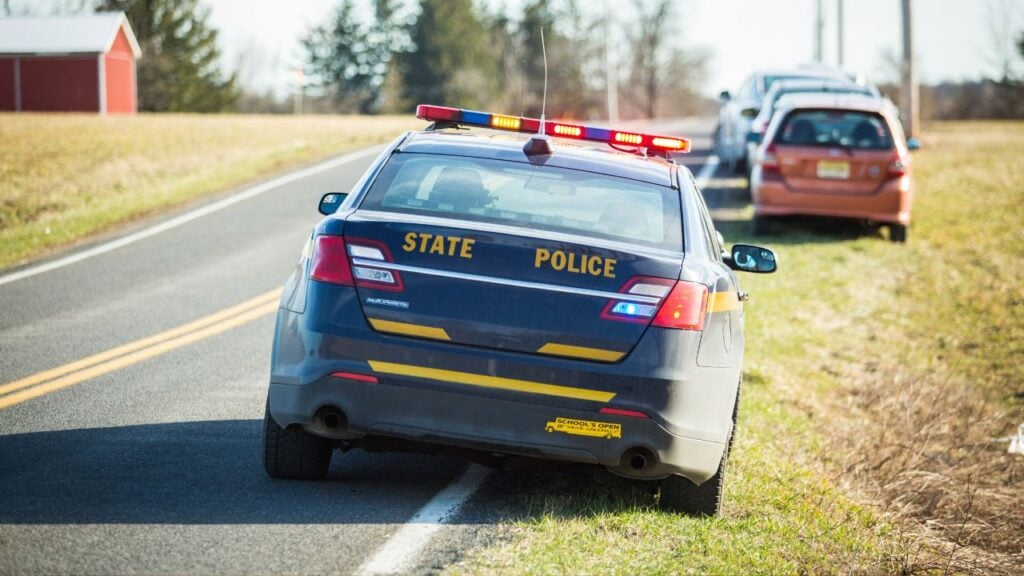
South Carolina logged more than 37,000 speed-related crashes in 2024, and many towns still lean hard on the ticket book anyway.
These are the South Carolina towns drivers learn to slow down in the hard way, usually with a ticket already in hand.
9 South Carolina Speed Trap Towns Drivers Learn About the Hard Way
9 Property Line Mistakes South Carolina Neighbors Take Each Other to Court Over

A Greenville homeowner orders a survey before listing the house, and the report comes back with a detail nobody expected.
Boundary fights like that play out the same way from Aiken to Horry County, and these are the mistakes that send neighbors to court.
9 Property Line Mistakes South Carolina Neighbors Take Each Other to Court Over
